Those are two different claims and they come apart. The chatbot on your phone can be useful, used by millions, and worth paying for — and the buildings, chips, power lines and loans behind it can still cost more than they return. Railways worked. Fiber-optic cable worked. Office towers worked. Every one of them stayed useful to society long after the people who financed them were wiped out.
So the question is not whether AI works. It works. The question is whether the race to own it can be paid for, and if it can't, who ends up holding the bill.
Building AI takes enormous physical things: warehouses full of chips, electricity to run them, cooling to keep them alive. Those things are bought now with money borrowed against revenue expected later. Meanwhile the chips wear out and get replaced on a clock that runs faster than the loans. Think of it like taking out a mortgage on a rental property where the payments start immediately but the tenants don't move in for three years. You are fine if they arrive on time. If the earnings run late, the obligations don't. That gap — between when the bill is due and when the money shows up — is the entire thing people mean when they say bubble.
The key thing to remember: A bubble here does not mean AI is fake. It means the spending got ahead of the earnings, and somebody other than the spender pays the difference.
What's in the rest of this article?
Here's the ground it covers, so you can stop anywhere and still have gotten something.
- First, the four things that all have to go right — and which one is weakest.
- Then who actually has to pay, company by company, and who has a second source of money.
- What happens when the companies selling the chips also fund the customers buying them.
- How the biggest quarter in Google's history was mostly stock it never sold.
- How few buyers are left, and what that does to what these companies are worth.
- Why no company in this race can afford to be the first to slow down.
- Where the loss lands. Your retirement account. Your power bill. Your town.
- What has actually broken so far. No company has failed yet. What HAS broken is the public's
willingness to have these buildings near them.
- The scoreboard that opens in October, and how to read it yourself.
- And the four things that would prove me wrong.
Most numbers below come from a company's own filing, a central bank, or a credit rating agency; the rest come from named news reports, all listed in the sources at the bottom.
The key thing to remember: Facts and guesses are labeled separately all the way through. You never have to take my word for which is which.
What does this actually have to get right?
| The bet | My call |
|---|---|
| 1. Enough people use it | Close to certain |
| 2. The price per unit keeps falling | More likely than not — and in September the newest model got more expensive |
| 3. The buildings earn their keep | Worse than a coin flip — the weak one |
| 4. The biggest customers can pay | Barely better than a coin flip |
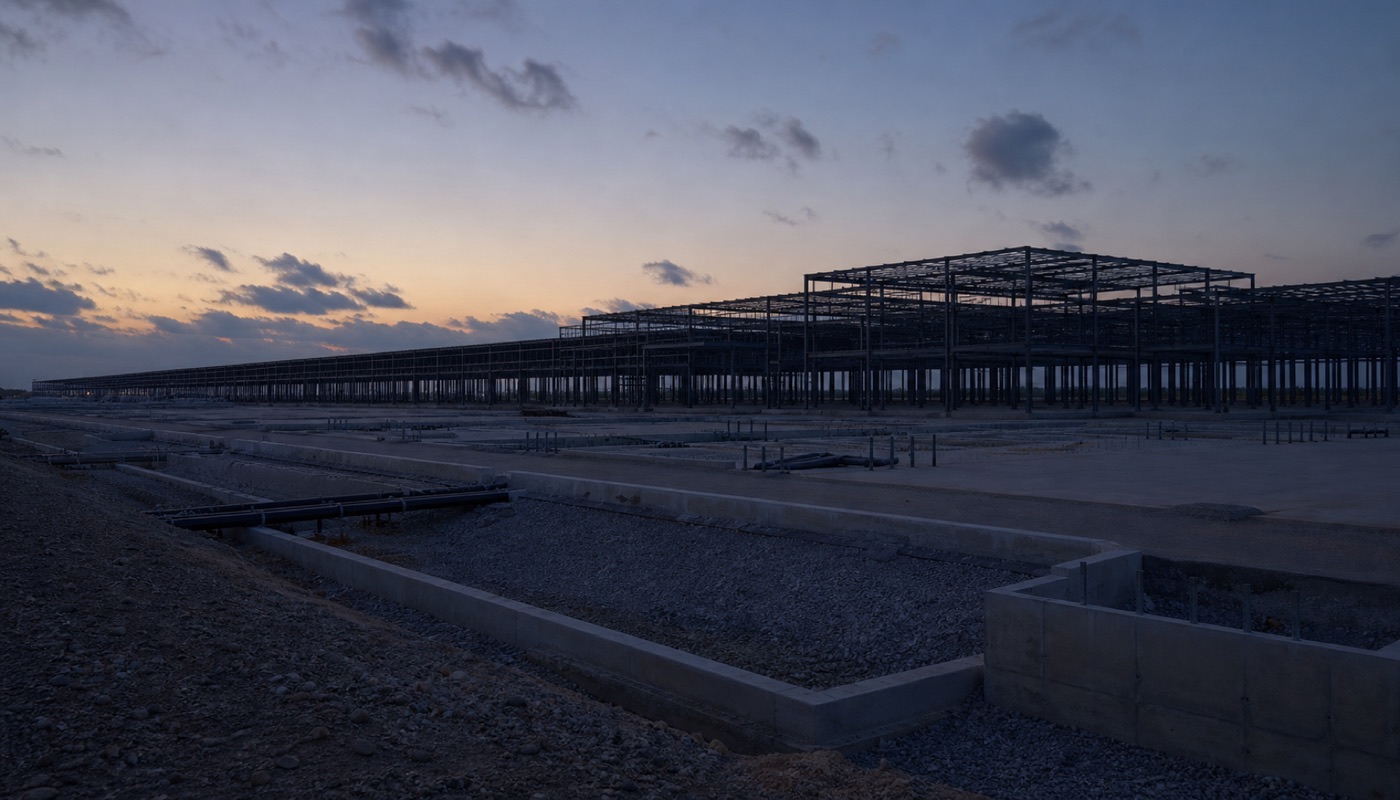
People argue about AI money as one question: is it a bubble or isn't it. That hides what is actually being bet on. Paying for this buildout takes four separate things going right, and all four have to land.
One: do enough people use it? This one is basically settled. Google has disclosed that the volume of text its models process is up roughly sevenfold in a year. Nvidia's filings show quarterly revenue of $96.2 billion for the quarter that ended on the 26th of July 2026. That is up 106% on the year, and up 18% on the quarter before it. In March 2026, Nvidia's founder and chief executive Jensen Huang said the company was looking at around a trillion dollars in orders for its next two chip generations through 2027. He sells the chips, so treat that as a salesman's number. Usage is still not the problem. Call this one close to certain.
Two: does the money keep growing while the price per unit keeps falling? Prices for AI dropped hard for three years and mostly kept dropping. Revenue is still growing — Microsoft reports an AI run rate above $37 billion, Google Cloud grew 82% in a quarter. Then in September 2026 OpenAI released its newest model and the price went up instead of down, by a lot. I deal with that below, because it belongs with the rest of what things cost. Nobody publishes the number that would actually settle this gate, which is revenue per unit of computing power. So this one is worked out, not measured. Call it more likely than not, and less comfortable than it was.
Three: do the buildings themselves make money? Subtract the electricity, the interest on the loans, the rent, and the chips wearing out. GPUs get replaced every few years, faster than the loans get paid off. This is the one I'd bet against. The clearest picture of the problem is at xAI: The Information reported it running about 11% of its 550,000 chips, against 43% to 46% at Meta and Google. Nine chips in ten are sitting in the dark, and the loan on all ten is the same size. Oracle's cash flow is deeply negative and a rating agency cut its credit over it. Amazon covered only about 60 cents of every dollar it spent on capital out of its own operations. Call this one worse than a coin flip.
Four: do the biggest customers stay solvent long enough to pay? Oracle has $638 billion of business on its books that it has not delivered yet. Roughly half of that is owed by OpenAI. CoreWeave — a company that does nothing but rent out AI computing power — got about two-thirds of its revenue from Microsoft alone. OpenAI has never made a profit.
Nvidia's own balance sheet shows where that risk has gone. Money owed to it by customers went from $38.5 billion in January to $63.1 billion in July, because it stretched payment terms out to as long as a year for large customers. Five customers now account for 70% of everything owed to it, up from 56% a year earlier. Selling more chips to fewer buyers, and waiting longer to be paid, is how a chip company quietly becomes a lender.
One deal shows the shape of it. Sharon AI is an Australian cloud company that took $1.9 million in revenue in the quarter to June 2026. In August it signed a six-year agreement with Nvidia worth up to $4.9 billion for as many as 40,000 chips. At its current rate of earning, that contract is worth several centuries of the company's revenue. The deal may work. But the money to honor it does not exist yet, and everyone signing knows that.
The size of what OpenAI has promised is not a critic's estimate — it comes from the company. In late 2025 its chief executive Sam Altman said OpenAI had roughly $20 billion of annualized revenue and about $1.4 trillion in data-center commitments. Twenty billion coming in, fourteen hundred billion promised out. By February 2026 the company had cut that back, telling investors it was aiming at around $600 billion of computing by 2030. I'd put this fourth one just barely on the right side of a coin flip.
Now, you cannot just multiply four numbers together here, because these four don't move independently. If demand disappoints, it hits all four in the same quarter. Accounting for how tightly they're tied together, the odds that all four hold come out somewhere around one in four. The odds that three or more fail come out at roughly the same place.
That is my judgment, not a measurement. If you think the third one deserves better than a coin flip, move it and the answer moves.
The key thing to remember: This isn't one bet with decent odds. It's four bets that all have to come in, and the weakest is whether the buildings themselves earn their keep.
Who actually has to pay, and what do they have to sell?
- OpenAI — about $40bn a year in. Roughly $600bn of computing promised by 2030.
- Burning about $25bn this year, about $57bn next. Spent $1.70 for every $1 it took in.
- Anthropic — about $65bn a year, and the healthier of the two. Still owes $65bn+ to clouds, $50bn for its own buildings, $35bn more elsewhere.
- No advertising business. No store. No operating system. Nothing else to sell.
- Microsoft — about $90bn in a quarter. Still sells Office, Windows, Azure.
- Amazon — about $201bn in a quarter. Still sells everything else.
- Alphabet — nearly $120bn in a quarter. Still sells search advertising.
- They would take a beating on money already spent. The lights stay on.
The four bets above are the shape of it. Here is the detail, because the danger is not spread evenly.
Two of these companies have one source of money. The rest have several. That single difference decides who survives a bad year.
OpenAI. Around $40 billion a year coming in as of August 2026. Against that: roughly $600 billion of computing promised by 2030, cut back from about $1.4 trillion. It is burning around $25 billion this year and expects to burn about $57 billion next year. In 2025 it spent $1.70 for every dollar it took in. It does not expect to be cash-positive until 2030. So OpenAI has to multiply its revenue several times over, while spending more each year than it earns, and it has to do it on subscriptions and business customers — because that is all it sells.
Anthropic. Around $65 billion a year as of July 2026, which means it passed OpenAI. It is the healthier business of the two and it got there a different way: about 85% of its money comes from companies and developers rather than consumers, where the margins are better. Its gross margin went from roughly minus 94% in 2024 to about 60% in 2026, almost entirely from making each answer cheaper to produce. It expects to stop burning cash around 2028. But it has also promised over $65 billion to cloud providers, $50 billion for its own data centers, and $35 billion more to another supplier. Same problem, better position.
Now the ones with a second source of money. Microsoft took about $90 billion in a single recent quarter, of which the AI business is a $37 billion annual run rate. Amazon took about $201 billion in a quarter; its AI and chip businesses are around $25 billion a year. Alphabet took nearly $120 billion in a quarter, with cloud at $24.8 billion. xAI sits inside a group with an advertising business attached.
Look at what that means. If AI revenue stalls tomorrow, Microsoft still sells Office and Windows and Azure. Amazon still sells everything else and runs the rest of the cloud. Google still sells search advertising. They would take a beating on the money already spent, and their shareholders would feel it — but the lights stay on, because something else is paying the bill.
OpenAI and Anthropic have nothing else. No advertising business, no store, no operating system. If the subscriptions and the enterprise contracts do not grow fast enough, and do not grow profitably enough, there is no second business to carry them.
And profitably is the hard word. Growing revenue is not sufficient — both companies have to grow it faster than the cost of producing it. That is exactly why chips like Jalapeño matter so much to them and so little to the rest of us. Anthropic already proved it can be done: its margin swing came from making each answer cheaper, not from charging more. OpenAI has to run the same play, at a larger scale, against a bigger bill, with less time.
So when people ask whether AI is a bubble, they are asking one question about companies in completely different positions. The diversified giants are making an expensive bet. The two labs at the center of it are the bet.
The key thing to remember: Microsoft, Amazon and Google have somewhere else to get money. OpenAI and Anthropic do not. Everything they owe has to come out of selling access to their own models — and it has to be sold for more than it costs to produce.
What happens when the seller pays the buyer?
Amazon agreed to put $50 billion into OpenAI. $15bn was due immediately.
The other $35bn was due only if OpenAI went public or hit a secret milestone (widely reported as artificial general intelligence). Deadline: the end of 2028.
OpenAI has not gone public, and no milestone was announced. Amazon released the full $35 billion anyway, years ahead of schedule.
That is about $100 for every person in the United States, paid early, with no public sign either written condition was met. The deal let Amazon pay early by choice. Nothing required it to.
Nvidia sells the chips. That's the business, and it's a very good one.
Nvidia also invests in the companies buying the chips, and helps them borrow money to buy more chips. Through 2026 it discussed guaranteeing up to $250 billion of a single customer's data-center lease — a number that came down to $120 billion after its own investors pushed back — alongside roughly $350 billion of financing tied to chip purchases.
Nvidia's defense is reasonable and might be right. Jensen Huang argues that nobody on earth has a better view of AI demand than the company selling into all of it, and that the arithmetic holds. He has been right about this industry more often than his critics have. He also runs the company that sells the chips and funds the buyers. Both of those are true at once.
But look at what it does to the number everyone is reading. When record chip sales get announced, you cannot tell from outside how much of that is a customer spending its own money and how much is Nvidia's money coming back to Nvidia. Imagine a car dealer who lends you the down payment, then counts your purchase as proof that demand for cars is strong. Nothing there is hidden or illegal either. It just quietly breaks the one signal most people are using to decide this is fine.
Then there's the payment that wasn't due.
In February 2026, Amazon agreed to put $50 billion into OpenAI. Fifteen billion was due immediately. The other $35 billion came with conditions written into the filing: it would be paid if OpenAI went public, or hit a milestone the filing keeps secret, widely reported as artificial general intelligence, with a deadline at the end of 2028.
OpenAI has not gone public, and Amazon has not said the milestone was met. It paid the $35 billion anyway, more than two years early.
That is about $100 for every person in the United States, paid early, with no public sign that either written trigger was met. Amazon has not explained why, and I am not going to guess. But conditions exist for a reason. You write them because you want to see something before the money leaves. When the party who insisted on the protections waives them, there are two readings — either confidence got so high the protections stopped mattering, or somebody needed the cash and confidence was the story told about it.
Both readings point the same way: the discipline is loosening. That's the thing worth watching, more than the size of the number.
And this summer it stopped being a critic's word. The Bank for International Settlements — the bank that central banks themselves use — described this pattern in its annual report and gave it a name: shadow borrowing. Obligations that work exactly like debt, but sit largely outside the balance sheets where you'd go looking for debt.
The key thing to remember: When the seller finances the buyer, "record demand" and "money we handed out" can be the same dollars counted twice — and that is now an official description, not an accusation.
What happens when the profit isn't from selling anything?
Alphabet, which owns Google, had the biggest quarter in its history in mid-2026. Net income of $112.1 billion, up nearly 300% from the year before.
Almost all of that jump came from a single line. Alphabet's own filing calls it a net gain of $98.0 billion, "primarily the result of net unrealized gains on our equity securities."
Unrealized means nothing was sold. Alphabet owns roughly 14% of Anthropic, and Anthropic's valuation tripled that quarter. Alphabet owns a piece of SpaceX, which went public in June. Those prices went up, so Alphabet's profit went up. No customer paid anything extra. No product shipped. It works like the value of your house going up: real on paper, yours, and completely unspendable until somebody actually buys it — and just as capable of going back down while you sleep.
Work out the share and it's about $87 of every $100 of that record quarter.
Nobody broke a rule. This is how the accounting is supposed to work. But it cuts both ways.
One of the largest companies on earth just posted a record profit made mostly of the prices of stakes in other AI companies. Those other companies are valued by the same enthusiasm holding up the first one. So the value is now partly holding itself up — each one worth more in part because the others are worth more.
And if one of those prices falls, the same line goes negative. In a quarter. Without anyone selling a share, without a single customer canceling, without anything happening in the actual business.
What gets me is how ordinary this became. A record profit made of prices, at one of the biggest companies in the world, and it barely registered as news.
The key thing to remember: A profit you didn't sell anything to earn can reverse just as fast — and it can take the next company's profit with it on the way down.
Who is actually left to buy?
People say Elon Musk bought Cursor, the AI coding tool.
Strictly, that's wrong. SpaceX bought Anysphere, the company behind Cursor, for $60 billion — the largest purchase of a venture-backed startup ever recorded. Not Musk personally, and not his AI company.
People say Musk bought Cursor because in every way that decides anything — the direction, the strategy, who says yes — it is Musk. Which company's balance sheet the money left is a question for lawyers. The reason it's a distinction without a difference is the finding, not an error to correct.
So look at what that means for everybody else in the queue.
Cognition, whose product writes software the way a human engineer would, raised a billion dollars at a $26 billion valuation on roughly $492 million of revenue. That's about 53 times revenue. A company priced like that has exactly two ways to ever pay anyone back: go public, or get bought by somebody enormous.
Now count the buyers on earth who can write a $26 billion cheque for an AI company. It's a short list, and one man's group of companies is a meaningful part of it.
Then watch what happened next. In August, SpaceX finished buying Cursor. Weeks later OpenAI told SpaceX it is ending the contract that lets Cursor use OpenAI's models, with a shutoff date of 12 November 2026. The contract had a clause letting OpenAI walk if the owner changed. OpenAI's stated reason is that it cannot be confident Musk's companies will stick to its terms.
So a company bought for sixty billion dollars is losing access to the models many of its customers came for. Users can bring their own key, but that will not work with several of the features people actually pay for.
The short list of buyers is not just short. Being bought by someone on it can cost you your supplier. When the same few players are the buyers, the sellers and the competitors all at once, an acquisition is not the safe exit it looks like.
That is not a market. It is a waiting list with one name at the front.
And it explains something about where the money is going that hasn't landed with most people. AI took roughly a third of all venture capital dollars worldwide in 2024. About half in 2025. And $242 billion in the first three months of 2026 — around 80% of all venture funding on the planet.
Eighty percent. Nearly every dollar funding new companies anywhere is now funding one idea, and most of those companies are building on top of a handful of models owned by an even smaller handful of people.
Everyone agreed the danger was one company controlling AI. Everyone raced to stop that from happening. Look at what the race built.
The key thing to remember: With one plausible buyer left, nobody knows what these companies are worth. The number in the headline is what the last investor agreed to pay, not what anyone would pay today.
Why doesn't anybody slow down?
- The market does not read it as prudence. It reads they stopped believing.
- The share price drops that afternoon.
- The punishment is immediate, certain, and lands on the person who chose it.
- The sector’s own payoff falls — that is the Bank for International Settlements’ published finding.
- In bad scenarios it turns negative.
- The punishment is distant, shared, and lands on everybody.
- Microsoft, Google, Amazon and Meta have the best demand data on earth.
- They can watch what people actually do with these tools, at a scale no outsider can.
- It is hard to believe all four walked into the same delusion at the same time.
- If this works and you sat it out, you do not come second. You are finished.
- No amount of money buys back the years.
- A company that believes that will spend enormous sums on a bet it privately rates below even odds.
This is the question that convinces me none of this resolves quietly, and the central-bank research answered part of it.
The finding from the Bank for International Settlements: as competitive pressure drives spending higher, the net payoff for the sector as a whole falls — and in bad scenarios turns negative. Everyone spending more makes everyone collectively worse off, while still making complete sense for each of them individually.
Because look at what happens to whoever moves first.
If a giant announces it will spend less next year, the market does not read that as prudence. It reads it as they stopped believing, and the share price drops that afternoon. The company that announces a bigger number gets rewarded the same afternoon.
So the punishment for caution is immediate, certain, and lands on the person who chose it. The punishment for collective overspending is distant, shared, and lands on everybody. Every executive is looking at that trade and making the only choice that keeps their job.
Nobody has to be reckless for this to end badly. They only have to be individually sensible, one quarter at a time, in a game where going first is the single move that gets punished on the spot.
There is a second answer underneath the first one, and it is worth asking out loud. What do these companies see that we don't?
These are not naive buyers. Microsoft, Google, Amazon and Meta have the best demand data in the world — they can see what people actually do with these tools, at a scale no outsider can. Either they know something the public numbers do not show, or the thing driving them is not confidence at all.
There is a version where it is not confidence. If this works and you sat it out, you do not come second — you are finished, and no amount of money buys back the years. A company that believes that will spend enormous sums on a bet it privately rates below even odds, because the cost of being wrong the other way is total. You have made that trade yourself on a smaller scale, any time you paid for something you did not want in order to avoid a worse outcome. That is not optimism. It is fear.
Nobody outside those rooms can tell you which it is. But notice that both answers fit the same spending — which is exactly why the spending itself proves nothing either way.
I should say plainly which part of this is documented and which is mine. The first step is theirs: the sector's own return falling as the race continues is a central bank's published finding. The rest — that restraint gets punished before overspending does — is my read of the incentives, and no institution has said it. Treat it as reasoning, not as a receipt.
The key thing to remember: "Surely somebody will slow down before it goes too far" is not a plan. There is nobody in this whose job includes slowing down.
Where does the loss actually land?
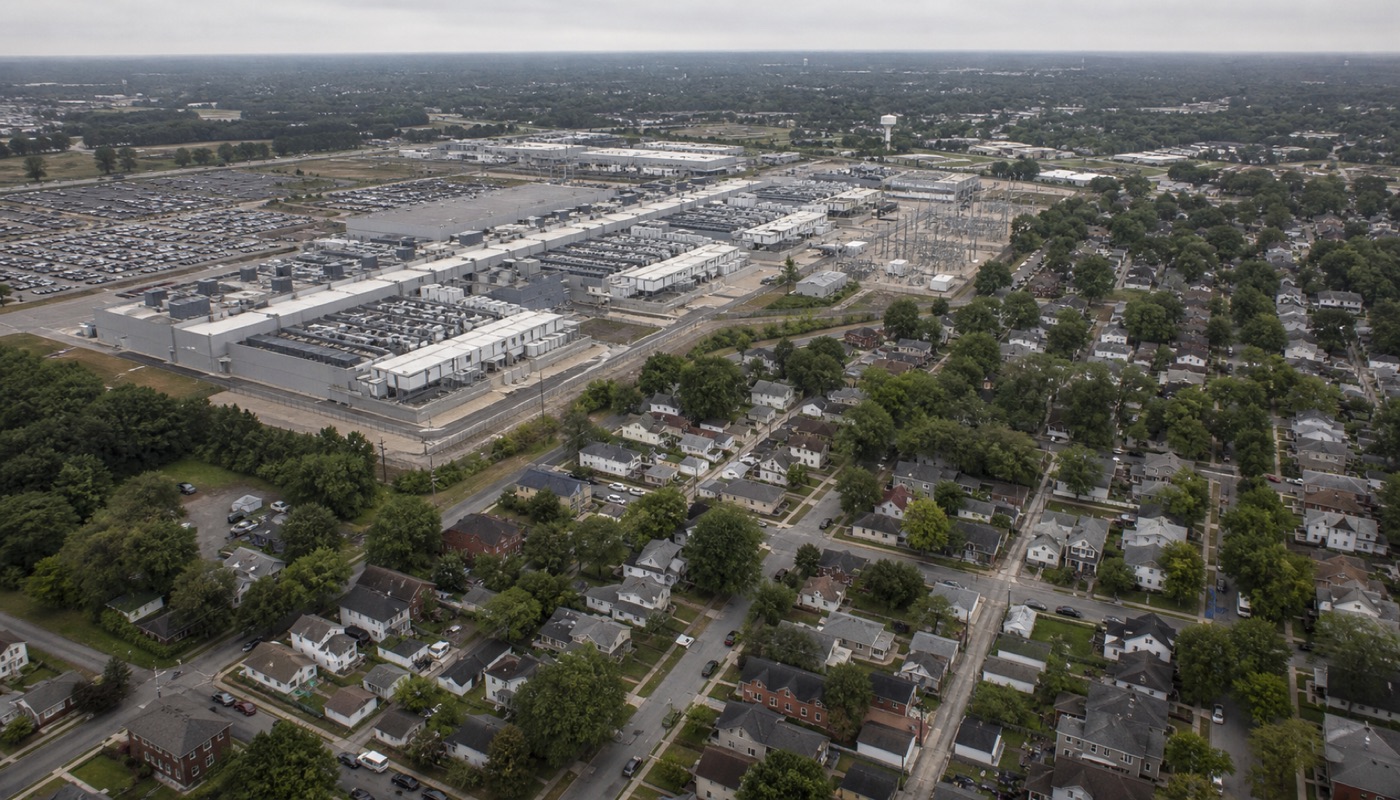
European Central Bank staff, August 2026: a correction is likely even if AI succeeds completely.
About €440 billion of European household money sits in American technology shares — most of it through cheap index funds bought by people doing the sensible thing.
And there is markedly less room to cushion a fall than there was in 2000.
Nowhere near the people who placed the bet.
Look at what your retirement account actually holds. Most people never have. Roughly $8 of every $100 in a standard index fund is now one chip company. No single company has taken up that much of the American stock market since at least the 1970s. The ten biggest actively managed funds inside workplace retirement plans average something like 38% in technology and communications.
You didn't choose that. You bought the whole market, which is the responsible thing to do. The whole market quietly became a bet on one idea.
It isn't only Americans. In August 2026, Malin Andersson and four colleagues at the European Central Bank — Johannes Breckenfelder, Stefano Corradin, Kalin Nikolov and Maria Antonietta Viola — wrote that a correction in these valuations is likely even if AI succeeds completely. Their reasoning is worth understanding, because it doesn't depend on anything failing: while a new technology is small, betting on it is a risk you can spread around by owning other things. Once it's woven through the entire economy, it becomes a risk you can't escape by owning something else — so investors demand a higher reward to hold it, and that demand pushes prices down. They counted around €440 billion of European household money sitting in American technology shares, most of it through cheap index funds bought by people doing the sensible thing.
They also said something quieter that I keep returning to: there is markedly less room to cut interest rates or spend public money to cushion a fall than there was in 2000. Less rope this time.
And they said it wouldn't stay in one country. A sharp fall forces investment funds to sell assets to pay people cashing out, which pushes prices lower, which makes more people cash out. Because the American and European markets move together, they called it a question of financial stability — not a private problem for whoever happened to buy the stock.
That's a staff publication, not a decision by the bank's governing council. But between that and the Bank for International Settlements, two official institutions are now on the record. For two years the reply to this argument was that only cranks thought it. That reply is gone.
Then keep following the money outward, past the market.
A town that rewrote its tax rules to land a data center is now holding a contract with a company whose credit rating sits one notch above junk. A rating agency cut Oracle to that level in July and said why in plain words: Oracle has $638 billion of business booked that it hasn't delivered, roughly half of it owed by OpenAI, and if OpenAI can't pay, Oracle is left holding long-term leases on buildings it cannot easily unload.
So what happens to Oracle and Nvidia if OpenAI cannot pay?
Oracle is the clearer case, because the rating agency already spelled it out: data centers built for one customer, leases running years, no obvious second tenant that size, and a credit rating already one notch above junk.
Nvidia is worse in a quieter way. It would survive losing the orders. The harder part is the money it guaranteed and lent to the buyers — a default turns a supplier into a creditor of something that has stopped paying. And at roughly $8 of every $100 in an ordinary index fund, whatever happens to Nvidia does not stay there.
So the chain runs like this. A company that has never earned a profit, holding up a rated company's credit, holding up a town's tax base, sitting inside the index fund in your retirement account, next to your job.
Every link in that chain is documented. Not one of them requires anybody to be a villain.
The key thing to remember: You didn't sign up for this trade. You're in it anyway, through the most responsible financial decision you ever made.
What has actually broken so far?
“Clearly, people hate data centers — right now, at least.”
— Sam Altman, chief executive of OpenAI, to Time, 27 August 2026
- Step one is paid demand disappoints.
- That has not occurred. There is no receipt for it.
- Everything after it is reasoning from a step that has not happened.
- Status: a forecast.
- Data-center power demand → grid costs → household bills.
- Every step has receipts.
- It is finished. It is running now.
- Status: a receipt.
Nothing.
There has not been a single default, bankruptcy, or failed refinancing at AI-infrastructure scale. Not one. Debt keeps getting raised and keeps getting bought. Lenders are getting choosier — one large cloud company had to sweeten the terms on a $2.6 billion loan, moving the price from 99 cents on the dollar to 97 — but choosier is not broken.
It is worth noticing who is being cautious, and who is leaving.
Sarah Friar told staff that OpenAI would go public "by 2027, or sooner." She is OpenAI's own chief financial officer, and she has said publicly that she is not comfortable listing in 2026, given the spending commitments and the question of whether revenue growth will support them. When the finance chief of the company at the center of all this is the one pumping the brakes in public, that carries more than any outside opinion.
And people are heading for the door. On 13 August 2026 OpenAI's chief revenue officer, Denise Dresser, left after eight months; she had run Slack before joining. Days earlier Brad Lightcap ended eight years there. Fidji Simo went in July, the head of data centers later that month. OpenAI says Dresser left to pursue other interests, and that is the only stated reason anyone has.
I won't tell you what was in her head. But someone walked away from that job, that early, with an IPO coming — and I notice. So can you.
The loudest outside voice runs the other way. Ed Zitron argues OpenAI runs out of cash in 2027 and that retirements shrink twenty to forty percent for good. He writes Where's Your Ed At and hosts Better Offline — and he also runs a technology PR agency, a commercial interest in the industry he covers, which you should know.
One of his claims does not hold. He says Oracle's revenue has been flat for fifteen years after inflation. Oracle took $35.6 billion in 2011 and $67.4 billion in the year to May 2026 — in today's money that is roughly 28% real growth, slow but not flat, and the latest year grew 17% on the very AI business he expects to sink them. His direction is well supported. That number is not, and one wrong figure gives people a reason to throw out the right ones.
What has broken is the welcome. Data Center Watch counted at least 48 projects worth about $156 billion blocked or stalled by local opposition in 2025, and by March 2026 there were 833 active opposition groups across 49 states. OpenAI's chief executive told Time on 27 August 2026 that people hate data centers, at least for now. The man who needs those buildings built is saying out loud that the towns do not want them.
The case on the other side is real too. Microsoft says it has more than $600 billion of business still to deliver and cannot build capacity fast enough. Amazon's AI business is growing at triple-digit rates. And research published in June 2026 found that data centers slightly lowered average American electricity rates between 2015 and 2024. The mechanism is worth understanding, because it cuts against the rest of this article. A power grid costs a fixed amount to own and maintain whether or not anyone uses it — the poles, the wires, the substations. That fixed cost is divided across every bill, including yours. A data center buys enormous amounts of electricity and pays its share of that same fixed cost, so the slice everyone else carries gets smaller. Over that period the effect was real, and it ran the other way from what people assume. What changed after 2024 is the scale. The new buildings are large enough to need new grid built for them, and new grid is a fresh cost rather than a shared one. You are not splitting an existing bill any more. You are helping pay for a bigger one.
There is a further problem with the crash argument, and it is the one I found most uncomfortable to write down.
Grade every step in the chain by whether it has actually happened, and the collapse story has a hole at the very front. Its first step — that paid demand disappoints — has not occurred. There is no receipt for it. Everything downstream of it is reasoning from a step that hasn't happened yet. The whole crash case, the one everyone argues about, rests on a foundation that is currently a forecast.
Meanwhile the other chain — the one that runs from data-center power demand to grid costs to household bills — has receipts at every step. It is finished. It is running now.
So the thing everybody fights about is the least established claim in the file. That inverted this whole article for me. The question stopped being will there be a crash and became why is the finished part the quiet one?
The key thing to remember: The first real default is the day this argument ends. It has not happened. So the crash is still a forecast. The cost transfer is already a receipt.
What will finally put a price on all this?
- On a standard test of a model driving a computer by itself: 72.6% of the work finished, against 65.7% for the model before it.
- About 40 minutes a task instead of about 75. That is 47% less time.
- It answers using fewer words.
- $10 and $50 per million pieces of text in and out — against $4 and $20 before. Two and a half times.
- A fast setting doubles the price again.
- Artificial Analysis works it out at about 75% more per finished task.
- Against Anthropic’s Fable 5.1: 66 to Astra’s 61 on intelligence, at slightly less money.
- Traders with money on the line expect computing to cost more later.
- They think demand is still growing.
- The buildout’s assumption is holding.
- They expect computing to cost less later.
- They think demand has peaked.
- That is the signal the whole argument has been missing.
Two prices decide this whole argument, and until now neither one has been public. What it costs to rent the computer, and what it costs to run the model on it.
Start with the model, because September gave us a reading. On the 3rd, OpenAI released GPT-6 Astra. The machine got better and faster: on a standard test of a model driving a computer by itself, Astra finished more of the work than the model before it — 72.6% against 65.7% — and took about 40 minutes a task instead of about 75. That is 47% less time, and it answers using fewer words.
It also got more expensive. Astra charges two and a half times what that model charged for the same amount of text — $10 and $50 per million pieces of text in and out, against $4 and $20 — with a fast setting that doubles the price again for up to two and a half times the speed. Whether the efficiency covers the increase is exactly the argument: the testing firm Artificial Analysis works it out at about 75% more per task than a model ago, OpenAI's position is that price per finished task is the number that matters, and other analysts say the launch data is still too thin to call. It is not undercutting Anthropic either — Fable 5.1 scores 66 on that firm's intelligence index against Astra's 61, at slightly less money for a typical mix of work. One release is not a trend. The models below the frontier are still getting cheaper. But this whole buildout leans on one thing: the price at the top falling. In the month I am writing this, it went up.
Now the other price, and this is the bigger one. The rent on the computer itself is an argument because the central number is not public. Right now there is no posted price for an hour of AI computing. Every deal is negotiated privately, the same chip costs wildly different amounts depending on who you are and who you buy from, and nobody outside the room sees the going rate. It is the only commodity this large that trades in the dark.
That ends on October 5th, 2026. CME Group and a firm called Silicon Data are listing two futures contracts on NYMEX, one tracking the hourly rental price of Nvidia's H100 chip and one tracking its newer B200, each contract covering a month of rental. It still needs the regulator's sign-off. When it opens, the price of computing becomes a public number that anyone can look up, the way anyone can look up the price of oil or wheat.
The useful half of this is real. A published forward price lets a company building a data center lock in its costs instead of guessing, and it lets a lender check whether a borrower's business plan assumes a price the market does not believe. The Boston Consulting Group works out that a reliable forward price could cut borrowing costs across the buildout by about $116 billion through 2030 — roughly $26 billion a year on a $3.6 trillion spend.
The other half is why I am writing this section at all. Every large boom in modern history was made bigger by the financial products built on top of it. The 2008 crash was not caused by people buying houses. It started with the loans themselves. Banks wrote mortgages with payments that looked affordable for a couple of years and then jumped, and told borrowers not to worry because they could refinance before that happened — which only works while prices keep rising. So the loans were already bad when they were written. What turned bad loans into a global crash was the layer of bets stacked on top of them, sold on to people who never met the borrower and never saw the paperwork. If that sounds distant, remember where it landed: on your house price, your job and your retirement account. A futures market lets you hedge, and it lets people who will never plug in a single chip bet on the price anyway.
And this commodity has a problem oil does not. A barrel from one oil company is the same as a barrel from another, so no single producer owns the benchmark. These contracts are tied specifically to Nvidia's chips. Nvidia holds roughly four-fifths of the market. The reference price for the world's newest commodity is, in effect, the price of one company's product.
The most useful thing in this article is what that gives you. From October you can look up what the market expects computing to cost later. If the later price is higher than today's, traders with money on the line think demand is still growing. If the later price is lower, they think demand has peaked. That is not a pundit's opinion and it is not mine. Traders set that price with their own money, and it is published every day.
The key thing to remember: This argument has never had a scoreboard. In October it gets one.
What would prove this article wrong?
Writing these down in advance is the only thing that separates reasoning from rooting. Four things would move it, and two of them are already in motion.
The first real default, or the absence of one. No default, bankruptcy or failed refinancing has happened at this scale. If another year passes with none, the argument weakens badly. This is the single highest-value thing on the board.
Seller financing shrinking while orders hold. Roughly $470 billion of vendor financing and guarantees are on the table right now. If that number falls while the order books stay full, the demand was real on its own all along — and Part B, the circular money, stops mattering. This is the cleanest single way to find out I'm wrong.
Margins closing on their own. This one is already underway, and it is the strongest case for optimism in the whole picture. In June 2026 OpenAI and Broadcom unveiled Jalapeño, OpenAI's first custom chip, built in nine months and designed to run finished models rather than train new ones. Broadcom's chief executive says it cuts the cost of answering a question by about half. The first servers are due online before the end of this year.
Read what that does to the argument. It attacks gate three, the weak one, directly — cheaper answers means the buildings have a better chance of paying for themselves. It also loosens Nvidia's grip, because a company that builds its own chips is a company that needs fewer of theirs. If this works and spreads, a good part of what I have written above gets weaker, and I would be glad about it.
What it does not do is close the gap on its own. Bain, one of the big management consulting firms, put a number on the size of the hole: to pay for the computing the world expects to need by 2030, the industry has to find about $2 trillion a year in new revenue — and even after counting the savings that AI itself delivers, they still come up roughly $800 billion short. Halving the cost of a query is a real dent in a number that large. It is not the whole answer.
The buildout being made to pay for itself. Wisconsin, Texas and Virginia all moved in 2026 to force data centers to cover their own costs rather than spreading them across everyone's bill. This is the one that gives me real hope, partly because the evidence already runs both ways, and partly because it is the only item on this list you can personally vote on.
What nobody knows.
Whether this breaks. Anybody who tells you otherwise is selling something — including the people selling the crash. The strongest case that it's fine is that AI works, people pay for it, and the biggest companies have real revenue and real backlogs. The strongest case that it isn't is that spending is outrunning earnings, some demand is funded by the sellers, some profit is paper, one unprofitable customer decides a rated company's credit, and the safety net underneath is thinner than it was in 2000. Both of those can be true at once, and I think they are.
The key thing to remember: Anybody who can't tell you what would change their mind is rooting, not reasoning.
What am I actually saying?
Not that AI is fake. It works, I use it every day, and I think it makes some things better. I love the technology. What I don't love is what's being built around it.
What I'm saying is narrower and much harder to argue with. The technology can succeed completely and the money around it can still end badly.
The shape of it matters. If present economics simply continue with nothing new arriving, what the numbers describe is overbuilding, then falling use of what got built, then write-downs, then consolidation — while the strongest companies buy distressed capacity at prices they could never have gotten during the boom. The losses walk outward to lenders, utilities, towns, and a retirement account belonging to somebody who never heard of any of this.
The strong get the assets cheap. The loss goes somewhere else. And it happens slowly enough that there is no morning where everybody wakes up and knows. Just a bad quarter, then a worse one, then a familiar name sold for parts, and somewhere in there your balance stopped climbing and you could not say which month it was.
That's the part that gets me. Not the spending. Not even the circular money. It's that the whole thing is arranged so that being right pays the people who made the bet, and being wrong pays you.
And of everyone in this race, not one of them has a job that includes slowing down.
What can you do about it tonight?
- 1Open your retirement account and look at the top ten holdings.
- 2See how many of your funds hold the same companies — a broad market fund, a technology fund and a growth fund usually own much the same thing.
- 3Stop reading “annualized run rate” as if it were money. It is a recent pace multiplied out. Find the actual revenue in the filings.
- 4From October 5th, look up the compute futures price once a month. Above today’s price means demand is still growing. Below means the market thinks it peaked.
- 5Go to one county meeting about a data center. That is the only item here where your vote moves the number.
Five things. None of them is "sell everything," because I don't know what happens next.
Open your retirement account and look at the top ten holdings.
Then see how many of your funds hold the same companies. A broad market fund, a technology fund and a growth fund usually own much the same thing.
Stop reading an annualized run rate as if it were money. It's a recent pace multiplied out. Companies have to report actual revenue in their filings, and that's the number to find.
From October 5th, look up the compute futures price once a month. It takes a minute. If the price for later months is above today's, the people betting real money think demand is still growing. If it is below, they think it has peaked. You will know before the headlines do, because the headlines will be reading the same chart.
And go to one county meeting about a data center. That's the only item here where your vote actually moves the number — and it happens to be the chain with receipts at every step.
The key thing to remember: The crash may never come. The bill is already being written. Go look at what you own.
---
Check our sources
- European Central Bank — The AI boom: rational enthusiasm or the next dot-com bubble? (17 August 2026).
- Bank for International Settlements — Annual Economic Report 2026 (28 June 2026).
- Bank for International Settlements — Working Paper 1367, The AI investment race (2026).
- Alphabet Inc. — Second Quarter 2026 Results, SEC Form 8-K Exhibit 99.1 (22 July 2026).
- Microsoft Corporation — Form 10-K, fiscal year 2026 (30 June 2026).
- Oracle Corporation — Fourth Quarter and Fiscal Year 2026 Results (10 June 2026).
- S&P Global Ratings — Oracle downgraded to BBB− (9 July 2026), reported by heise online.
- GeekWire — Filings: how Amazon's $50B OpenAI deal works (IPO or redacted milestone trigger; commitment expires 31 December 2028; Amazon may invest early by choice).
- Seeking Alpha — Amazon completes OpenAI investment with additional $35B tranche (July 2026).
- Forbes — Nvidia AI financing and the backstop debate (16 August 2026).
- The Motley Fool — Nvidia's weight in the S&P 500 (1 September 2026).
- Crunchbase News — Q1 2026 venture funding and AI's share of it (2026).
- The Next Web — Cognition raises $1 billion at a $26 billion valuation (May 2026).
- Watten, Bistline and Blanford — Have Data Centers Raised Your Electric Bill? Causal Evidence from the United States (June 2026).
- Vellum — GPT-6 Astra Benchmarks Explained (September 2026).
- Artificial Analysis — Benchmarking GPT-6 Astra (3 September 2026).
- Artificial Analysis — GPT-6 Astra vs Claude Fable 5.1, model comparison (September 2026).
- The Information — xAI Shows How Hard It Is to Use a Lot of GPUs at Once (April 2026; subscriber-only). Source of the report that xAI was using about 11% of its 550,000 chips, against 43% to 46% at Meta and Google.
- TechCrunch — OpenAI launches Astra, its powerful (and controversial) new model (3 September 2026).
- CME Group — CME Group and Silicon Data to Launch Compute Futures on October 5 (11 August 2026).
- Boston Consulting Group — The New Economics of AI Compute Markets (2026).
- NVIDIA — Financial Results for the Second Quarter, Fiscal 2027 (quarter ended 26 July 2026).
- SharonAI Holdings Inc. — Form 8-K, second-quarter 2026 results and NVIDIA agreement (August 2026).
- Data Center Watch — report on projects blocked or stalled by local opposition (2026).
- Fortune — 'Clearly, people hate data centers': Sam Altman (27 August 2026).
- House of El: AI — The AI Boom Is Finally Breaking Apart (4 September 2026).
- Ed Zitron, interviewed on The Diary Of A CEO (28 August 2026).