
Undastandable · The AI Data-Center Land Rush
August 2026 · current as of late August 2026

What Is the AI Data-Center Land Rush?

A data center is a warehouse full of computers. AI companies are buying land, power, and water in American towns to build thousands more of them, and the fight is over who pays for that.

Watch The Land Rush

This 18-minute narrated film follows the land deals, power-grid costs, tax breaks, and jobs promises behind the AI data-center buildout.

🎧 Part 1 — teach me from scratch
0:00 / --:--
This is the whole article, both parts, taught section by section, starting from zero. Above every section, a blue box says what that section is about to show you. Where a section leans on a harder idea, a “Go deeper” box explains that idea first. Every box has its own play button. Part 1 ends about halfway down, and you can stop there. Each part has its own recording.
You will see some of the same sentences and numbers here as in the article. That is expected: this side covers the same facts, but explains each idea first, one step at a time.
💡 What this section is doing

Below, the article starts with what a data center is: a building full of computers that make the answers to your AI questions. Then it says why companies are racing to buy land in American towns, and the four things each building needs: land, power lines, water and permission. Watch for the sentence the whole article turns on. The industry says it pays its own way, and the paperwork filed with power regulators can say something different. Last comes a list of what Part 1 covers, in order, and a note that Part 2, on this same page, follows the tax money.

↓  the article section it explains is right below
🔍 Go deeper — the one idea to get first

The one word to get first is grid. The grid is every power plant and every power line that feeds electricity to the homes and businesses in a big region. Your house is on a grid. So is every data center. Electricity from all the plants flows into the same wires, and everyone on those wires shares them. So when one giant new customer plugs in and the wires have to get bigger, the question of who pays for the bigger wires touches everyone on the grid, not only the new customer.

Start Here

What’s in the rest of this article?

When you ask an AI chatbot a question, your phone does not do the work. A computer in another building does. That building is packed with computers, floor to ceiling. It is called a data center.

A large data center can use as much electricity as a small city. AI companies want many more of them, fast. So they are racing to buy land in American towns. That race is the land rush.

Each building needs four things: land, new power lines, water to cool the computers, and permission from the local government.

The industry says it pays its own way. Paperwork filed with the officials who set power prices can tell a different story. It can show costs that reach ordinary electric bills.

This article follows these buildings from the first land deal to the charge on a household bill. It covers who is building them, why some deals are signed under a company name that is not the real buyer, who pays when the power system has to grow, and what you can do when one is planned near your home.

The article has two parts on this page. Part 1 is about the buildings, the secrecy, and your power bill. Part 2 is about the tax money: what your town gives up to get one of these buildings, and what it gets back. You can read Part 1 and stop. There is also a separate article, Data Centers in Space, about the plan to put these buildings in orbit.

Read this first: people call it “the cloud,” but it has a street address. Every AI answer is made inside a building that is plugged into someone’s power grid.

Part 1 covers, in order:

What a data center is — and why the AI ones need so much more.
How it reaches you — your bill, your town’s water, and deals signed under other names.
Who really pays — the grid bills, the “temporary” gas plants, and what the filings show.
The change of subject — blaming foreign money for the protests, and the names you will keep seeing.
How to spot a sales pitch — what you can do, and where it already worked.
The common claims, answered — a short recap, and every source.


💡 What this section is doing

Below: what a data center is, in plain words. It is a building full of servers, computers with no screen that sit on shelves and do work for people far away. Data centers have been around for decades. What changed is AI, which needs far more computing. Watch for the article’s picture of the difference: an ordinary data center is a bathtub filling from a faucet, and an AI one is the same tub on a fire hose. Then it names the three things every company is racing for: cheap land, big power supplies, and water for cooling.

↓  the article section it explains is right below
🔍 Go deeper — the one idea to get first

Why a data center needs water. Computers turn electricity into heat. A laptop gets warm on your lap. Now picture a warehouse with thousands of computers working all day and all night. It makes a huge amount of heat, and the heat has to be carried away, often with water, or the machines break. AI makes this much bigger. An AI model is a very large computer program. Training it means computers go through an enormous amount of text and adjust the program over and over. After that, every question anyone asks makes the computers calculate again to write the answer. More calculating uses more electricity, and more electricity makes more heat.

Part 1 · The Building

What is a data center — and why the AI ones are different

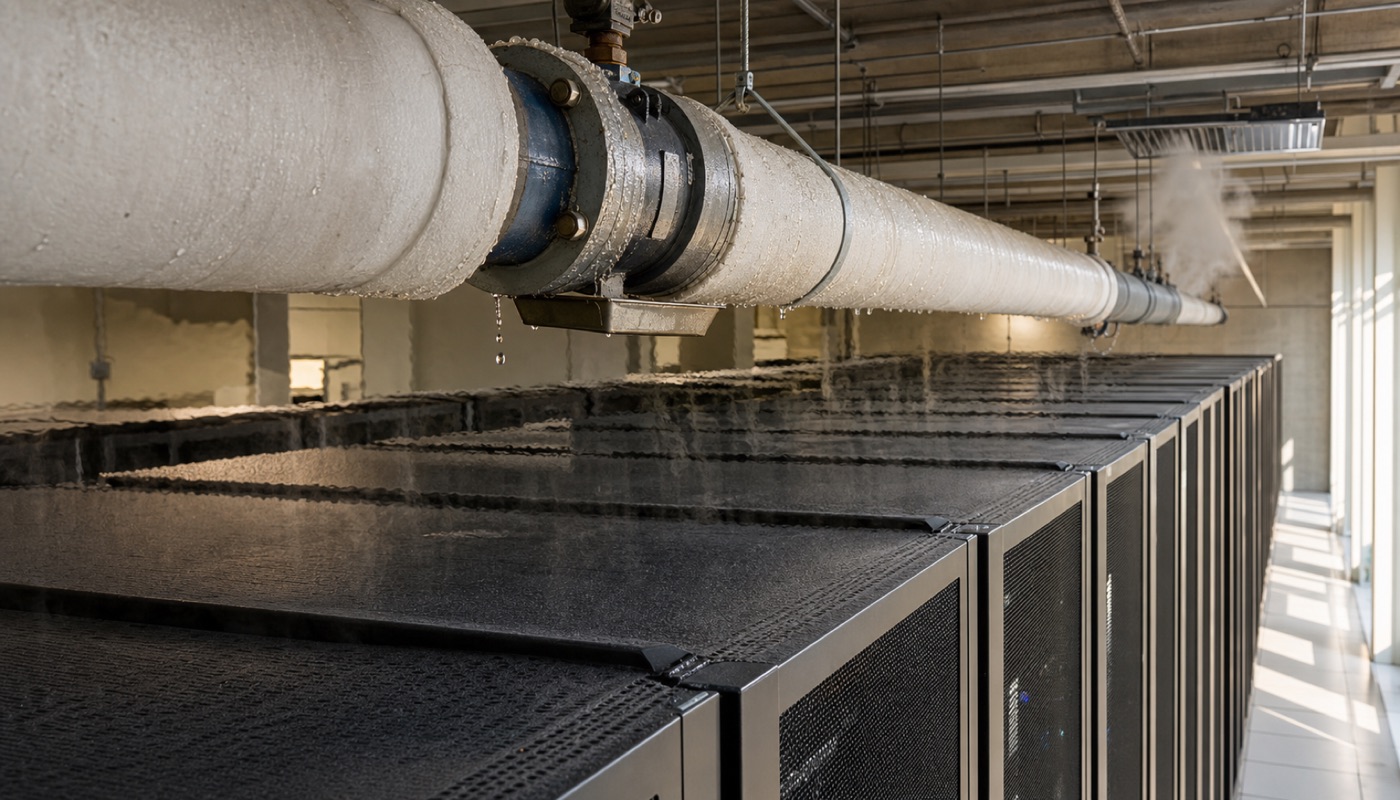
Inside one of these buildings: rows of computers, floor to ceiling.
Inside one of these buildings: rows of computers, floor to ceiling. AI-generated illustration

A data center is a building full of servers. A server is a computer with no screen and no keyboard. It sits on a shelf and does work for people far away. It runs websites, stores files, and answers AI questions.

When you ask a chatbot something, a machine in one of these buildings makes the answer and sends it to your phone.

Data centers are not new. They have been around for decades. What is new is AI. Training and running AI takes far more computing than running a website. More computing needs more electricity. More electricity makes more heat.

The article compares it to water. An ordinary data center is a bathtub filling from a faucet. An AI data center hooks the same tub up to a fire hose. It needs enormous amounts of power, nonstop, and lots of water to carry the heat away.

Companies are building them everywhere at the same time. So they all want the same three things: cheap land, big power supplies, and water for cooling. That is the land rush.

The deals can move faster than the people living nearby can find out what is coming.

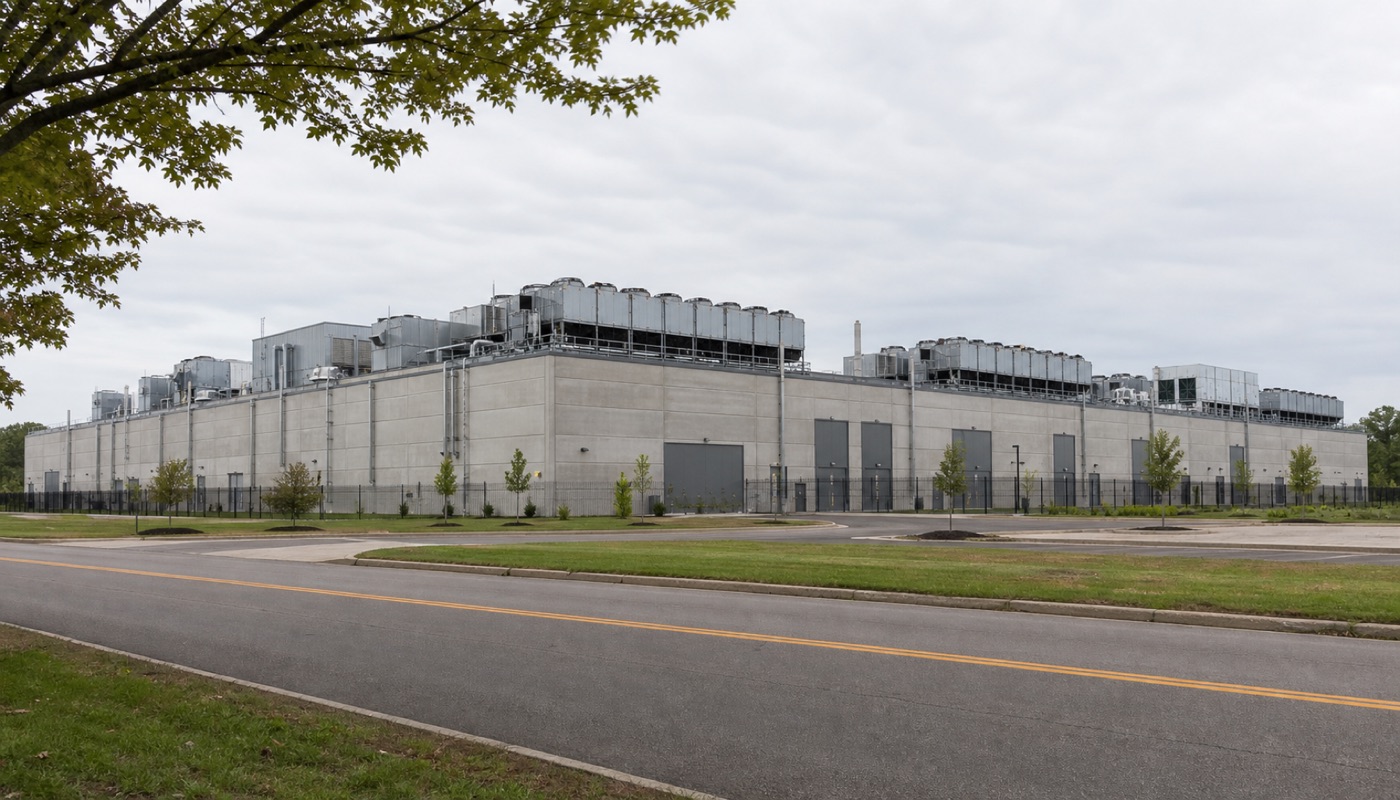
From the road, the building looks like an ordinary warehouse. Inside, a large one uses as much electricity as a small city. That need for power and water is behind everything else in this article: the electric bills, the gas plants, the secrecy, and the fights over water.


💡 What this section is doing

Below: how this reaches your house. It starts with Cassandra Lainez in New Jersey, who used less electricity and still saw her bill go up $29. Then it explains how that can happen: new power plants, substations and lines built for one giant customer can be added to everyone’s price. It names the secrecy you will read about next, the made-up company names and the officials who promise to stay quiet. And it names the two public rooms where the decisions are made: your local government, for land and water, and a hearing called a rate case, for who pays for the power lines.

↓  the article section it explains is right below
🔍 Go deeper — the one idea to get first

What your electric bill pays for. Your bill is the electricity you used, times a price. That price does not only pay for making electricity. It also pays for the power plants, the wires and the equipment that bring it to you. A power company cannot raise that price on its own. Every state has a utility commission, a group of state officials called regulators, who approve power prices. The power company asks them in a rate case, a public hearing where it shows its costs and anyone can speak. If new equipment for a data center is paid for by raising everyone’s price, your bill goes up even if the electricity you use goes down.

Part 1 · Where It Lands

How this affects you

Somebodys living room, and the site going up outside the window.
Somebody’s living room, and the site going up outside the window. AI-generated illustration
THE POINT

Cassandra Lainez used less electricity.

Her bill went up $29.

Every AI question runs in a warehouse that needs land, electricity, and water for cooling. These buildings are spreading fast. The cost of serving them can reach your home.

Cassandra Lainez lives in New Jersey. She used less electricity than before. Her bill went up by $29 anyway. “A $29 increase,” she said, “felt almost like a slap in the face.”

How can using less cost more? Picture a giant new customer that is plugged in all day. New power plants, substations and lines get built to serve it. If households are charged for them, you can turn off your lights, use less, and still pay more.

It is not only the power bill. Your town’s water and the air nearby are part of the deal too.

The way these deals are made can leave you watching from the side. A company with a made-up name buys the land, so you do not know who the real buyer is. Your own officials may have signed a promise to keep quiet. By the time you hear about the project, it can look already decided.

Many of the big decisions still happen in public rooms. Your local government decides about land and water. State utility regulators decide who pays for new power lines and plants. They decide it in a rate case, a public hearing where the power company asks permission to charge more, and anyone can speak.

Knowing where those decisions are made helps you judge what both sides tell you.

The last section of Part 1 is about what you can do. It gives you one question to ask and the meetings where you can ask it. It also names the two states that changed their power rules and the towns that voted to pause new projects.


💡 What this section is doing

Below: how data-center deals are kept secret. First, a picture: a shell company is an empty box with a harmless name printed on it, and the real buyer hides behind it. Then two real cases. In Beaver Dam, Wisconsin, a company called Balloonist LLC turned out to be Meta. In St. Charles, Missouri, a 440-acre plan arrived under the name Project Cumulus. Then the NDA, a signed promise that keeps officials from telling you who the buyer is. NBC News found NDAs in most of the more than 30 proposals it checked. Watch the Virginia number at the end: 2,389 residents against an Amazon project, 11 for it, and it was overridden anyway.

↓  the article section it explains is right below
🔍 Go deeper — the one idea to get first

Shell companies and NDAs, taken apart. A shell company exists only on paper. It has a name and can sign papers, but it has no workers and makes nothing. The usual kind is an LLC, short for limited liability company, which is set up with paperwork filed with the state and a fee, and the owner can pick almost any name. When an LLC buys land, the county’s land records list the LLC as the buyer. So a person looking up the sale in Beaver Dam sees Balloonist LLC, not Meta. An NDA, short for non-disclosure agreement, is a signed promise to keep a secret. Someone who breaks it can be taken to court. Put the two together, and neither the records nor the officials will tell you who is buying.

Part 1 · The Secrecy

Fake company names, and the NDAs that gag your officials

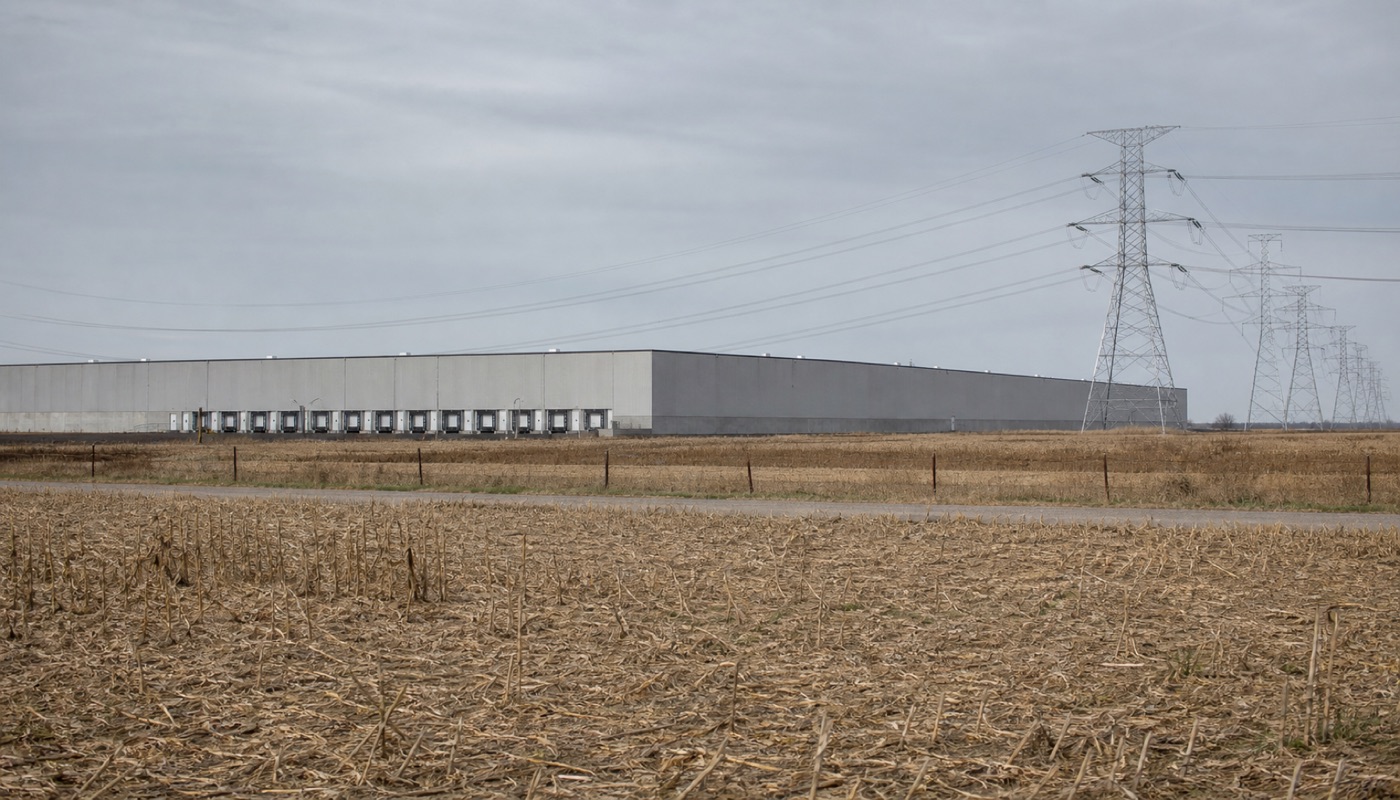
Trucks arriving at the edge of a town. Often this is the first anyone local sees of it.
Trucks arriving at the edge of a town. Often this is the first anyone local sees of it. AI-generated illustration
HOW IT ACTUALLY WORKS
  1. 1A real buyer decides to build.
  2. 2The buyer sets up a company with a name nobody recognizes — in Beaver Dam, Wisconsin, it was “Balloonist LLC.”
  3. 3That company, not the buyer, signs the land deal.
  4. 4The county’s public records show only the company name.
  5. 5Local officials sign an NDA, so they are not allowed to tell you who is behind it.
  6. 6You find out after the terms are set.
THE VOTE THAT DID NOT COUNT
One Virginia community, on the public record
Opposed the Amazon data center
2,389 residents
Wanted it
11 residents
Built anyway. “And yet we were ignored.”

Picture a shell company as an empty cardboard box with a harmless name printed on the side. The real owner stays hidden behind the box. That is one way a data-center deal can come into your town.

In Beaver Dam, Wisconsin, the company that signed the land deal was called Balloonist LLC. Behind it was Meta. Meta owns Facebook, Instagram and WhatsApp. It is one of the biggest companies in the world, and it builds AI data centers.

In St. Charles, Missouri, a plan for 440 acres showed up under the name “Project Cumulus.”

Some officials are allowed to know the real company. But first they may have to sign a non-disclosure agreement, or NDA. An NDA is a legal promise to keep a secret. It can stop them from naming the company or saying what the deal is.

NBC News looked at more than 30 of these proposals in 14 states. In most of them, local officials had signed NDAs. And they were dealing with what looked like shell companies. In Virginia, about 80% of the local governments NBC looked at had signed one.

That raises a fair question, without accusing anyone of anything: why would a government official sign a secrecy promise with a private company?

Put the steps together. A company nobody knows signs the papers. The public records show that name, not the real buyer. Officials promise to stay quiet. The land is tied up. By the time the public gets to speak, the important decisions have been made.

In one Virginia community, a public-records request showed 2,389 residents against an Amazon data center. Only 11 were for it. A public-records request is a written request asking a government office for copies of its files.

A resident told Bloomberg Television that the community was ignored. The 2,389-to-11 result was overridden anyway.

You live there. You pay the bills and breathe the air. And this way of making deals can make you the last person to hear about a decision that changes your town.


💡 What this section is doing

Below: how a data center 50 miles away can change your bill. It starts with the grid, one shared network of power plants and high-voltage lines. Then the article’s picture: one customer filling an Olympic-size pool, day and night, can make a town’s water pipes too small. Power works the same way, so a huge new customer can mean new plants, new lines and new substations. Watch the last step, where state regulators decide who pays: the company, everyone, or a split.

↓  the article section it explains is right below
🔍 Go deeper — the one idea to get first

What a substation is. Power lines carry electricity at very high voltage across long distances. A home or a business cannot use it like that. A substation is a fenced yard of equipment that steps the power down to a level customers can use. A normal neighborhood is served by substations that already exist. A customer that uses as much power as a city may need brand-new ones, plus miles of new high-voltage line to reach them. That is the construction somebody has to pay for.

Part 1 · The Grid

Why a building you’ll never see can land on your bill

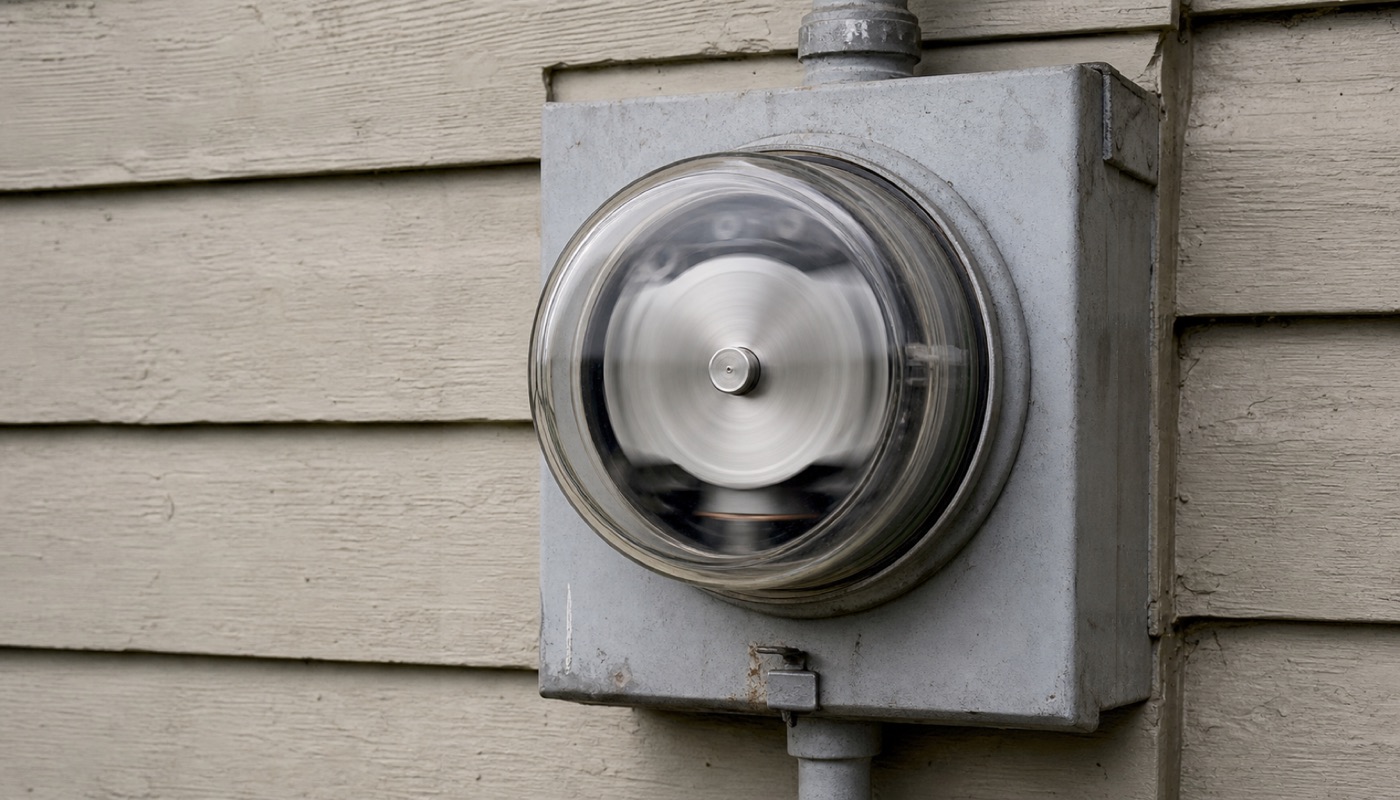
The line runs from that buildings fence to the meter on this house. That is the whole connection.
The line runs from that building’s fence to the meter on this house. That is the whole connection. AI-generated illustration
WHO CAUSED IT, WHO IS CHARGED
How a building 50 miles away reaches your meter
A data center asks to plug in
One customer, drawing as much power as a small city.
The utility builds for it
A new substation, miles of high-voltage line, sometimes a whole power plant.
The utility asks to get the cost back
A rate case — a public hearing where anyone can speak.
Regulators decide who pays
All of it to the company, all of it spread across every customer, or a mix.
Your bill
If it is spread, part of a building you will never see is on your house.

Electricity is less local than it feels. Your home and a data center 50 miles away can draw power from the same regional grid. The grid is one shared network of power plants and high-voltage lines.

Picture the grid as a town’s water pipes. Now add one customer who fills an Olympic-size pool, day and night. The old pipes may not be big enough anymore. In the same way, the power company may need new power plants, new long-distance lines, and new substations to carry the load.

A substation steps high-voltage power down to a level customers can use. Hooking up a huge new customer can mean building new substations and miles of new lines. That costs a lot.

Somebody has to pay for it. The power company asks state regulators for permission to get its money back through electric rates. The rate is the price you pay for each unit of electricity.

The regulators have three choices. They can send the bill to the data-center owner. They can spread it across all customers. Or they can split it. When the cost is spread, part of a project built for one private company can show up on your monthly bill.

That can happen even if the building is nowhere near your house, and even if you never use that company’s AI.

Sharing a grid can mean sharing the cost of making it bigger.


💡 What this section is doing

Below: how big these buildings are, using a Walmart store as the ruler. A Walmart uses about 1 megawatt. Ted Geisler, president of the power company Arizona Public Service, says a data center the same size can use 400. Watch what that means for his company: more than 50% more electricity, as much as all of Salt Lake City or Charlotte. Then CNBC compares one campus to all of San Francisco, and says data-center demand will grow 15–20% a year through 2030.

↓  the article section it explains is right below
🔍 Go deeper — the one idea to get first

The megawatt, in numbers. A watt measures how fast something uses electricity. A megawatt is one million watts. A Walmart-sized store uses about 1 megawatt, which is roughly enough for a few hundred homes. A data center that uses 400 megawatts uses 400 times that: as much as 400 of those stores, in one building. Some campuses reach thousands of megawatts. A thousand megawatts has its own name, a gigawatt. You will see gigawatts again with the diesel generators and with the campus planned in Alberta.

Part 1 · The Scale

Just how big are these? A Walmart versus a city

From above, next to the houses. From the road, at the end of the street.
From above, next to the houses. From the road, at the end of the street. AI-generated illustration
HOW BIG
Same footprint, two buildings
A Walmart
about 1 megawatt
A data center the same size
about 400 megawatts
Per Arizona Public Service president Ted Geisler. A large campus draws roughly what San Francisco does, per CNBC.

Picture two buildings that take up the same amount of ground as a Walmart.

The Walmart uses about 1 megawatt of power. That is roughly enough for a few hundred homes.

Ted Geisler is the president of Arizona Public Service, a power company called APS for short. He said a data center the same size can use 400 megawatts.

All the data centers asking for power could push APS to make about 50% more electricity. That much new electricity is enough for a whole big city. A campus is a group of these buildings on one site, and large campuses can reach hundreds or even thousands of megawatts.

CNBC made an even bigger comparison. It said one campus “running at the lower end of peak demand uses roughly the same amount of power as the population of San Francisco.” Demand from data centers is expected to grow 15–20% every year through 2030.

So, side by side: a Walmart uses about 1 megawatt. A data center the same size uses about 400 megawatts, according to Geisler at APS. A large campus uses about as much power as San Francisco, according to CNBC.

You may never go inside that building or use its AI. But no household gets a vote before a company and a power company plug a city-sized customer into the shared grid. If new plants and lines are needed, families can be charged to make room. Who pays that bill is a choice made by the people who set the rules.


💡 What this section is doing

Below: the sentence you will hear at every meeting, that a data center pays its own way. The article agrees it buys its electricity. Then it uses an apartment building to show what that leaves out: a tenant who needs a private elevator pays the same rent as everyone, and the landlord splits the elevator bill among every apartment. Watch for the two questions it ends on, because they come back at the end of Part 1: who caused the cost, and who pays it?

↓  the article section it explains is right below
🔍 Go deeper — the one idea to get first

Two different costs, with made-up numbers. One cost is the electricity the building uses every month. The other is building the equipment to get that much power to its door. Say the power company spends $100 million on a new substation and lines for one data center. The regulators can send all $100 million to the data center. They can spread it over one million households, which is $100 each. Or they can split it: $50 million to the data center and $50 for each household. In all three cases the data center pays the same monthly price for its electricity. Only the answer to who paid for the $100 million changes.

Part 1 · Who Pays

“A business pays its own way.” So why is this on your bill?

THE CLAIM AND THE RECEIPT
WHAT THEY SAYWHAT THE FILING SHOWS
“We already pay our fair share for power.”PJM’s independent monitor attributed 63% of one capacity-price rise to data centers — about $9.3 billion recovered from customers.
“A business pays its own way, like any other.”Dominion projected average Virginia residential bills more than doubling to $315 a month, primarily due to data centers.
“The turbines are temporary, so no permit is needed.”In January 2026 the EPA confirmed those turbines require construction and air permits.

A data center buys its electricity. So people say it “just pays market rates like anyone else.” That leaves out a much bigger cost: getting enough power to its door.

The article uses an apartment building to show it. A new tenant needs a private elevator. The tenant pays rent. Then the landlord splits the elevator bill among every apartment. The tenant pays the same rent as everyone else. That tells you nothing about who paid for the elevator.

A data center can force the grid to add a substation and run high-voltage wires for miles. State regulators decide where that bill goes: to the company, to all customers, or split between them. Regulators often let the power company collect at least part of it from everyone.

When that happens, the company gets the service and keeps its earnings. Your household helps pay for the new equipment, even if you never use that company’s AI.

So there are two questions, not one. Who caused the cost? And who pays it? They can be different people.

“It pays its own way, like any other business” is only true if its share covers both things: the electricity, and the equipment built to deliver it.

Paying for electricity is not the same as paying for the grid work you caused. When you hear “the data center pays its fair share,” ask which costs went to the project and which went to everyone else.


💡 What this section is doing

Below: the numbers that show the cost landing on households. PJM runs the grid for about 65 million people in 13 states and Washington, DC, and it holds a yearly auction that sets a price customers pay. That price went from $28.92 to $269.92 in one year. Watch who did the counting: Monitoring Analytics, PJM’s independent referee, said 63% of the increase came from data centers, about $9.3 billion. Then Maryland’s David Lapp asks why households should pay for some of the richest companies in the world, and the article comes back to Cassandra Lainez’s $29.

↓  the article section it explains is right below
🔍 Go deeper — the one idea to get first

What a capacity auction is. Think of the hottest afternoon of the year, when every air conditioner is running. The grid has to have enough power plants for that moment, even though on most days they are not all needed. So once a year PJM holds a capacity auction, which pays power plants to promise they will be ready at the busiest times. The price is counted per megawatt, per day, which is why it is written as a price per megawatt-day. When data centers add a lot of new demand, more plants have to stand ready, the price of that promise goes up, and every customer in the region pays it. A market monitor is the independent referee that watches the auction and reports what drove the price.

Part 1 · The Auction

How one building’s cost fans out across every household

THE NUMBER
PJM capacity price, one year apart (per megawatt-day)
Before
$28.92
After
$269.92
That is a rise of roughly 833%, in one year.
THE FAN-OUT
Where that one price lands
65 million
people on PJM’s grid, in 13 states plus Washington, DC
63%
of the increase attributed to data centers by PJM’s own independent monitor
$9.3 billion
recovered from customers

PJM runs a yearly “capacity auction.” Power plants are paid to promise that electricity will be there when demand is highest. That price is then passed on to customers.

PJM’s grid serves about 65 million people in 13 states in the mid-Atlantic and the Midwest, plus Washington, DC. In one year, its auction price climbed from $28.92 to $269.92 per megawatt-day.

Data centers create much of the new demand. But the higher price is charged across the whole region, including to households that had nothing to do with it.

Monitoring Analytics is PJM’s independent market monitor, the referee. It said 63% of that increase was caused by data centers. That came to about $9.3 billion, collected from customers.

In the next auction, in December, data-center demand made up about 40% of the total cost: $6.5 billion out of $16.4 billion.

CNBC described the same event as “more than a 500% increase,” with about 60% tied to current and expected data-center demand. The percentages differ because each one was measured and rounded a different way. They all describe a price that went up by hundreds of percent, mostly because of data centers.

David Lapp is Maryland’s People’s Counsel. By law, his job is to speak for households in power-price cases. He said auction prices “went up by 800%,” and some bills rose “over $1,000.”

Then he asked: “Why should residential customers be responsible for costs being driven by some of the biggest and wealthiest corporations in the world?”

This is how Cassandra Lainez used less power and still paid $29 more. The extra charge came from demand somewhere else on the shared grid, not from anything she did at home.

Lapp calls that way of splitting the cost “fundamentally unfair.” A wealthy company can cause the cost, while you and your neighbors help cover $9.3 billion of it. That is a policy choice, and regulators can choose differently. Using less power does not protect you when someone else’s demand is spread across your bill.


💡 What this section is doing

Below: what happened in Memphis, Tennessee. Elon Musk’s AI company, xAI, ran as many as 35 gas turbines on trailers to help power its Colossus supercomputer, and called them “temporary” so they could run without the usual air-pollution permits. The NAACP and the Southern Environmental Law Center said they would sue, and that first group was removed. Then a lawsuit targeted 27 more in Southaven, Mississippi. Watch the date January 2026, when the EPA confirmed that turbines like these do need permits.

↓  the article section it explains is right below
🔍 Go deeper — the one idea to get first

Turbines, permits and smog. A gas turbine burns natural gas to spin a generator and make electricity, like a power plant, but small enough to sit on a trailer. Burning gas puts gases into the air that, in sunlight, help make smog, the brown haze that makes air harder to breathe. An air-pollution permit is permission from the government to release that pollution, with limits on how much. One turbine adds some. Dozens running day and night add a lot. That is why the reporting says the turbines together could be the largest source of smog-forming pollution in the 11-county Memphis area.

Part 1 · The Turbines

The “temporary” gas plants going up next to real neighborhoods

Somebody chalked the tire to prove the generator was temporary. The same tire months later, weeds grown over it.
Somebody chalked the tire to prove the generator was temporary. The same tire months later, weeds grown over it. AI-generated illustration
THE COUNT
Memphis, then across the state line
35
turbines on trailers at the first site, called “temporary”
27
more in Southaven, Mississippi, now the subject of a Clean Air Act lawsuit
46
counted running without air permits, in total

When the grid cannot bring a data center enough power fast enough, the company can make its own by burning natural gas on the site. The people nearby get the exhaust and the noise, all day and all night.

That happened in Memphis, Tennessee. Reporting indicates that xAI, Elon Musk’s AI company, powered its Colossus supercomputer partly with gas turbines. It ran as many as 35 turbines on trailers. It called them “temporary,” so they could run without the usual air-pollution permits.

The NAACP, a civil-rights group, and the Southern Environmental Law Center filed a notice that they planned to sue. After that, xAI removed that first group of turbines.

A 2026 lawsuit now targets 27 more turbines, across the state line in Southaven, Mississippi. It was filed under the Clean Air Act, the main national law on air pollution.

Reporting counted 46 turbines running without permits in total. Together, they could be the largest source of smog-forming pollution in the 11-county Memphis area.

Mississippi regulators had called the machines “mobile” or “temporary.” In January 2026, the EPA confirmed that turbines like these do need construction and air permits. The EPA, the Environmental Protection Agency, is the national government office in charge of pollution rules.

Picture a whole gas power plant, cut into pieces, loaded onto trailers, and parked next to your neighborhood. Calling each piece temporary does not make the exhaust temporary when the machines run around the clock.

The company keeps the profit. The families nearby breathe the air, and they are disproportionately in a community that was given no real say. Civil-rights and environmental groups had to go to court to force the permit question.

One label, “temporary,” let dozens of turbines run beside homes without the permits other businesses must get.


💡 What this section is doing

Below: the diesel generators that sit behind every data center. Northern Virginia alone has more than 4,000 of them, and most have no pollution controls. One Amazon permit, reviewed by the columnist Ivy Main, covers 173 generators at a single site. Watch for two facts: every generator is started on a test schedule, which puts exhaust in the air even when nothing is wrong, and in a grid emergency they all start at once. Then San Antonio, where one company asked to run 32.

↓  the article section it explains is right below
🔍 Go deeper — the one idea to get first

What a backup generator is. It is an engine that burns diesel fuel to make electricity if the power goes out, so the computers never stop. Most of the time it sits there switched off. But each one has to be started now and then, to prove it still works, and every test run burns fuel. Now the numbers. Northern Virginia’s 4,000-plus generators can make over 11 gigawatts. A gigawatt is 1,000 megawatts, so that is more than 11,000 megawatts, which the article says is more than Dominion Energy’s whole fleet of natural-gas power plants. Pollution controls are equipment fitted to an engine to cut the exhaust. Most of these have none.

Part 1 · The Diesel

The diesel sitting behind every one of these buildings

A field of backup generators. A house air filter from somebody living near one, next to a new filter.
A field of backup generators. A house air filter from somebody living near one, next to a new filter. AI-generated illustration
THE SCOREBOARD
The diesel nobody puts in the press release
4,000+
diesel generators in Northern Virginia, where the buildings cluster
173
generators on one Amazon permit, at a single site
32
generators one company asked to run in San Antonio, July 2026

Gas turbines are what a company uses when the grid cannot feed it fast enough. Diesel is different, and more common. Diesel generators are the backup. They sit behind the building in case the power fails. Every data center has them.

In Northern Virginia, where these buildings are packed close together, that adds up to more than 4,000 diesel generators. Together they could produce over 11 gigawatts, more than Dominion Energy’s entire fleet of natural-gas plants. That is enough to power millions of homes, sitting idle.

Most of them are the cheapest kind, with no pollution controls at all. One Amazon permit, reviewed by the columnist Ivy Main, covers 173 generators at a single data center, burning up to ten million gallons of diesel a year.

A backup generator is supposed to sit and do nothing, and most of the time it does. But not all the time. Each one is run on a test schedule, and the exhaust from each test lands on whoever lives nearby. And in a grid emergency they do not take turns. They all start at once.

It is not only Virginia. In San Antonio this July, a company asked to run 32 diesel generators at one site. “Which would impact our air quality significantly,” said Ric Galvan, the city council member for that district.

Gas turbines get the news coverage. Diesel generators are at every one of these buildings.


💡 What this section is doing

Below: the industry’s own case first. The Data Center Coalition, which speaks for Amazon, Meta, Google and Microsoft, says its members already pay their fair share, and the article agrees the investment, jobs and taxes are real. Then it sets the filings beside that claim: the monitor’s 63%, a Louisiana power plant where a Meta data center is committed to pay for only about half, and Dominion’s forecast of $315 monthly bills in Virginia. Watch the limit it puts on its own case: there is no national number, because every deal is different.

↓  the article section it explains is right below
🔍 Go deeper — the one idea to get first

The Louisiana numbers, taken apart. A power plant for one Meta data center was proposed at $3 billion to $4 billion. Energy analyst Ari Peskoe said the data center’s 15-year agreement “only obligates them to pay for about half.” Half of $3 billion is $1.5 billion. Half of $4 billion is $2 billion. So the part that could be left for everyone else in the state is somewhere around $1.5 billion to $2 billion. That is Peskoe’s reading of the deal, and it is a possibility, not a bill that has been sent.

Part 1 · The Fair Share

The claim that data centers already pay their fair share

This is the thing somebody has to pay for: the transformers and the steel going up to feed one building.
This is the thing somebody has to pay for: the transformers and the steel going up to feed one building. AI-generated illustration
WHO ACTUALLY PAYS
WHO PAYS FOR A NEW SUBSTATIONWHAT THEY COVER
The data centerIts own equipment, and the electricity it uses.
Everyone else, in a lot of statesThe lines, the substation, and sometimes a whole power plant built to serve it — spread across household bills.
Maryland and OregonChanged the rule. Data centers are now their own customer class, so the company gets that bill instead of you.
ONE PLANT, ONE COMPANY, HALF THE BILL

A $3 to $4 billion power plant, proposed for one Meta data center in Louisiana.

The company’s 15-year contract covers about half.

The rest: “everyone else in Louisiana.”

The Data Center Coalition speaks for Amazon, Meta, Google, Microsoft and dozens of other data-center companies. It says its members “already pay their fair share for power.” It points to the money they invest, the construction jobs they bring, and the taxes they pay where they build. Those benefits are real.

The claim leaves out who paid for the grid costs. The PJM numbers showed it: 63% of one capacity-price increase, about $9.3 billion, landed on customers. The market’s own independent monitor said data centers caused it.

In Louisiana, energy analyst Ari Peskoe said a power company proposed a $3 billion to $4 billion power plant for a Meta data center. The data center’s 15-year agreement “only obligates them to pay for about half,” he said. That could leave “everyone else in Louisiana” paying for the rest.

Dominion, the power company, gave another warning. It projected average Virginia household bills “more than doubling to $315 a month… primarily due to data centers.”

There is no one national number for who pays. The terms change with each project, each power company, each state and each contract. “Households pay for all of it” goes too far as well. Companies pay real money for electricity and equipment, sometimes a lot. The fight is over the part left for everyone else.

Tyson Slocum, a consumer advocate at Public Citizen, argues the industry understates how much gets pushed onto customers. The coalition argues that the companies cover far more. Both are advocates. Neither is a neutral referee.

The split is decided deal by deal. So the useful question is not “do they pay?” It is: how much of the grid cost they caused gets spread onto households? Ask for that number at your state’s rate case, the hearing where the power company has to justify a price increase.


💡 What this section is doing

Below: a move you will see again. Kevin O’Leary, the Shark Tank investor, is promoting a $70 billion data-center campus in Alberta. In May 2026 he said the people opposing it were getting money connected to China, and called it an irrefutable fact. The Washington Post and NPR checked and found the evidence thin and unverified. Watch why a half-truth works better than a flat lie: while everyone argues about foreign money, nobody asks who pays for the substation.

↓  the article section it explains is right below

Part 1 · The Distraction

“China is behind the protests” — watch the subject get changed

This is who actually showed up to object: a room full of people who live there.
This is who actually showed up to object: a room full of people who live there. AI-generated illustration

When someone says China is behind the protests, the discussion stops being about who pays for the substation.

Kevin O’Leary is an investor from the TV show Shark Tank. He is promoting Wonder Valley, a planned data-center campus in Alberta, Canada. It is pitched as the world’s largest: 7.5 gigawatts and $70 billion.

In May 2026, he said the people opposing it had received “foreign-linked money, including interests connected to China.” He called that “an irrefutable fact.” Irrefutable means impossible to prove wrong.

The Washington Post and NPR checked. They found the evidence thin and unverified, which means nobody had shown it was true. The Alliance for a Better Utah, one of the groups O’Leary accused, challenged him to prove it.

A flat lie is easy to reject. A half-truth is more useful to someone selling something, because it sounds solid enough to steer you away. “Foreign money is behind the protests” can make neighbors who are defending their town look suspicious. Meanwhile, the substation question disappears.

Blaming a scary outsider to change the subject is used on every side of politics. When you notice it, it does not mean all news lies. It means someone is selling you something.


💡 What this section is doing

Below: a short who’s-who. Monitoring Analytics is the referee for PJM’s power market and takes no side. Public Citizen is a group that argues for customers. The Southern Environmental Law Center and the NAACP are the groups that took xAI’s Memphis turbines to court. Watch the last line: because Monitoring Analytics argues for neither side, its 63% counts for the most.

↓  the article section it explains is right below
🔍 Go deeper — the one idea to get first

Referee or advocate. An advocate is a person or group whose job is to argue for one side, the way a lawyer argues for one client. A trade group is an advocate for the companies in one industry. A consumer group is an advocate for customers. A referee, like a market monitor, has no side to win for. Advocates can be right, and they often are. But when an advocate and a referee disagree about a number, the referee’s number counts for more, because it has nothing to gain from the answer.

Part 1 · The Players

Names that keep showing up

The office where public filings happen, with its name on the sign. This is the counter you can walk up to.
The office where public filings happen, with its name on the sign. This is the counter you can walk up to. AI-generated illustration
WHO IS TALKING
WHOWHAT THEY AREWHICH WAY THEY LEAN
Monitoring AnalyticsPJM’s independent market monitorNeither side. Its 63% figure carries the most weight here.
Data Center CoalitionThe industry’s trade group — Amazon, Meta, Google, MicrosoftThe industry.
Public CitizenA consumer-advocacy groupConsumers.
SELC and the NAACPAn environmental law center and a civil-rights groupSued over the Memphis turbines.

These are the names that keep coming back, and what each one is.

Monitoring Analytics is PJM’s independent market monitor. It is the watchdog that polices PJM’s power market. It said data centers caused 63% of one capacity-price increase. It is a neutral, technical source, not an advocate.

Public Citizen is a consumer-advocacy group, which means it argues for customers. Its energy expert, Tyson Slocum, argues the industry understates what gets pushed onto customers.

The SELC and the NAACP. The Southern Environmental Law Center and the NAACP filed legal notices and lawsuits against xAI’s gas turbines near Memphis, which were running without permits.

Public Citizen argues for customers. The industry’s trade group, the organization that speaks for the companies, argues for them. Monitoring Analytics argues for neither side. That is why its 63% figure carries the most weight in this article.


💡 What this section is doing

Below: four warning signs you can spot at a public meeting, all from earlier in Part 1: a company with a made-up name, the words “it pays its own way,” the word “temporary,” and a scary outsider getting the blame. Each one comes with a single question to ask out loud, and you do not need to know anything about electricity to ask it.

↓  the article section it explains is right below

Part 1 · The Four Tests

How to tell when you’re being sold

THE FOUR TELLS
WHAT YOU HEARWHAT TO ASK
A company nobody has heard of, under a made-up project name, turns up on the agendaWho is the real company? Did anyone sign an NDA? Ask it on the record.
“It pays its own way.”Which costs went to the company, and which went to every ratepayer?
“Temporary.”What permit does it hold? A machine running around the clock is not temporary.
A scary outsider gets blamedWhat question was on the table before the accusation came up?

All four of these came up earlier in the article.

A company nobody has heard of, using a made-up project name, shows up on a local meeting agenda. Ask, on the record, who the real company is. Ask whether anyone signed an NDA.

“On the record” means said out loud at a public meeting, so it goes into the official notes.

Someone says it pays its own way. Ask which costs went to the company and which went to every customer.

“Temporary.” A machine that runs around the clock is not temporary. Ask what permit it has.

A scary outsider gets blamed. Ask what question people were discussing before the accusation came up.

Every number in this article has a link at the bottom. Open a link, read past the quoted line, and decide for yourself.


💡 What this section is doing

Below: the three places where you have a say. Zoning, where your local board can change or stop a deal before it is signed, with the warning of Saline Township, Michigan, which voted no and was sued. The rate case, where you can ask one question about who pays. And the people around you. Then the wins: Maryland and Oregon made data centers their own customer class, and the Tennessee Valley Authority will charge its data centers about 10% more from October 1, plus roughly $1.5 million per megawatt up front.

↓  the article section it explains is right below
🔍 Go deeper — the one idea to get first

What a customer class is, with made-up numbers. Power companies sort their customers into groups, such as homes, small businesses and big factories, and each group can be given its own price. Say a grid upgrade for data centers costs $100 million. If data centers are in the same big group as everyone else, everyone’s price goes up a little to cover it. If data centers are their own group, the $100 million goes into the data centers’ price only, and the price for homes does not move. That is the fix Maryland and Oregon made.

Part 1 · What You Can Do

What you can do, and where it already worked

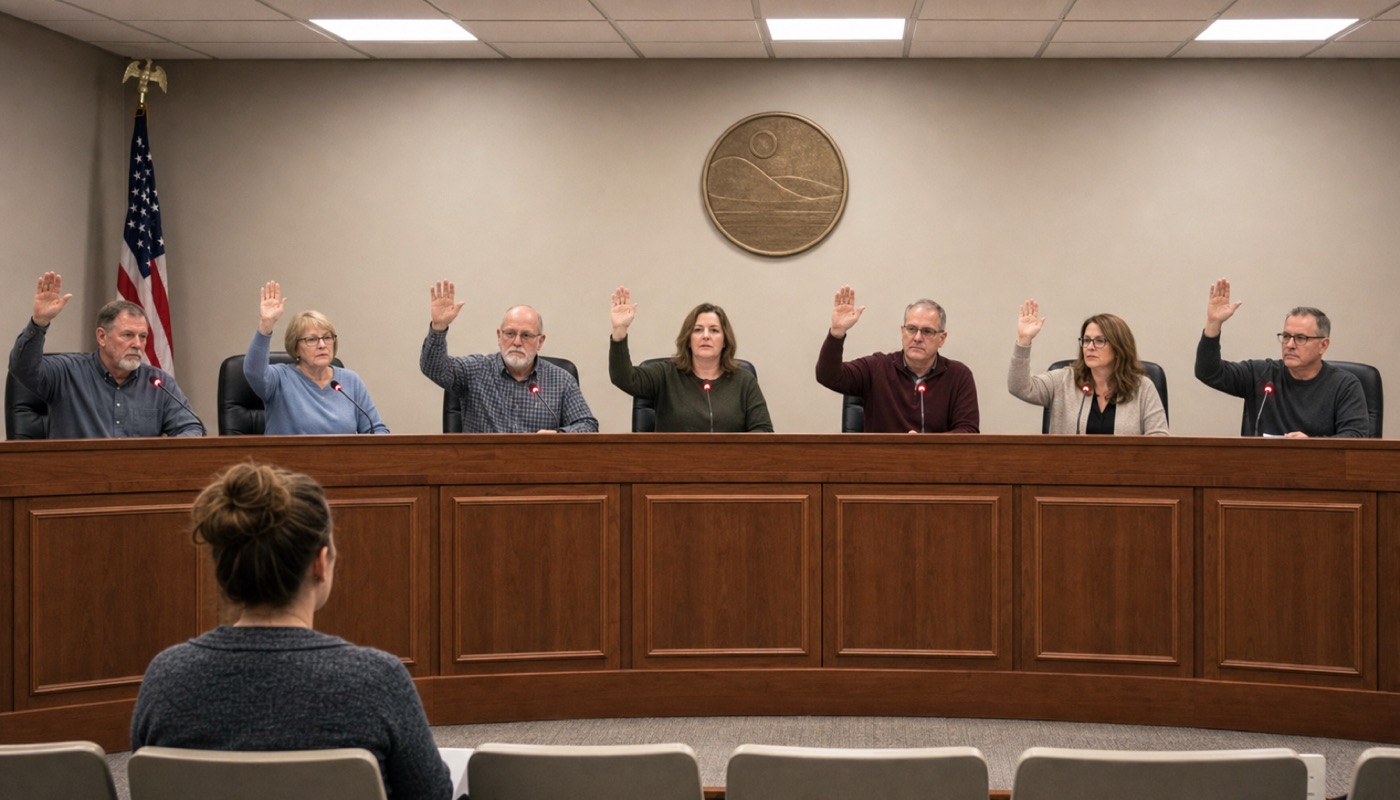
A resident speaking at the microphone. The council voting nine to nothing.
A resident speaking at the microphone. The council voting nine to nothing. AI-generated illustration
THE THREE ROOMS
THE ROOMWHAT IT DECIDESWHAT TO SAY THERE
Zoning or planning boardLand and water permission — the earliest chance to change an unsigned dealBring the numbers. Put them on the public record.
The rate case, at your state utility commissionWho pays for the grid upgradesWill data-center grid work be charged to a separate customer class, or spread across all ratepayers?
Your own peopleWhat your neighbors believeTriggering a cost and paying it are two different things.

Data centers are decided in rooms you can walk into. There are three.

Zoning. Zoning rules say what can be built where. Your local planning or zoning board is the earliest chance to change or stop a deal before it is signed. Bring numbers and put them on the public record. It is not a sure thing. Saline Township, Michigan, voted 4–1 against a $16 billion project. It was sued, and was “advised to settle.” To settle means to end a lawsuit by agreeing to terms instead of fighting it out in court.

The rate case. Every state has a utility commission that approves higher power prices. Nearly all of them take comments from the public, and you do not need a lawyer. Ask one question: will the grid upgrades for data centers be charged to a separate customer class, or spread across everyone who pays for power?

Your own people. When someone says the data center pays its own way, explain the difference between causing a cost and paying it. Share this free article. Hearings on power, water and air are happening now.

This has already worked. Maryland and Oregon made data centers a separate customer class, so the company gets the bill for the grid work it caused. More Perfect Union reported it, and Maryland People’s Counsel David Lapp confirmed it on the record.

Since then the fix has gotten sharper. It is called a large-load tariff. A tariff is a power company’s official price list. The plain version of this one is a minimum bill: if you ask the grid to hold a huge amount of power for you, you pay for that reservation whether you use it or not. It works like a deposit on a banquet hall. Book the room and you pay for it, even if half your guests never come. It stops other customers from paying for substations and power plants built for a project that shrinks or never opens.

The Tennessee Valley Authority, a power supplier owned by the national government, approved one in August 2026. From October 1, its data centers pay a separate rate: about 10% more on average, phased in over three years, plus roughly $1.5 million per megawatt committed up front. The TVA says the reason is to keep the cost of serving those buildings off households and existing businesses.


💡 What this section is doing

Below: the scoreboard. The Bipartisan Policy Center counts 54 towns that actually voted to pause new data centers, and says almost none are permanent bans. Other counts pass 200 because they include every active effort. Watch how the article handles the gap: both numbers can be defended, because they count different things. Then two results: people in St. Charles, Missouri pushed Project Cumulus to withdraw, and lawmakers filed over 300 bills in 41 states in 2026.

↓  the article section it explains is right below
🔍 Go deeper — the one idea to get first

A pause is not a ban. Lawmakers call a pause a moratorium. A ban says “never.” A moratorium says “not until we have written rules.” A town that passes one is not saying no to data centers forever. It is saying no new ones until it knows what it is agreeing to. So a count of passed pauses and a count of every active effort to pause measure two different things, and both can be right.

Part 1 · The Wins

Where towns have already pushed back

THE SCOREBOARD
What changed, and where
54
towns voted to pause new data centers — almost all are freezes, not bans
300+
bills introduced in 41 states in 2026, almost double the year before
1
town, St. Charles, Missouri, got a project withdrawn outright

Towns have been voting to pause new projects until they know what they are agreeing to.

The Bipartisan Policy Center, a policy research group, counts 54 of those pauses that actually passed. It notes that almost none are permanent bans. They are freezes that buy time to write rules.

Other counts go past 200, because they include every active local effort, not only the ones that passed. Both numbers can be defended. They count different things.

In St. Charles, Missouri, residents pushed Project Cumulus to withdraw. That is the 440-acre plan that first appeared under a made-up name.

And in 2026, lawmakers introduced over 300 bills in 41 states about data-center costs, taxes, water, and transparency, meaning how open the deals have to be. That is almost double the year before.


💡 What this section is doing

Below: four things people say, each with a verdict. That a data center pays its own way: half-true. That data centers raised household power prices: true, from PJM’s own monitor. That temporary turbines need no permit: false, settled by the EPA in January 2026. That China funds the protests: unsupported. Watch the difference between false and unsupported. False means shown to be wrong. Unsupported means nobody has shown it is true.

↓  the article section it explains is right below

Part 1 · The Claims

The common claims, answered

“A data center pays its own way, like any business.” Half-true. It does buy its electricity and bring in tax money. But getting enough power to its door can take new plants, lines and substations, and regulators often spread that cost over every household.

“Data centers raised electricity prices for households.” True. PJM’s independent market monitor said data centers caused 63% of a capacity-auction price increase of hundreds of percent. That was about $9.3 billion collected from customers.

“Temporary gas turbines need no permits.” False. In January 2026, the EPA confirmed that construction and air permits are required. xAI ran up to 35 near Memphis as “temporary,” and a 2026 lawsuit targets 27 more in Southaven, Mississippi.

“China secretly funds the protests.” Unsupported. Kevin O’Leary called it beyond dispute in May 2026. Reporters at two national news outlets checked and could not verify it.


💡 What this section is doing

Below: all of Part 1 in a few short paragraphs, in the order it happens. The buildings, the power they need, the equipment the power company builds, and the rules that spread the cost across everybody’s bill. Then the secrecy, and the change of subject. Then the fixes: Maryland and Oregon’s separate customer class, and the fifty-four towns that paused. It ends with one question to take to any meeting: who caused this cost, and who is being charged for it?

↓  the article section it explains is right below

Part 1 · The Recap

What you know now

Here is the whole thing, in order.

Companies are building computer warehouses as fast as they can. Each one needs a huge amount of electricity. One campus can use as much power as a good-sized city.

To feed them, the power company builds new lines, new substations, and sometimes a whole new power plant. That costs billions of dollars.

In a lot of states, the rules let the power company spread that cost across everybody’s bill. That is how a building you will never walk into ends up on the bill for your house.

Most of the deal is done before you hear about it. The land is bought under a company name nobody recognizes. Your own officials sign agreements that stop them from saying who is really behind it. By the time it is public, the terms are already written.

When people object, the subject gets changed. The protests get blamed on foreign money, and nobody has produced evidence that this is true.

None of that makes these projects a scam. They bring real investment and real tax money, and every deal has different terms. Some places have already changed the rules. Maryland and Oregon made data centers their own customer class, so the company gets its own bill instead of yours. Fifty-four towns voted to pause new projects until somebody explained the deal. One town got a project pulled completely.

Those decisions are made in public meetings that you can attend.

You get one question. It works at any meeting, and you do not need to know anything about electricity to ask it:

Who caused this cost, and who is being charged for it?

Ask it at your utility commission, your county board, or your planning commission. Bring the numbers from this article with you and say them out loud, so they go on the public record.

THE ONE QUESTION

Who caused this cost,

and who is being charged for it?

Ask it at your utility commission · your county board · your planning commission


💡 What this section is doing

Part 1 ends here, and this is a good place to stop. Below is what Part 2 covers: what the word “jobs” means in these deals, the $1.9 billion Virginia paid, what Texas found when it checked the job promises, and the states taking the tax breaks back. Part 2 starts right after, on this same page, with its own recording.

↓  the article section it explains is right below

Part 1 · Continue

Continue to Part 2

END OF PART 1

That is Part 1. It covered the buildings, the secrecy, and your power bill. You can stop here.

Part 2 covers the tax break: the four different things “jobs” means when a data center is pitched to your town, the $1.9 billion Virginia paid after being told a million and a half a year, what Texas found when it finally audited the job promises, and the states taking the tax breaks back.

Continue to Part 2

💡 What this section is doing

Below: where every number came from, starting with the PJM prices and the xAI turbine counts. The article labels each kind of source. A projection is a forecast. An advocacy figure comes from a group arguing one side. An industry statement comes from the companies. A personal account is one person’s experience. An unproven accusation is a charge nobody has backed up. Then comes the full list of links.

↓  the article section it explains is right below

Part 1 · The Receipts

Don’t take our word for it

Every number in this article has a source listed below. When accounts disagree, each claim stays attached to whoever made it. Projections, advocacy figures, industry statements, personal accounts, and unproven accusations are all labeled. Some figures can change, so check their dates.

You do not have to trust anyone here, including us. Open a link, read past the quoted line, and make your own call.

Sources for Part 1 — every number, with its link
  • Monitoring Analytics is PJM’s independent market monitor, the watchdog policing PJM’s power market. It attributed 63% of one capacity-price increase to data centers. It is a neutral technical anchor, not an advocate.
  • Public Citizen is a consumer-advocacy group. Its energy expert, Tyson Slocum, argues the industry understates what gets shifted onto consumers. He argues for consumers.
  • SELC and the NAACP: The Southern Environmental Law Center and the NAACP filed legal notices and lawsuits challenging xAI’s unpermitted gas turbines near Memphis.
  • PJM’s Monitoring Analytics — independent monitor, neutral anchor: data centers 63% (~$9.3B).
  • PJM’s Monitoring Analytics, 5 Jan 2026 — analysis of the December 2025 auction (2027/28): data centers ~40% ($6.5B of $16.4B).
  • ABC15 Arizona — APS has 19 gigawatts of data-center requests it “can’t serve today”; energy consultant Amanda Ormond on utilities building “50% more power.”
  • ElectricityRates — 2025/2026: ~833% year-over-year; $28.92 → $269.92/MW-day. The next auction (2026/2027) cleared at $329.17/MW-day.
  • IEEFA — PJM prices.
  • Utility Dive — PJM auction.
  • CNBC — “more than 500%,” ~60%; San Francisco-scale campus; demand +15–20% yearly through 2030.
  • Maryland Matters — David Lapp, Maryland People’s Counsel and statutory ratepayer advocate: prices up roughly 800%; some bills over $1,000; asked why households should cover wealthy corporations’ costs; calls the allocation unfair.
  • Consumer Reports — Ted Geisler, APS president, via 12 News: Walmart-size ~1 MW; data center ~400 MW. Cassandra Lainez, via More Perfect Union: usage down, bill +$29; “$29 increase… slap in the face.”
  • Virginia Mercury — Ivy Main, COMMENTARY column, 14 Jan 2026: Northern Virginia's 4,000-plus diesel generators, 11+ GW; Tier II units with no pollution controls; an Amazon permit covering 173 generators and up to 10 million gallons of diesel a year at one site.
  • KSAT San Antonio — 9-10 Jul 2026: Vantage Data Centers seeking 32 on-site diesel generators at Westover Hills; Council Member Ric Galvan quoted.
  • NBC News — 30+ proposals, 14 states; most used NDAs and shell entities; ~80% of examined Virginia governments; Project Cumulus, St. Charles.
  • Wisconsin Watch — Balloonist LLC = Meta; Beaver Dam.
  • Bloomberg TV — resident records request: 2,389 opposed, 11 supported Amazon.
  • Data Center Coalition — industry advocate: members say they cover their proper share.
  • More Perfect Union — Ari Peskoe: Louisiana utility’s $3–4B Meta plant; 15-year deal “only obligates them to pay for about half.” Dominion projection: Virginia bills “more than doubling to $315/mo… primarily due to data centers.” Public Citizen’s Tyson Slocum, consumer advocate: “fair share” means “corporate public relations.” Attributed accounts; check original filings.
  • MultiState — 30+ states, 300+ bills, 2026.
  • SELC — xAI Colossus, Memphis: up to 35 “temporary” turbines; first array removed after NAACP/SELC notice.
  • Mississippi Today — 46 total, no permits; recent contested count.
  • Earthjustice — 2026 Clean Air Act suit: 27 Southaven turbines.
  • Memphis Flyer — EPA confirmed in January 2026: temporary turbines require permits.
  • National Observer — Wonder Valley, Alberta: $70B, ~7.5 GW, world’s-largest pitch; clean geothermal replaced by gas; review waived April 2026.
  • Global News — Sturgeon Lake Cree Nation: court, “zero consultation”; O’Leary venture Miami-based.
  • Washington Post — O’Leary, May 2026: “foreign-linked money… connected to China,” which he called irrefutable; thin, unverified evidence.
  • NPR, via KPBS — Alliance for a Better Utah: ~$200,000 yearly, matching its prior decade; accusation attributed, unproven.
  • Maryland law — data-center “customer class” isolating costs.
  • Oregon law — large-load class isolating costs.
  • Bipartisan Policy Center — 54 local pauses actually enacted; almost all are temporary freezes, not bans.
  • Governing — more than 200 active local pauses “according to some counts,” credited to Interconnected Capital, 20 Aug 2026.
  • Chattanooga Times Free Press — TVA data-center rate from 1 Oct 2026, ~10% average increase over three years.
  • Center on Budget and Policy Priorities — 300+ bills in 41 states in 2026, almost double 2025.
  • Data Center Dynamics — St. Charles forced Project Cumulus’s withdrawal.
  • Fortune — Saline Township: 4-to-1 against $16B; sued; counseled toward settlement.
  • Washington Post — Congress shelved SOPA/PIPA after protests in 2 days, 2012.
  • Undastandable Plain English for the rest of us — undastandable.com

Part 2: What Does a Data Center Actually Give Your Town?

A data center is a warehouse full of computers. To get one, your state stops collecting sales tax on everything inside it for a decade or more — and what it is promised in return is jobs.

🎧 Part 2 — teach me from scratch
0:00 / --:--
💡 What this section is doing

Below, Part 2 lays out what it covers, in order. What the word “jobs” really means when a data center is pitched to a town. Who pays, starting with Virginia, which was told a million and a half dollars a year and paid $1.9 billion. Who profits. Who wrote the rules, including a five-job minimum. What Texas found when it finally checked. And what already worked. Watch the first line after the list: nobody voted for a five-job minimum, and it is in the law anyway.

↓  the article section it explains is right below
🔍 Go deeper — the one idea to get first

The trade at the center of Part 2. A state wants a data center built inside its borders. The company wants to pay less. So the state offers a trade. It stops charging one of its taxes on the building, and in return the company promises jobs. A trade like that is fair only if what the town gets back is worth what the state gives up. The rest of Part 2 puts numbers on both sides of the trade.

Part 2 · Start Here

What’s in Part 2?

Part 2 covers, in order:

The four kinds of “jobs” — and which one you are actually voting on.
Who pays — Virginia was told a million and a half dollars a year. It paid $1.9 billion.
Who profits — and what the tax break actually buys.
Who decided — including the five years before anybody checks.
What Texas found when it finally looked, in the words of the man who counts the state’s money.
What already worked — and the one room where you have a say.

Read this first: nobody voted for a rule that only five jobs are needed. It is in the law anyway. Every figure in Part 2 links to the page it came from.


💡 What this section is doing

Below: the deal itself. A data center is where your websites, apps and AI answers are made, and every one has to be built somewhere. To get one, a state usually stops charging sales tax on everything inside it, the servers, the cooling and the generators, for ten years or more. Watch the detail people miss: those machines are replaced every few years, and every new batch is tax-free too. In return, the town is promised jobs, and the money the state does not collect has to come from somewhere else.

↓  the article section it explains is right below
🔍 Go deeper — the one idea to get first

Sales tax, with made-up numbers. Sales tax is the extra few cents on each dollar you pay at a store, which the store sends to the state. Say the sales tax is 6 cents on the dollar. A family buying a $1,000 fridge pays $60 of tax. A data center that fills its building with $500 million of servers and cooling equipment would owe $30 million. With the tax break, it owes nothing. When the servers are replaced a few years later, the next $500 million is tax-free too. That is why the tax break keeps paying out for as long as the building stands.

Part 2 · The Trade

What the deal actually is

Inside one of these buildings: cooling pipes running over rows of computers. This is the thing your state stops charging sales tax on.
Inside one of these buildings: cooling pipes running over rows of computers. This is the thing your state stops charging sales tax on. AI-generated illustration
WHAT NORMALLY HAPPENS / WHAT HAPPENED HERE
Sales tax on the equipment inside
If it were any other business
  • Buy servers, cooling plant and generators → the state charges sales tax, the same as it charges you.
  • Replace that equipment in a few years → it is charged again.
The data-center deal
  • No sales tax on any of it, for a decade or more.
  • The machines get replaced every few years — so the tax break keeps paying out for as long as the building stands.
This is the giveaway. Not a cheque written to a company — a tax that simply stops being collected.

The building is a warehouse full of computers. It is where the websites you visit, the apps on your phone and the AI answers you ask for are actually made. Companies are building them everywhere at once, and each one has to go up somewhere.

To get one, your state usually gives up the sales tax on everything inside the building — the servers, the cooling, the generators — for ten years or more. That is where nearly all the money is.

Those machines are pulled out and replaced every few years. Each time, the new ones are tax-free too. So the tax break keeps paying out for as long as the building stands.

In return, your town is promised jobs.

Money the state does not collect still has to come from somewhere: another tax, or a service that does not get paid for. Your county makes up the difference.


💡 What this section is doing

Below: the word “jobs,” and the four different things it means in these pitches. Construction jobs are real, and they end when the building is done. Vendor jobs belong to other companies. Multiplier jobs are not people at all, but a model’s guess. Facility staff are the people who work in the building for the next twenty years, and they are the smallest group. Watch the question at the end: ask which of the four they mean, and ask for four separate numbers.

↓  the article section it explains is right below
🔍 Go deeper — the one idea to get first

What a multiplier job is. Economists use computer models, which are sets of formulas, to guess the ripple effects of a new building. The idea is that the building’s workers and suppliers spend money in the area, and that spending creates work somewhere else, at a supplier or a restaurant. The model turns that guess into a number of jobs. Nobody counts those people, and nobody has to show they exist. So a jobs promise that includes multiplier jobs can be much bigger than the number of people the building will ever employ.

Part 2 · The Promise

What were you actually promised?

The building they showed the town. The staff parking lot on a working day.
The building they showed the town. The staff parking lot on a working day. AI-generated illustration
WHICH ONE ARE YOU VOTING ON
WHAT IT IS CALLEDWHAT IT ACTUALLY IS
Construction jobsReal, and they end when the building does. Many crews were never local — specialty electrical and mechanical crews travel from site to site.
Vendor jobsWorkers who may be on site every day servicing machines. None of them are on the data center’s payroll.
Multiplier jobsNot people. A model’s guess at work created somewhere else. Nobody has to show that those jobs exist.
Facility staffThe permanent ones. This is the only number the tax break has to justify.

The company tells your town how many jobs it will bring. It does not say what kind. The word “jobs” is being used for four different things, and only one of them is a permanent job in your town.

Construction jobs are real, and they end. The crews leave when the building is finished. Many were never local: specialist electrical and mechanical crews travel from site to site.

Vendor jobs belong to somebody else’s company. A vendor is a company that sells or services equipment. Its workers may be on site every day fixing machines, and none of them are on the data center’s payroll.

Multiplier jobs are not people. They are a model’s guess at work created somewhere else — at a supplier, at a restaurant. Nobody has to show that those jobs exist.

Facility staff are the technicians and operators who actually work in that building for the next twenty years.

Only that last group has to justify ten years of forgiven taxes. It is also the smallest of the four.

Ask which of the four they mean. If they cannot give you the four numbers separately, they do not have them.


💡 What this section is doing

Below: what the tax break really costs, and who covers it. The answer is you, but not on a bill you can see. Virginia is the clearest case. When it passed the tax break in 2008, its own tax department guessed it would cost about a million and a half dollars a year. Last year it cost $1.9 billion. Watch the comparison the article makes: roughly eight hundred times what the public was told, after adjusting for inflation. Then the wider picture: ten states each losing more than $100 million a year, and Texas and Virginia over a billion each.

↓  the article section it explains is right below
🔍 Go deeper — the one idea to get first

A million against a billion. Write both numbers out. A million and a half is $1,500,000. $1.9 billion is $1,900,000,000. The second is more than a thousand times the first. The article says roughly eight hundred times because it adjusts for inflation. Inflation means prices rise over time, so a dollar in 2008 bought more than a dollar buys today. To compare fairly, the 2008 guess is first turned into today’s dollars. Even then, the real bill came in hundreds of times larger than the guess.

Part 2 · Who Pays

Who pays for it?

TOLD, THEN PAID

Virginia was told in 2008: $1.5 million a year.

Last year it paid: $1.9 billion.

Roughly eight hundred times what the public was told.

ONE THING LEADS TO THE NEXT
Where the uncollected money actually goes
The state does not collect the tax
Virginia: $1.9 billion last year, against the $1.5 million a year it was told in 2008.
That money does not disappear
The budget still has to balance.
It comes from somewhere else
Another tax, or a service that does not get funded.
Which is you
Ten states are each losing more than $100 million a year this way. In Texas and Virginia it is over a billion, each.

You pay for it. It just does not show up on a bill you can argue with.

Virginia shows what this tax break becomes. When the state wrote it into law in 2008, its own tax department estimated it would cost about a million and a half dollars a year. Last year it cost $1.9 billion. That is roughly eight hundred times what the public was told, after adjusting for inflation.

Ten states are each losing more than $100 million a year this way. In Texas and Virginia, it is over a billion dollars a year, each.


💡 What this section is doing

Below: a study by two economists, Dany Bahar and Greg Wright. They compared about 1,500 data centers that were built with 52 that were announced and then canceled. Watch their two findings. First, these buildings go where there is power, land and fiber, not where the tax breaks are. Second, the tax break is about 2% of the building cost at the giant sites and 62% at the small ones. Last, what a county actually gets: roughly a hundred to two hundred jobs over ten years, the same wages, and house prices a few percent higher.

↓  the article section it explains is right below
🔍 Go deeper — the one idea to get first

2% and 62%, in dollars. Picture every $100 a company spends to build a data center. At the giant sites, the tax break is worth about $2 of that $100. At the small sites, it is worth about $62. So at the giant sites, the public’s money barely changes what the company pays. At the small ones, the public pays for most of the building. And the small ones are the sites with the fewest workers.

Part 2 · Who Profits

Who profits?

A small site beside a funded campus. The tax break barely moves the big one and pays for most of the little one.
A small site beside a funded campus. The tax break barely moves the big one and pays for most of the little one. AI-generated illustration
THE NUMBER
The tax break as a share of what it costs to build
Giant projects
2%
Small projects
62%
Where the projects are biggest and the jobs most numerous, the public money is a small fraction of what the company is spending. Bahar and Wright, matching about 1,500 built data centers against 52 announced and canceled.
THE NEUTRAL COUNT
What a county actually gets, per Bahar and Wright
100–200
jobs over ten years, for a county landing its first big data center
0
movement in wages
a few %
rise in house prices

The companies profit. And the tax break makes the least difference to them where the projects are biggest.

Dany Bahar and Greg Wright are economists, people who study how money and jobs move. They took about 1,500 data centers that were built and matched them against 52 that were announced and then canceled. Then they tracked jobs in those counties through 2024.

Their first finding: where these buildings go is decided by power, land and fiber. Fiber means fiber-optic cable, the glass lines that carry internet traffic at high speed. Tax rules do not decide it.

Then they measured the tax break against the building cost. Where the giant data centers are, the tax break is about 2% of the construction cost. Where the small ones are, it is 62%.

Put those together. In the biggest projects, which have the most jobs, public money is a small part of what the company spends. In the smallest ones, which have the fewest staff, public money pays for most of the construction.

Bahar and Wright also counted the jobs. A county that gets its first big data center gains roughly a hundred to two hundred jobs over ten years. Wages do not go up. House prices go up a few percent.


💡 What this section is doing

Below: who wrote these rules. State lawmakers did. In Missouri, Delaware and Maryland, the law asks for just five jobs in exchange for never charging sales tax on hundreds of millions of dollars of equipment. In at least fourteen states, no cost figure is published at all. Watch the Texas numbers: 138 projects got the tax break before the state checked a single one, and 59 more were approved while the first checks were still running.

↓  the article section it explains is right below
🔍 Go deeper — the one idea to get first

The five-year gap, step by step. Texas hands over the tax break first and checks the job promise five years later. Walk through it. In year one, the building opens and stops paying sales tax. In years two, three and four, there is still no sales tax and still no check. In year five, the state looks at whether the jobs are there. By then the company has collected the tax break for half a decade.

Part 2 · Who Decided

Who decided this without asking you?

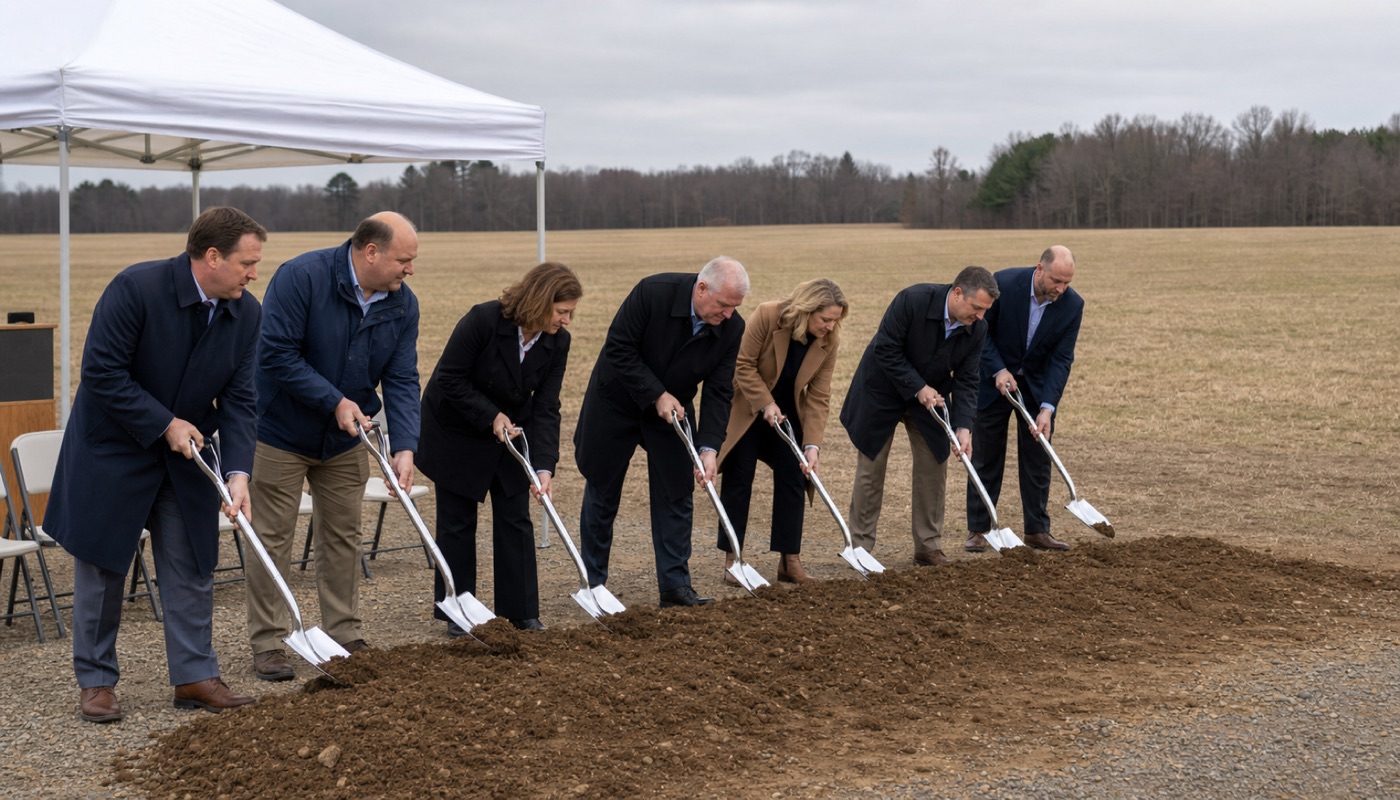
Gold shovels in an empty field. By the time this happens, the terms are already law.
Gold shovels in an empty field. By the time this happens, the terms are already law. AI-generated illustration
THE SCOREBOARD
What is actually written in the statutes
5
jobs is the legal minimum in Missouri, Delaware and Maryland — the staff of a small dentist’s office
14
states where the public cannot find out what the program costs at all. Not a small figure. No figure.
138
Texas projects given the tax break before the state checked a single one

State legislatures wrote these rules. A legislature is the group of lawmakers each state elects. A law it passes is called a statute.

In Missouri, Delaware and Maryland, the law asks for five jobs. Five is about the staff of a small dentist’s office. In exchange, the state never charges sales tax on hundreds of millions of dollars of equipment. Nobody campaigned on that number. It is in the statute.

In at least fourteen states, the public cannot find out what the program costs at all. Those states publish no figure for it.

Texas gave this tax break to 138 projects before it checked a single one. Then it approved 59 more while the first audits were still running. An audit is a check of whether someone did what they promised, using their own records.

The state hands the money over and looks at the promise five years later. So a company can collect for half a decade before anyone asks whether it did what it said.

None of that was hidden. It was written down in public. The meetings where it was decided were open to anyone who showed up.


💡 What this section is doing

Below: the day a state finally checked. In July, the Texas Senate’s finance committee looked at the first audits. Twenty projects were due. Six passed, and six failed outright. Watch who explains what that means: Brad Reynolds, the chief revenue estimator for the Texas Comptroller, the office that counts the state’s money. Then the industry’s trade group claims more than 103,000 jobs, a state senator named Donna Campbell asks why the companies cannot find 40, and nobody answers.

↓  the article section it explains is right below
🔍 Go deeper — the one idea to get first

Why Reynolds says the multiplier jobs cannot come true. It starts with a tight labor market, which means there are more jobs than people looking for work. In a market like that, almost everyone who can do construction work already has a construction job. So when a site getting the tax break hires a worker, that worker has usually just left another construction job. One job was filled, and another was left empty. The work moved from one place to another. It was not added.

Part 2 · The Audit

What happened when Texas finally looked?

IN THEIR OWN WORDS
“To be unable to justify employment of even 20 people on a permanent basis at one of these things tells you how little employment is really stemming from this.”Brad Reynolds — chief revenue estimator, Texas Comptroller
“If you’re telling me there’s hundreds of thousands of jobs that are created, why are they having problems getting 40?”Sen. Donna Campbell
THE FIVE-YEAR GAP
  1. 1A company promises jobs.
  2. 2It gets the tax break immediately.
  3. 3Five years pass.
  4. 4Only then does the state check whether the jobs showed up.
  5. 5Of the first twenty that came due: 6 passed · 6 failed outright.
THE SAME WORD, THREE NUMBERS
The same Texas jobs, counted three ways
Trade group,
with multiplier
428,000
Trade group,
direct
103,000
What six audited
buildings could not keep
40
The first two are the industry’s own study, cited minutes after the audits were read out. The third is the standard six projects failed — they could not show even twenty or forty permanent jobs, depending on the size of the building.

In July, the Texas Senate’s finance committee sat down with the first audits. Twenty projects had come due. Six passed. Six failed outright. They had not kept even twenty or forty permanent jobs, depending on the size of the building.

Brad Reynolds told the senators what that meant. He is the chief revenue estimator for the Texas Comptroller. The Comptroller’s office collects and counts the state’s money, and a revenue estimator predicts how much will come in. That makes Reynolds the man whose job is counting the state’s money.

He said that failing to justify even 20 permanent jobs at one of these buildings shows how little employment really comes from them.

Minutes later, the industry’s trade group cited a study. It claimed data centers support more than 103,000 jobs in Texas, or 428,000 once you let them count jobs at other companies.

Donna Campbell, a state senator, asked why data centers were having problems getting 40 jobs if hundreds of thousands were created.

Reynolds spoke to the bigger number directly. In a tight labor market, he said, a worker hired at a site getting the tax break has usually just left another construction job. So the work moved instead of being added. His exact words:

“Those multiplier effects that these models advertise cannot come true. They just simply cannot come true.”


💡 What this section is doing

Below: the question that decides whether a tax break buys anything: would the company have built here without it? Brad Reynolds of the Texas Comptroller was asked exactly that, and his answer is quoted in his own words. Watch the two prices after it. One company that walked away from its tax deal was handed $5.6 million in back taxes. And the whole Texas program has gone from about $15 million a year to a projected $3.3 billion.

↓  the article section it explains is right below
🔍 Go deeper — the one idea to get first

What a subsidy buys. A subsidy is public money, or a tax break, given to make something happen. It only buys something if the thing would not have happened without it. If the company was going to build anyway, the public paid for something it would have gotten for free. Now the growth, as arithmetic: $3.3 billion divided by $15 million is 220. So the yearly cost is projected at about 220 times what it was a decade ago.

Part 2 · The Test

Would they have built anyway?

The steel goes up either way. That is the states own revenue mans point.
The steel goes up either way. That is the state’s own revenue man’s point. AI-generated illustration
THE PRICE KEEPS CLIMBING

The Texas program a decade ago: about $15 million a year.

Projected now: $3.3 billion.

One company that walked away was billed $5.6 million in back taxes — one tax break, one building.

Reynolds was asked whether the industry would build in Texas without the tax break at all. He said:

“I think a large portion of the development would continue to come because it is just an economic and competitive necessity for these companies to do that.”

Reynolds was saying Texas is probably paying for something it would have gotten anyway.

Meanwhile the price keeps climbing. One company walked away from its certificate, the state approval that gave it the tax break, after its power deal collapsed. It was handed a bill for $5.6 million in back taxes, which are the taxes it had skipped and now had to pay. That is what one tax break is worth on one building.

The program’s cost has gone from about $15 million a year a decade ago to a projected $3.3 billion.


💡 What this section is doing

Below: the industry’s case, made properly. The North Carolina Chamber, a business group, reports that searches for data-center work have doubled since January and are eight times what they were in early 2022. The construction and technical jobs are real, and the technical ones pay well. Watch one sentence quoted from the Chamber’s own article: these deals often require companies to post jobs as permanent, no matter how long each one actually lasts.

↓  the article section it explains is right below

Part 2 · The Other Side

What does the industry say?

Somebody pours the concrete. That work is real, it pays well, and it ends.
Somebody pours the concrete. That work is real, it pays well, and it ends. AI-generated illustration
THE INDUSTRY’S CASE
Searches for data-center work, per the North Carolina Chamber
Early 2022
1×
January 2026
4×
August 2026
8×
Doubled since January, eight times early 2022. Their number, their case.

Their case is real. The North Carolina Chamber, a business group, reports that searches for data-center work have doubled since January. They are eight times what they were in early 2022.

Somebody builds the substation. Somebody pours the concrete pad the building sits on. The technical jobs pay well. And the construction work brings money into the town while it lasts.

Then their own article explains the gap between the sales pitch and the payroll: “local incentive agreements often require employers to post permanent positions regardless of how long individual roles actually last.”

An incentive agreement is the deal that gives a company a tax break in exchange for promises. So a permanent job can be permanent because the paperwork says so.


💡 What this section is doing

Below: fixes that already happened this year, none of them in Congress. Maryland and Oregon made data centers their own customer class. The Tennessee Valley Authority gave them their own rate, with a large payment up front. Pennsylvania now requires a binding promise with penalties before a permit. Nebraska’s governor, Jim Pillen, tells data centers to make their own electricity, and Texas ordered every project checked before it plugs in. Watch what they share: none is a ban, and in each one the company that causes the cost gets the bill.

↓  the article section it explains is right below
🔍 Go deeper — the one idea to get first

The three rooms. Every one of these decisions is made in one of three kinds of public meeting. A state utility commission is the group of state officials who approve power prices and decide who pays for grid work. A county board runs the county, and it signs deals on the county’s behalf. A planning commission decides what can be built where. All three meet in public, and anyone can go and speak.

Part 2 · What Worked

What already worked

Concrete pads poured for equipment that is not there yet. Somebody paid to hold that space.
Concrete pads poured for equipment that is not there yet. Somebody paid to hold that space. AI-generated illustration
THE FIX THAT WORKS IS NOT A BAN
WHO CHANGED ITWHAT CHANGED
Maryland and OregonData centers became their own customer class, so a company that triggers grid work gets the invoice instead of everyone else.
The Tennessee Valley AuthorityData centers pay their own rate — more per unit, plus a large payment up front just to reserve capacity.
PennsylvaniaA binding commitment with penalties before a permit, and the same conditions on the sales-tax exemption.
NebraskaData centers generate their own electricity, so the extra power use “is not paid for by hardworking Nebraskans.”
TexasThe grid operator audits every project trying to plug in, and connects none that fails.

None of this goes through Congress. Every decision that matters here is made by a state utility commission, a county board, or a planning commission. All three changed something this year.

States changed who gets billed. Maryland People’s Counsel David Lapp confirmed the fix on the record. Maryland and Oregon created a separate customer class for data centers. A customer class is a group of customers that pays its own price. So a company that causes grid work gets the invoice instead of everyone else.

The Tennessee Valley Authority went further. It put data centers on their own rate: more for each unit of power, plus a large payment up front just to reserve room on the grid. That way, nobody else pays for a substation built for a project that shrinks or never opens.

States tied the money to the promise. Pennsylvania’s order now requires a legally binding promise, with penalties, before a permit is issued. Legally binding means a court can make the company keep it. The order puts the same conditions on the sales-tax break.

Jim Pillen, Nebraska’s governor, said why Nebraska now tells data centers to make their own electricity: so that Nebraskans do not pay for the extra power use.

Texas ordered its grid operator, the organization that runs the state’s power grid, to audit every project trying to plug in, and not to connect any that fails.

The fix that works is not a ban. The company that causes the cost pays the invoice.


💡 What this section is doing

Below: the year states and towns started pulling back. Twenty-five states filed bills to cut these tax breaks, eight passed something, and Maine repealed its tax breaks completely. Fifty-four towns voted to pause. Watch the Gilroy, California example, a deal with no fight at all: a 7–0 vote, Amazon pays up front for the recycled-water system that serves its data center, and there are no tax breaks anywhere in it.

↓  the article section it explains is right below
🔍 Go deeper — the one idea to get first

How Gilroy’s deal works, step by step. Recycled water is used water that has been cleaned so it can be used again. Gilroy set the terms for the system that brings it to an Amazon data center. First, Amazon puts the construction money into a fund, up front. Second, the water agency runs the bidding for the work. Third, the city pays the builders’ bills out of that fund. Fourth, any money left over goes back. No tax breaks, no rebates, no incentives.

Part 2 · Taking It Back

And the states started taking it back

THE SCOREBOARD
What changed this year, without Congress
25
states filed bills to cut these subsidies · 8 passed something · Maine repealed outright
300+
data-center bills filed across 41 states, roughly double last year
54
towns voted to pause new data centers until somebody explained the deal
Gilroy built the recycled-water system, Amazon put the money in up front, and leftover money goes back. No tax break at all.
Gilroy built the recycled-water system, Amazon put the money in up front, and leftover money goes back. No tax break at all. AI-generated illustration

Legislatures started taking it back. Twenty-five states filed bills to cut these subsidies. Eight passed something. Maine repealed its subsidies outright, which means it took them out of the law. More than three hundred data-center bills were filed across forty-one states, roughly double the year before.

And towns just stopped. Fifty-four voted to pause new data centers until somebody explained the deal. Almost none are permanent bans. They are towns saying: wait until somebody explains this to us.

One town did it without a fight at all. Gilroy, California voted 7–0 on the terms for the recycled-water system serving an Amazon data center. Amazon puts the construction money in up front. There are no tax breaks, no rebates and no incentives. Gilroy’s terms: you pay for what you use.

Twenty-five states, three governors and fifty-four towns all changed something this year.


💡 What this section is doing

Below: the one number to ask for when a data center is proposed near you. On top goes everything the public gives: the tax break, grants, public infrastructure, and grid costs pushed onto other customers. On the bottom goes the number of permanent local jobs that someone has actually counted. Divide the top by the bottom. Then the article tells you where to ask for it: the utility commission, the county board, or the planning commission, whichever one is holding the vote.

↓  the article section it explains is right below
🔍 Go deeper — the one idea to get first

The division, with made-up numbers. Say a state and a town give a project $100 million over ten years, counting the tax break, grants, roads and grid costs. Say the permanent local jobs that someone has actually checked come to 20. $100 million divided by 20 is $5 million for each job. Now say the company can only point to vendor jobs and multiplier jobs, with no checked count of its own staff. Then the bottom of the division is empty, and the cost per job cannot be worked out at all.

Part 2 · The One Number

The one thing to ask

When a project is proposed near you, ask for one number:

Everything the public gives — the tax break, grants, public infrastructure, and grid costs pushed onto other customers — divided by the permanent local jobs somebody has actually verified.

Public infrastructure means things built with public money, such as roads, pipes and power lines. Verified means counted and checked, not guessed by a model.

Both numbers are public records, so your officials can be asked for both.

Say it at the utility commission hearing, the county board meeting, or the planning commission, whichever one is holding the vote. Those meetings are open to the public and usually have empty seats.

THE ONE NUMBER

Everything the public gives

÷

the permanent local jobs somebody has actually verified

Both halves are public records. Ask at the utility commission · the county board · the planning commission


💡 What this section is doing

Below: who the sources for Part 2 are, and which way each one leans. Good Jobs First is critical of these tax breaks and says so. The Brookings Institution study is the neutral one. The North Carolina Chamber argues for the industry. Watch the two places where good sources disagree: 38 states or 40 offering these tax breaks, and 54 pauses or more than 200.

↓  the article section it explains is right below

Part 2 · The Receipts

Don’t take our word for it

Every number in Part 2 is linked in the sentence that uses it. The list below says who each source is and which way it leans.

Two places where good sources disagree, so they do not surprise you later. The National Conference of State Legislatures counted 38 states offering these incentives in April. The Center on Budget and Policy Priorities counted 40 in August, in a different month and with a different method. On local pauses, the Bipartisan Policy Center counts 54 actually passed, while Governing reports more than 200 active, “according to some counts,” in its own words. Both are counting honestly. They are counting different things.

Every one of these pages was opened and read, not taken from a summary. If something here is wrong, tell us and it will be fixed in public.

Sources for Part 2 — every number, with its link
  • Good Jobs First — a subsidy-accountability group, critical of these programs and open about it. Anthony Elmo, August 19 2026. The Texas figures and quotes come from the Senate Committee on Finance hearing of July 27 2026, which is public and which you can watch yourself.
  • Brookings Institution — research institution; this study is the neutral slot. Dany Bahar and Greg Wright, published May 4 2026, updated August 10. Federal employment data 2003–2024.
  • Center on Budget and Policy Priorities — progressive budget-policy group, argues for repeal. August 7 2026.
  • VPM — Virginia public media, reporting the state's own budget documents. March 13 2026.
  • National Conference of State Legislatures — nonpartisan association of state legislatures; the job minimums. Updated April 17 2026.
  • North Carolina Chamber — business advocacy group, arguing the pro-development side. August 19 2026.
  • Governor of Nebraska and Governor of Pennsylvania — the states' own announcements. Primary sources.
  • MultiState — state-policy tracking firm; Abbott's directive. Times Free Press — the TVA rate. Bipartisan Policy Center — the count of local pauses, with its own caution that almost none are permanent bans. Obedio — Gilroy's water agreement.

🎧 Listen to Part 1 — about 28 minutes
0:00 / --:--

What's in the rest of this article?

Ask an AI a question and a computer somewhere else does the work. That computer sits in a warehouse full of other computers, and a large one of those warehouses can use as much electricity as a small city.

The race to build those facilities has become a land rush. Technology companies need real property, new power lines, water for cooling, and permission from local governments. The industry says it pays its own way. Grid filings can tell a different story, including costs that may reach your electric bill.

This article follows these buildings from the first land deal to the charges that can appear on a household bill: who is building them, why some deals arrive under a different company name than the real buyer, who pays when the grid must expand, and what you can do when a project is proposed near your home.

This article has two parts. Part 1 follows the buildings, the secrecy, and your power bill. Part 2 follows the tax money — what your town gives up to land one of these buildings, and what it gets back. You can read Part 1 and stop. There is also a separate article, Data Centers in Space, about the plan to put these buildings in orbit.

Read this first: “The cloud” has a physical address. Every AI answer is produced in a building connected to someone’s power grid.

Here is the ground the article covers, in order:

A. What a data center is — and why the AI ones are different.

B. How this lands on you: your bill, your town’s water, and the deals signed under other names, with NDAs that gag your own officials.

C. Who really pays — the grid bills, the “temporary” gas plants, and what the filings show about who covers the cost.

D. The distraction play — blaming foreign money for the protests — and the players you’ll keep seeing.

E. How to tell when you’re being sold, what you can do about it, and where it already worked.

F. The common claims answered, the whole article in ten lines, and every source so you can check us.

What is a data center — and why the AI ones are different
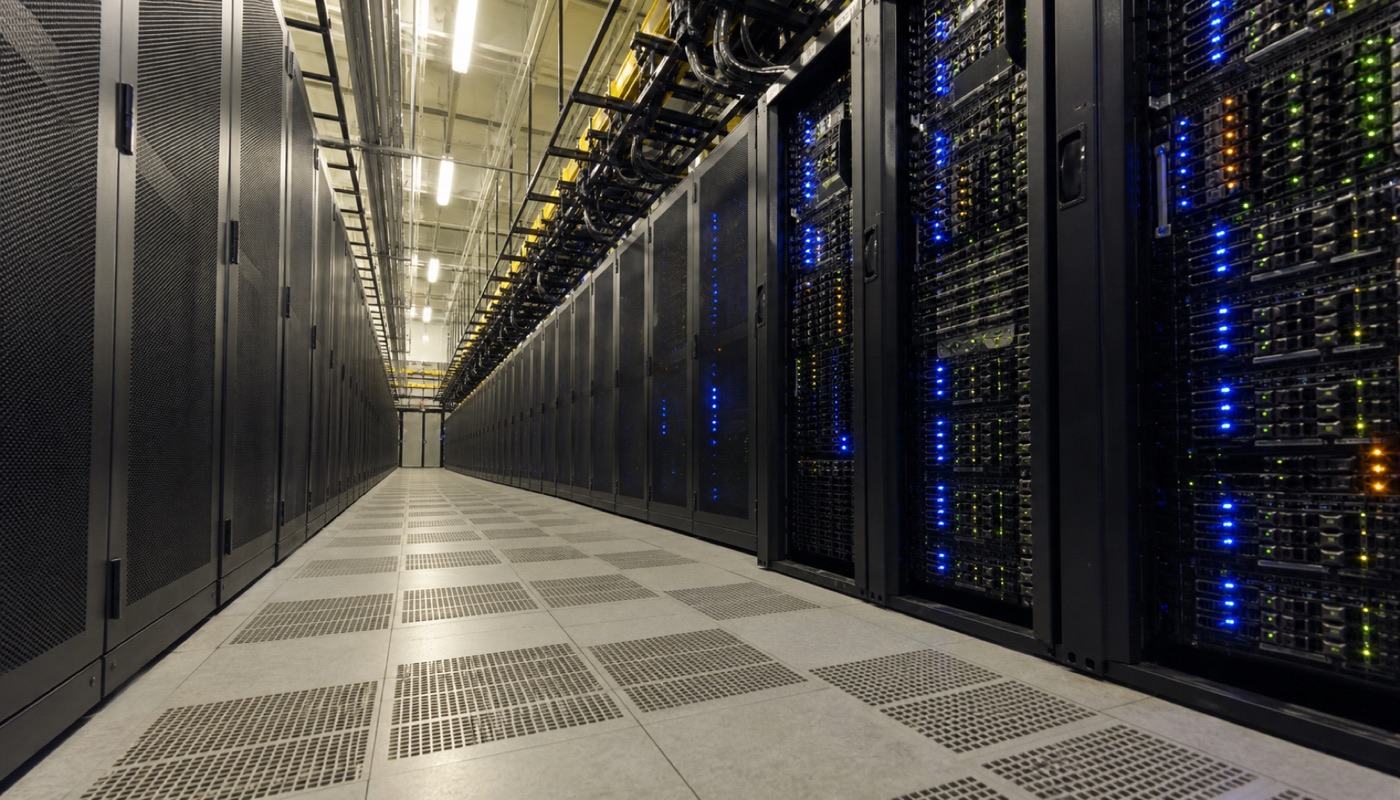
Inside one of these buildings: rows of computers, floor to ceiling.
Inside one of these buildings: rows of computers, floor to ceiling. AI-generated illustration

A data center is a building packed with servers—the physical computers that run websites, cloud apps, and AI tools. When you ask a chatbot a question, machines inside one of these buildings produce the answer.

These buildings have existed for decades. AI pushes them much harder because training and running models takes far more computing. Picture a regular data center as a bathtub filling from a faucet. An AI facility connects a fire hose. It needs enormous, nonstop power and lots of water to carry away heat.

Companies are building them everywhere at once. That has created a land rush for three limited things: cheap land, massive power supplies, and water for cooling. Deals can move faster than nearby communities can understand what is coming.

The warehouse may look ordinary from the road. Its appetite is not. That demand sits behind the electric bills, gas plants, secrecy, and water fights that follow.

How this affects you
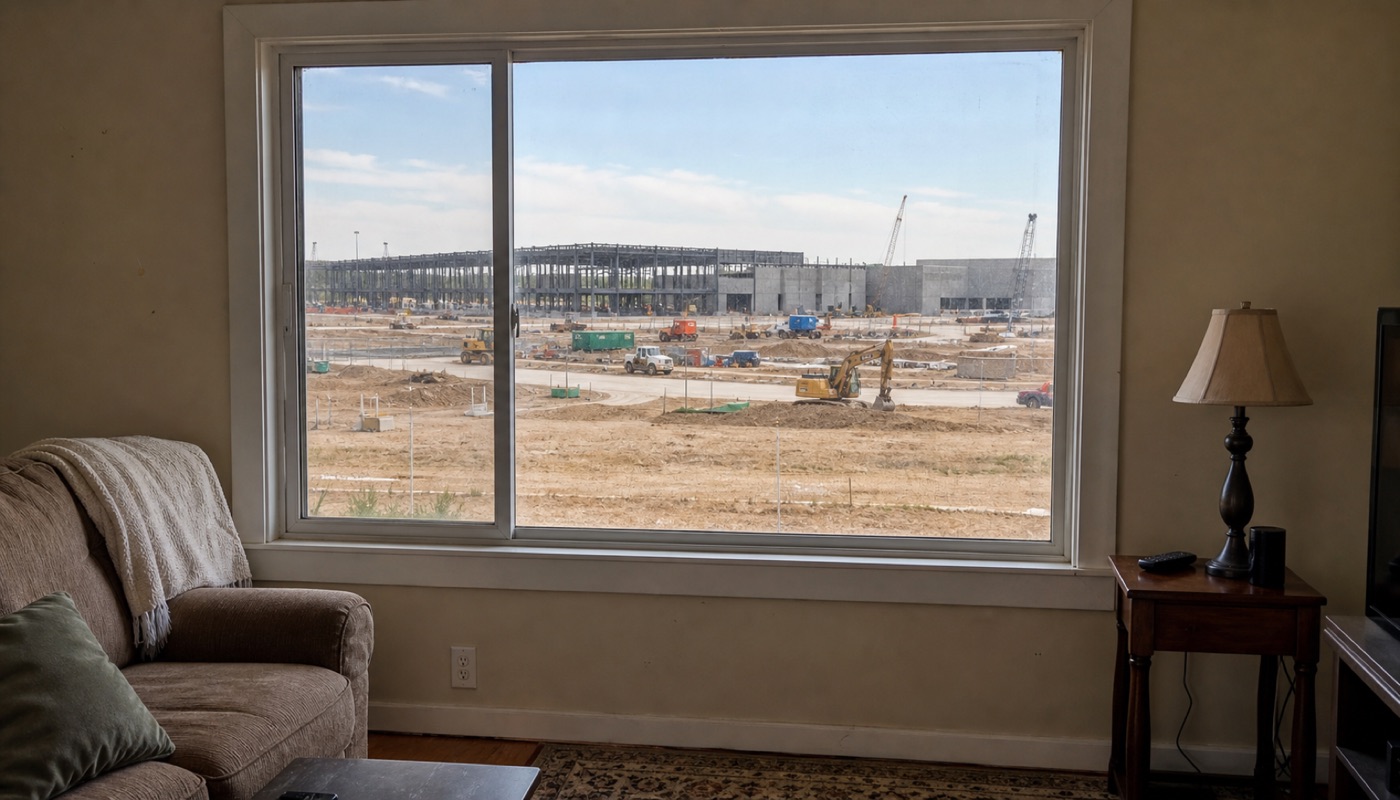
Somebodys living room, and the site going up outside the window.
Somebody’s living room, and the site going up outside the window. AI-generated illustration
THE POINT

Cassandra Lainez used less electricity.

Her bill went up $29.

Your AI prompts run in warehouses that need land, electricity, and water for cooling. Those buildings are spreading quickly, and the cost of serving them can reach your home.

In New Jersey, Cassandra Lainez watched her electricity use fall while her bill rose by $29. “A $29 increase,” she said, “felt almost like a slap in the face.”

Picture a giant new customer plugged in all day. You can turn off lights and use less, yet pay more if households are charged for the power plants, substations, and lines built to serve it. Your town’s water, nearby air, and power bill are all part of the deal.

The process can make you a spectator. A shell-company name hides the buyer. An NDA keeps your own officials silent. By the time you hear about the project, the decision may seem finished.

Many key choices still pass through public rooms. Local governments decide land and water permissions. State utility regulators decide who pays for grid upgrades in what is called a rate case — a public hearing where the power company asks permission to charge more, and anyone can speak. Knowing where those decisions happen helps you judge claims from supporters and opponents.

The last section of this article tells you what you can do. It gives you one question to ask and the meetings where you can ask it. It also names the two states that changed their utility rules and the towns that voted to pause new projects.

Fake company names, and the NDAs that gag your officials
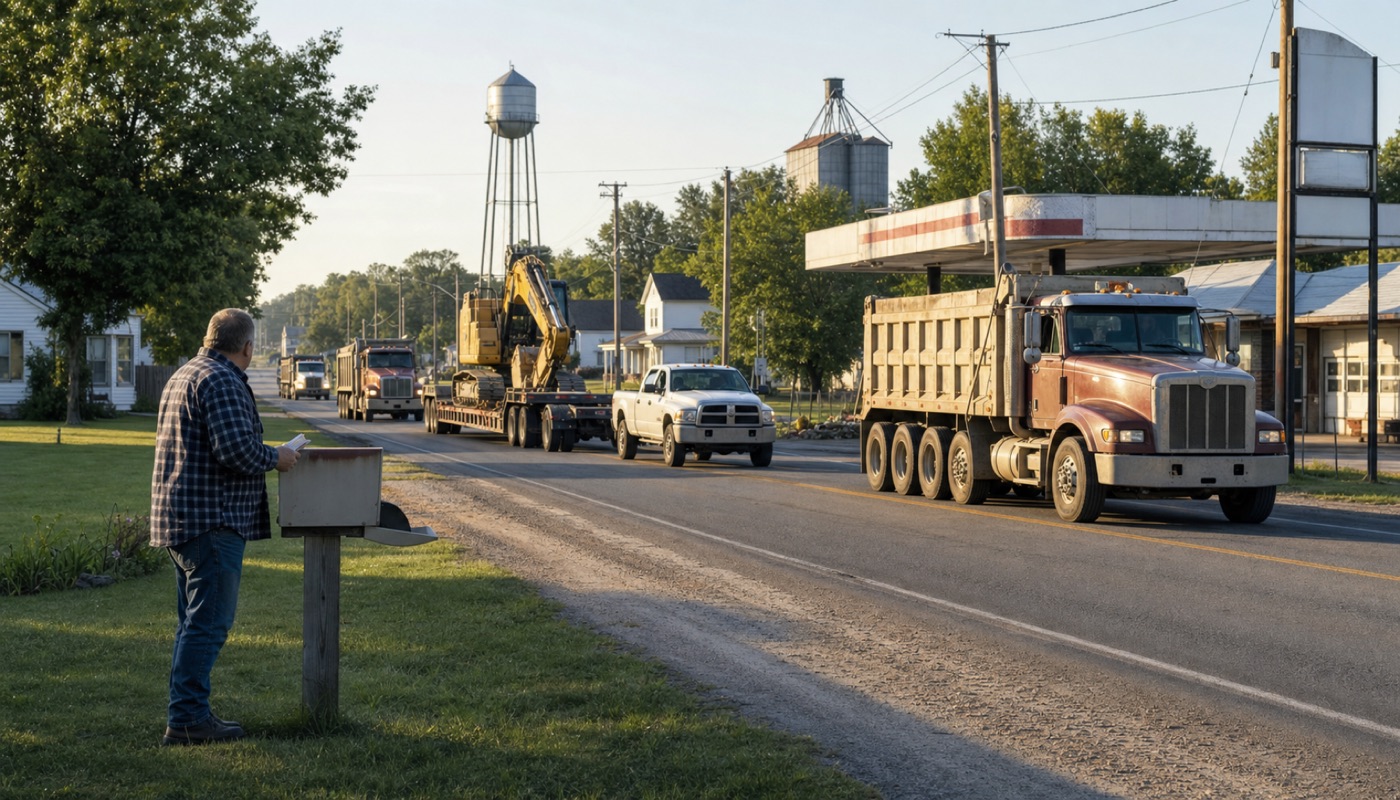
Trucks arriving at the edge of a town. Often this is the first anyone local sees of it.
Trucks arriving at the edge of a town. Often this is the first anyone local sees of it. AI-generated illustration
HOW IT ACTUALLY WORKS
  1. 1A real buyer decides to build.
  2. 2The buyer sets up a company with a name nobody recognizes — in Beaver Dam, Wisconsin, it was “Balloonist LLC.”
  3. 3That company, not the buyer, signs the land deal.
  4. 4The county’s public records show only the company name.
  5. 5Local officials sign an NDA, so they are not allowed to tell you who is behind it.
  6. 6You find out after the terms are set.
THE VOTE THAT DID NOT COUNT
One Virginia community, on the public record
Opposed the Amazon data center
2,389 residents
Wanted it
11 residents
Built anyway. “And yet we were ignored.”

Picture a shell company as an empty cardboard box with a harmless name printed on it. The real owner stays hidden behind the box, and that is how a data-center deal can enter your town.

The counterparty was Balloonist LLC. Behind it was Meta, the parent company of Facebook, Instagram, and WhatsApp—and one of the world’s largest companies and a major AI data-center builder. In St. Charles, Missouri, a 440-acre proposal appeared as “Project Cumulus.”

Officials allowed to know the real company may have to sign a non-disclosure agreement, or NDA. It is a legally binding gag order that can stop them from naming the company or revealing the deal’s terms.

NBC News reviewed more than 30 proposals across 14 states. In most, local officials had signed NDAs and were negotiating with apparent shell entities. Without accusing anyone of anything, it is fair to ask: why would any government official sign an NDA with a private company? In Virginia, roughly 80% of the local governments NBC examined had signed one.

You can see how the door closes: a company nobody recognizes signs the paperwork, the filings carry that name instead of the buyer's, officials promise silence, and the land is effectively tied up. Public comment arrives after the important decisions.

In one Virginia community, a public-records request showed 2,389 residents opposed an Amazon data center. Only 11 wanted it. A resident told Bloomberg Television that the community was ignored. That recorded 2,389-to-11 rejection was overridden anyway.

You live there, pay the bills, and breathe the air. Yet this structure can make you the last person told about a decision reshaping your town.

Why a building you'll never see can land on your bill
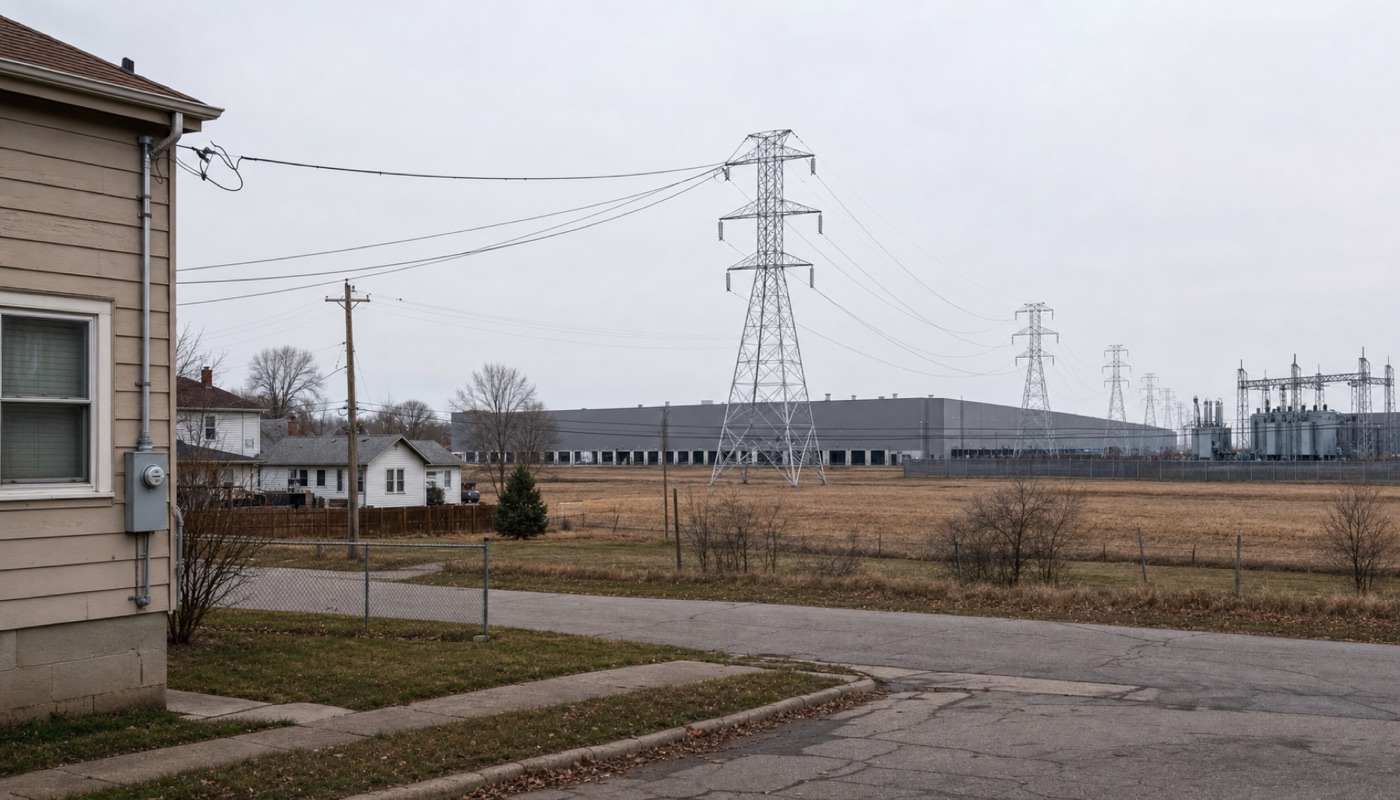
The line runs from that buildings fence to the meter on this house. That is the whole connection.
The line runs from that building’s fence to the meter on this house. That is the whole connection. AI-generated illustration
WHO CAUSED IT, WHO IS CHARGED
How a building 50 miles away reaches your meter
A data center asks to plug in
One customer, drawing as much power as a small city.
The utility builds for it
A new substation, miles of high-voltage line, sometimes a whole power plant.
The utility asks to get the cost back
A rate case — a public hearing where anyone can speak.
Regulators decide who pays
All of it to the company, all of it spread across every customer, or a mix.
Your bill
If it is spread, part of a building you will never see is on your house.

Electricity is less local than your street makes it feel. Your home and a data center 50 miles away may pull power from the same regional grid: one shared network of power plants and high-voltage lines.

Picture that grid as a neighborhood water system. Add one customer filling an Olympic-size pool around the clock, and the existing pipes may no longer be enough. Utilities may need new power plants, transmission lines and substations to handle the load.

Substation equipment steps high-voltage power down to levels customers can use. Connecting a huge new customer can require costly new substations and miles of additional lines.

Someone has to pay for that construction. Utilities ask state regulators for permission to recover their costs through electric rates. Regulators may assign some expenses to the data-center owner, spread others among customers, or approve a mix. When costs are shared broadly, part of a project built for one private company can show up on your monthly bill.

That can happen even if the building is nowhere near your house and you never use that company’s AI. We’ll trace how those charges move from a construction plan into household rates.

Sharing a regional grid can mean sharing the cost of expanding it.

Just how big are these? A Walmart versus a city
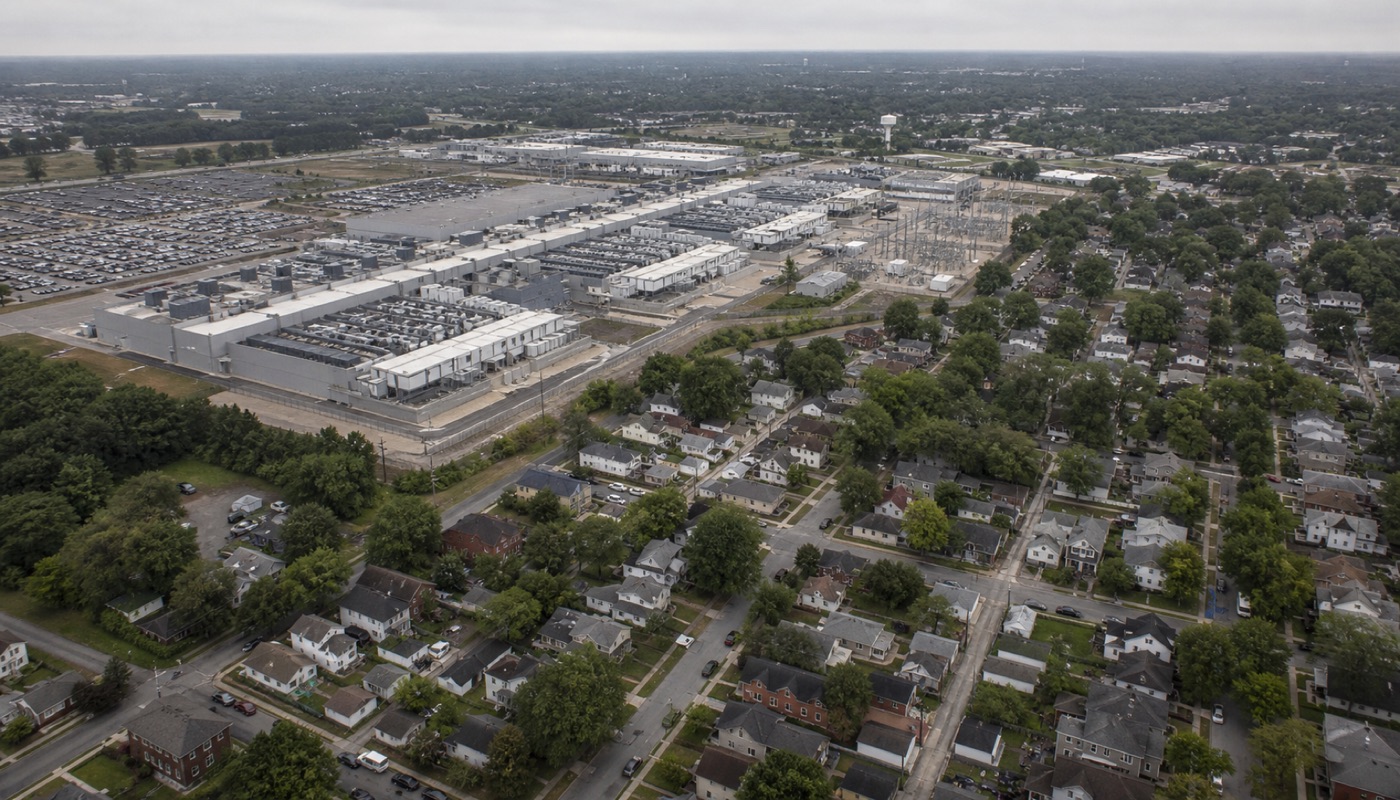
From above, next to the houses. From the road, at the end of the street.
From above, next to the houses. From the road, at the end of the street. AI-generated illustration
HOW BIG
Same footprint, two buildings
A Walmart
about 1 megawatt
A data center the same size
about 400 megawatts
Per Arizona Public Service president Ted Geisler. A large campus draws roughly what San Francisco does, per CNBC.

Picture two buildings with the same Walmart-sized footprint.

The Walmart draws about 1 megawatt, roughly enough power for a few hundred homes. Arizona Public Service president Ted Geisler said a same-sized data center can use 400 megawatts. Add up all the data centers asking for power, and APS and Arizona’s other utilities may need to make about 50% more electricity—enough for a whole big city. Large campuses can reach hundreds or even thousands of megawatts.

CNBC’s comparison is bigger still: one campus “running at the lower end of peak demand uses roughly the same amount of power as the population of San Francisco.” Data-center demand is projected to grow 15–20% each year through 2030.

So the picture is:

  • Walmart: about 1 megawatt
  • Same-footprint data center: about 400 megawatts, per APS’s Geisler
  • Large campus: roughly San Francisco’s power demand, per CNBC

You may never enter that building or use its AI. Yet no household gets a vote before a company and utility plug a city-sized customer into the shared grid. If new plants and power lines are needed, families can be charged to make room. Who pays that bill is a policy choice.

"A business pays its own way." So why is this on your bill?

THE CLAIM AND THE RECEIPT
WHAT THEY SAYWHAT THE FILING SHOWS
“We already pay our fair share for power.”PJM’s independent monitor attributed 63% of one capacity-price rise to data centers — about $9.3 billion recovered from customers.
“A business pays its own way, like any other.”Dominion projected average Virginia residential bills more than doubling to $315 a month, primarily due to data centers.
“The turbines are temporary, so no permit is needed.”In January 2026 the EPA confirmed those turbines require construction and air permits.

A data center buys its electricity. But “the data center just pays market rates like anyone else” leaves out a much larger expense: getting enough power to its door.

Picture a new tenant requiring a private elevator. The tenant pays rent. Then the landlord divides the elevator bill among every apartment. The tenant pays the same rent as everyone else, but that tells you nothing about who paid for the elevator.

A data center’s arrival may force the grid to add a substation and extend high-voltage wires for miles. State regulators decide where that charge goes. They can assign it to the company, spread it among all customers, or split it. Regulators often allow utilities to recover at least part of these costs from everyone.

When that happens, the company gets the service and keeps the revenue. Your household helps fund the expansion, even if you never use that company’s AI.

That is the split to watch: who triggers the cost, and who pays the cost? They can be different people. “It pays its own way, like any other business” is true only if its fair share includes both the electricity and the infrastructure needed to deliver it.

Your bill can include more than your household’s power use. So “the data center pays its fair share” is not a conclusion. Ask which costs went directly to the project and which went to everyone else. Paying for electricity is not the same as paying for the grid expansion you caused.

How one building's cost fans out across every household

THE NUMBER
PJM capacity price, one year apart (per megawatt-day)
Before
$28.92
After
$269.92
That is a rise of roughly 833%, in one year.
THE FAN-OUT
Where that one price lands
65 million
people on PJM’s grid, in 13 states plus Washington, DC
63%
of the increase attributed to data centers by PJM’s own independent monitor
$9.3 billion
recovered from customers

PJM runs an annual “capacity auction.” Power plants are paid to promise electricity will be available when demand peaks. The resulting price is passed through to customers.

PJM’s grid serves about 65 million people across 13 mid-Atlantic and Midwest states plus Washington, DC. In one year, its auction price climbed roughly 833%, from $28.92 to $269.92 per megawatt-day.

Data centers create much of the new demand. The auction price that results is charged out across the whole region, to households that had nothing to do with it.

Monitoring Analytics, PJM’s independent market monitor, attributed 63% of that increase to data centers. That amounted to roughly $9.3 billion recovered from customers.

In the following December auction, data-center demand accounted for about 40% of the total cost: $6.5 billion out of $16.4 billion. CNBC described the same event as “more than a 500% increase,” with roughly 60% tied to current and forecast data-center demand. The percentages differ because of framing and rounding. They still describe hundreds of percent, driven mostly by data centers.

David Lapp, Maryland’s People’s Counsel, is legally charged with representing residential utility customers. He said auction prices “went up by 800%,” with some bills rising “over $1,000.”

Then he asked: “Why should residential customers be responsible for costs being driven by some of the biggest and wealthiest corporations in the world?”

Using less electricity does not always lower your bill. Cassandra Lainez used less power, yet her bill increased $29. The added charge followed demand elsewhere on the shared grid, not greater use inside her home.

Lapp calls that allocation “fundamentally unfair.” A wealthy corporation can trigger the expense while you and your neighbors help cover $9.3 billion of it. That is a policy choice, and regulators can choose differently. Using less power does not protect you when someone else’s demand is spread across your bill.

The "temporary" gas plants going up next to real neighborhoods

Somebody chalked the tire to prove the generator was temporary. The same tire months later, weeds grown over it.
Somebody chalked the tire to prove the generator was temporary. The same tire months later, weeds grown over it. AI-generated illustration
THE COUNT
Memphis, then across the state line
35
turbines on trailers at the first site, called “temporary”
27
more in Southaven, Mississippi, now the subject of a Clean Air Act lawsuit
46
counted running without air permits, in total

When the grid cannot feed a data center fast enough, the company can burn natural gas on-site. You get the exhaust and the 24/7 noise.

That happened in Memphis, Tennessee. Reporting indicates xAI—Elon Musk’s AI company—powered its Colossus supercomputer partly with gas turbines. It ran as many as 35 turbines on trailers, calling them “temporary” so they could operate without standard air-pollution permits.

After the NAACP and the Southern Environmental Law Center filed notice that they intended to sue, xAI removed that first array. A 2026 Clean Air Act lawsuit now targets 27 more turbines across the state line in Southaven, Mississippi.

Reporting counted 46 turbines operating without permits in total. Together, they could be the largest source of smog-forming pollution across the 11-county Memphis metro area.

Mississippi regulators had described the machines as “mobile” or “temporary.” In January 2026, the EPA confirmed that turbines like these require construction and air permits.

Picture a full gas plant broken into trailers and parked beside your neighborhood. Calling each piece temporary does not make the exhaust temporary when the machines run around the clock.

The company keeps the profit. Nearby families—disproportionately in a community given no meaningful say—breathe the air. Civil-rights and environmental groups had to force the permitting question through lawsuits.

One label let dozens of turbines run beside homes without the permits other businesses must obtain.

The diesel sitting behind every one of these buildings
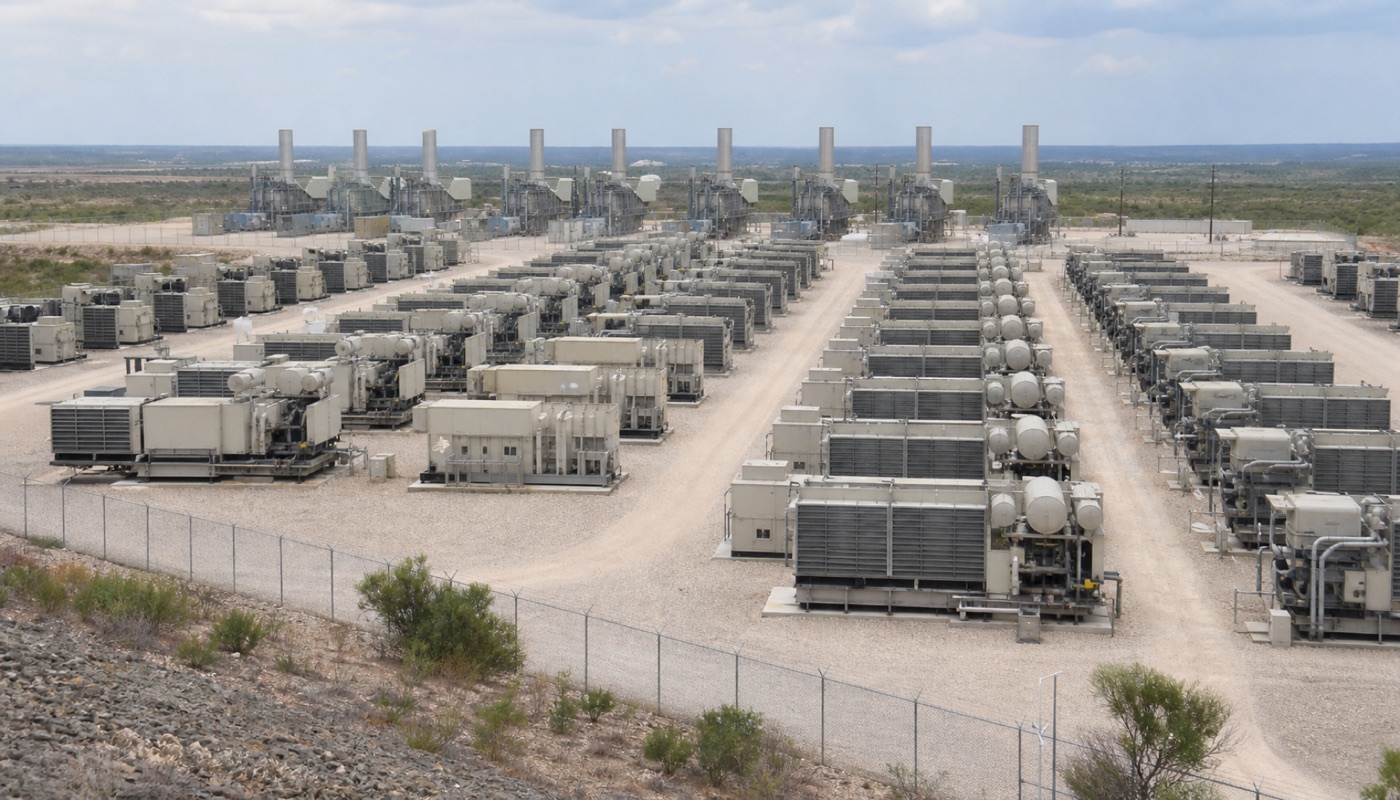
A field of backup generators. A house air filter from somebody living near one, next to a new filter.
A field of backup generators. A house air filter from somebody living near one, next to a new filter. AI-generated illustration
THE SCOREBOARD
The diesel nobody puts in the press release
4,000+
diesel generators in Northern Virginia, where the buildings cluster
173
generators on one Amazon permit, at a single site
32
generators one company asked to run in San Antonio, July 2026

Gas turbines are what a company reaches for when the grid cannot feed it fast enough. Diesel is different, and more common: it is the backup that sits behind the building for when the power fails. Every data center has it.

In Northern Virginia, where these buildings cluster, that adds up to more than 4,000 diesel generators — over 11 gigawatts of capacity, exceeding Dominion Energy's entire natural gas fleet. Enough to power millions of homes, sitting idle. Most are the cheapest kind, running with no pollution controls at all. One Amazon permit reviewed by columnist Ivy Main covers 173 generators at a single data center, burning up to ten million gallons of diesel a year.

A backup generator is supposed to sit there doing nothing, and most of the time it does. But it does not sit still all the time. Every one of them gets run on a test schedule, and the exhaust from that test lands on whoever lives nearby. And in a grid emergency they do not take turns. They all start at once.

It is not only Virginia. In San Antonio this July, a company asked to run 32 diesel generators at one site. "Which would impact our air quality significantly," said Ric Galvan, the council member for that district.

Gas turbines get the news coverage. Diesel generators are at every one of these buildings.

The claim that data centers already pay their fair share
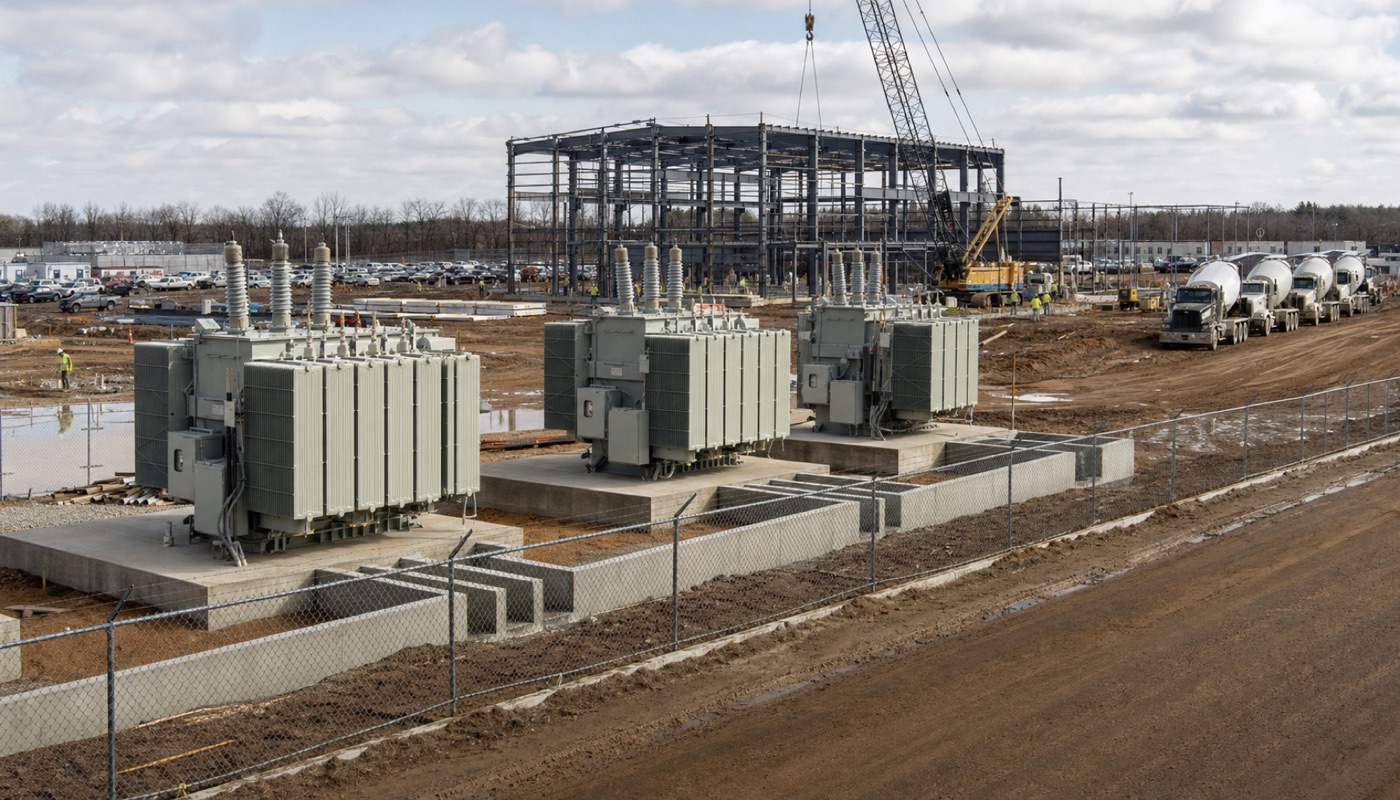
This is the thing somebody has to pay for: the transformers and the steel going up to feed one building.
This is the thing somebody has to pay for: the transformers and the steel going up to feed one building. AI-generated illustration
WHO ACTUALLY PAYS
WHO PAYS FOR A NEW SUBSTATIONWHAT THEY COVER
The data centerIts own equipment, and the electricity it uses.
Everyone else, in a lot of statesThe lines, the substation, and sometimes a whole power plant built to serve it — spread across household bills.
Maryland and OregonChanged the rule. Data centers are now their own customer class, so the company gets that bill instead of you.
ONE PLANT, ONE COMPANY, HALF THE BILL

A $3 to $4 billion power plant, proposed for one Meta data center in Louisiana.

The company’s 15-year contract covers about half.

The rest: “everyone else in Louisiana.”

The Data Center Coalition, which represents Amazon, Meta, Google, Microsoft and dozens of data-center operators, says its members “already pay their fair share for power.” It points to investment, construction jobs and tax revenue in host communities. Those benefits are real.

The claim leaves out who paid for the grid costs. You just saw PJM's numbers: 63% of one capacity-price increase—about $9.3 billion—landed on customers, attributed to data centers by the market's own independent monitor.

In Louisiana, energy analyst Ari Peskoe said a utility proposed a $3 billion to $4 billion power plant for a Meta data center whose 15-year agreement "only obligates them to pay for about half," potentially leaving "everyone else in Louisiana" responsible for the rest.

Dominion offered another warning: it projected average Virginia residential bills "more than doubling to $315 a month… primarily due to data centers."

There is no national percentage answering "who pays." Terms change by project, utility, state, and contract. "Ratepayers pay it all" is also too broad — companies pay real money for electricity and infrastructure, sometimes a great deal. The disputed number is the portion left for everyone else.

Public Citizen's consumer advocate Tyson Slocum argues the industry understates what gets shifted onto consumers. The coalition argues that companies cover far more. Both are advocates, not neutral referees.

The split is decided deal by deal. So the useful question is not "do they pay?" It is: how much of the triggered grid cost gets spread onto households? Demand that number at your state's rate case — the hearing where the power company has to justify a price increase.

"China is behind the protests" — watch the subject get changed
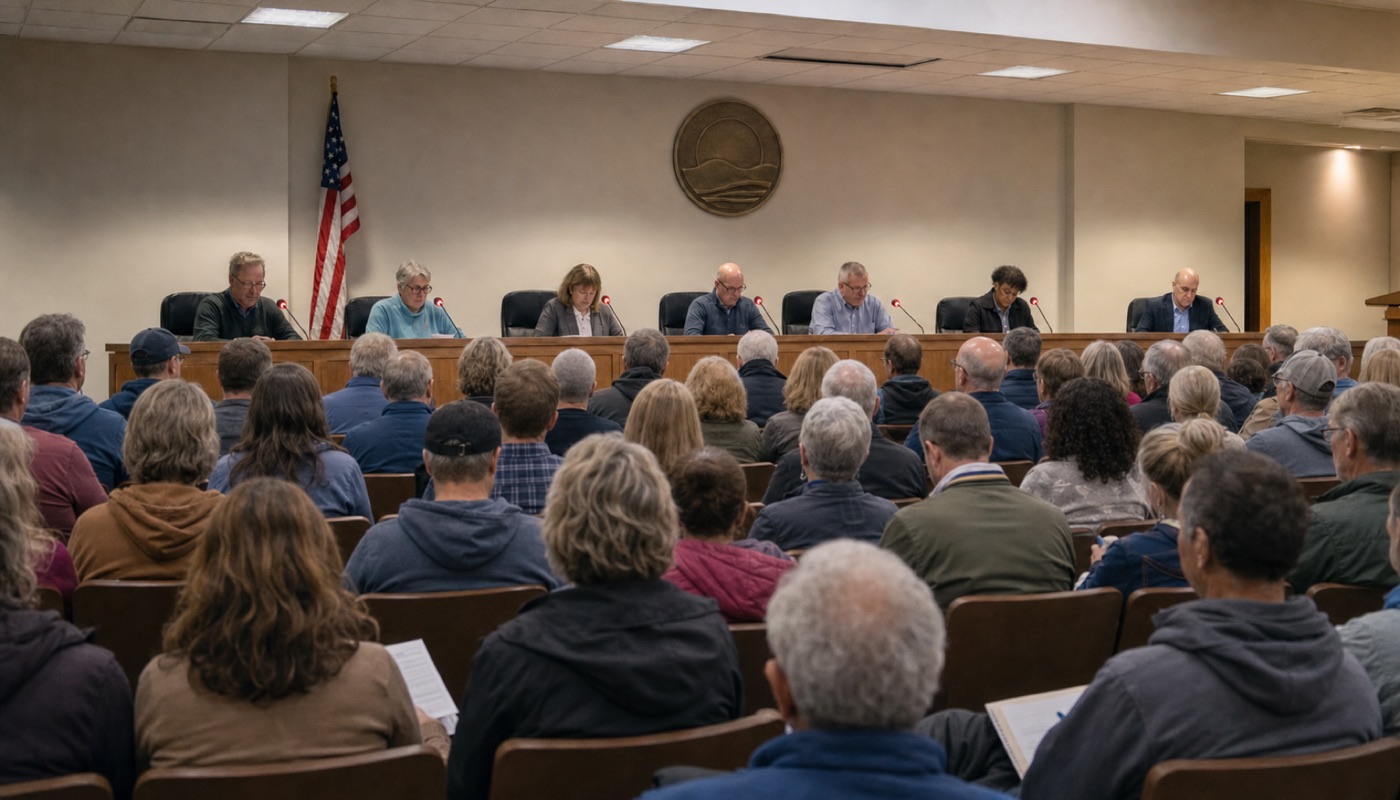
This is who actually showed up to object: a room full of people who live there.
This is who actually showed up to object: a room full of people who live there. AI-generated illustration

When someone says China is behind the protests, the discussion stops being about who pays for the substation.

Kevin O’Leary, the Shark Tank investor, is promoting Wonder Valley, a proposed 7.5-gigawatt, $70 billion Alberta data-center campus pitched as the world’s largest. In May 2026, he said opponents received “foreign-linked money, including interests connected to China,” calling it “an irrefutable fact.”

The Washington Post and NPR found the evidence thin and unverified, and the Alliance for a Better Utah, one group O’Leary accused, challenged him to prove it.

A flat lie is easy to reject. A half-truth is more useful to a salesperson because it sounds solid enough to redirect you. “Foreign money is behind the protests” can make neighbors defending their town look suspicious while the substation question disappears.

“Blame a scary outsider to change the subject” works across political sides. When you notice someone doing it, it does not mean all news lies. It means someone is selling you something.

Names that keep showing up
The office where public filings happen, with its name on the sign. This is the counter you can walk up to.
The office where public filings happen, with its name on the sign. This is the counter you can walk up to. AI-generated illustration
WHO IS TALKING
WHOWHAT THEY AREWHICH WAY THEY LEAN
Monitoring AnalyticsPJM’s independent market monitorNeither side. Its 63% figure carries the most weight here.
Data Center CoalitionThe industry’s trade group — Amazon, Meta, Google, MicrosoftThe industry.
Public CitizenA consumer-advocacy groupConsumers.
SELC and the NAACPAn environmental law center and a civil-rights groupSued over the Memphis turbines.

Tap any recurring name for plain English. No brand or acronym should block the evidence.

Public Citizen and the industry trade group each argue a side. Monitoring Analytics does not, so its 63% figure carries the most weight here.

How to tell when you're being sold

THE FOUR TELLS
WHAT YOU HEARWHAT TO ASK
A company nobody has heard of, under a made-up project name, turns up on the agendaWho is the real company? Did anyone sign an NDA? Ask it on the record.
“It pays its own way.”Which costs went to the company, and which went to every ratepayer?
“Temporary.”What permit does it hold? A machine running around the clock is not temporary.
A scary outsider gets blamedWhat question was on the table before the accusation came up?

All four of these came up earlier in this article.

  • A company nobody has heard of, hiding behind a made-up project name, turns up on a local agenda. Ask on the record who the real company is, and whether anyone signed an NDA.
  • Someone says it pays its own way. Ask which costs went to the company and which went to every ratepayer.
  • “Temporary.” A machine running around the clock is not temporary. Ask what permit it holds.
  • A scary outsider gets blamed. Ask what question was being discussed before the accusation came up.

Every number in this article is linked at the bottom. Open a link, read past the quoted line, and decide for yourself.

What you can do, and where it already worked
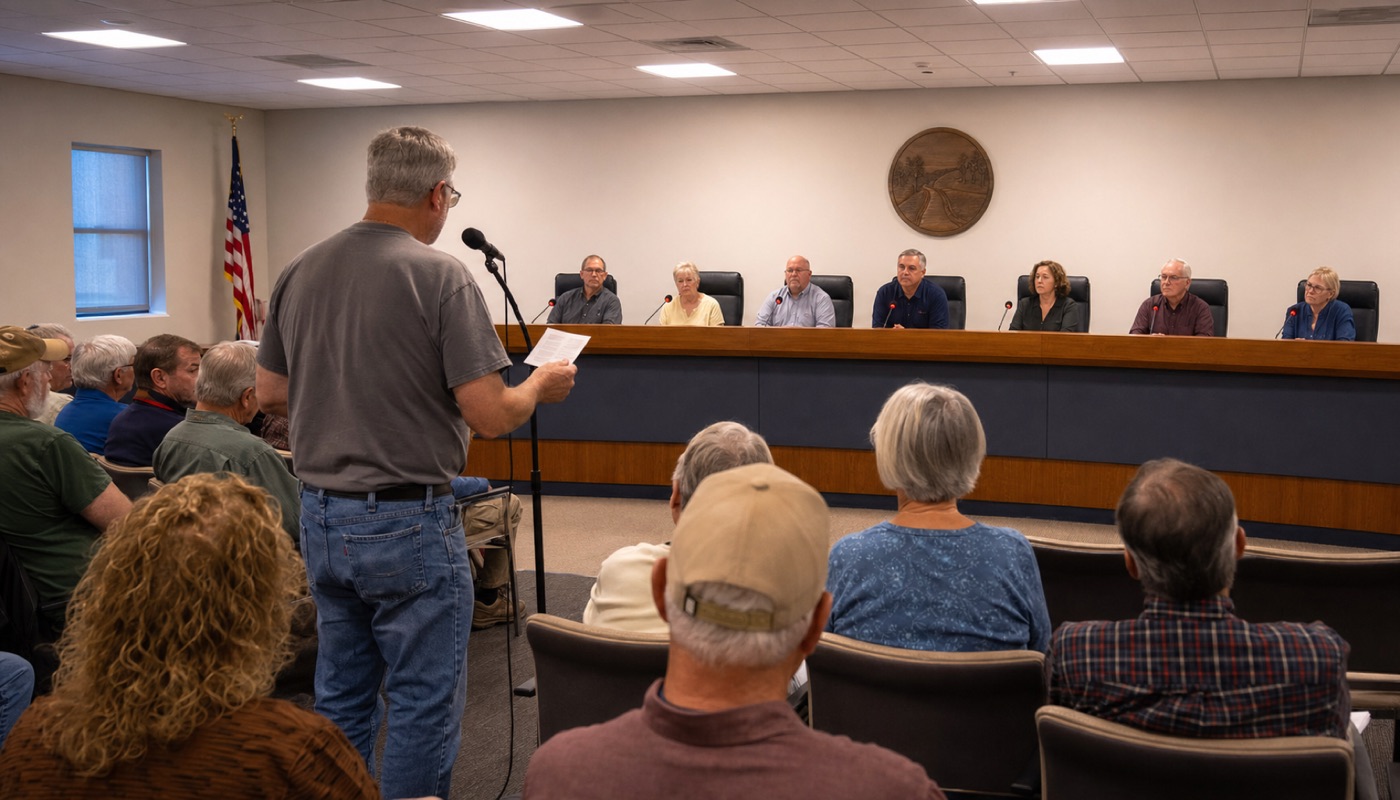
A resident speaking at the microphone. The council voting nine to nothing.
A resident speaking at the microphone. The council voting nine to nothing. AI-generated illustration
THE THREE ROOMS
THE ROOMWHAT IT DECIDESWHAT TO SAY THERE
Zoning or planning boardLand and water permission — the earliest chance to change an unsigned dealBring the numbers. Put them on the public record.
The rate case, at your state utility commissionWho pays for the grid upgradesWill data-center grid work be charged to a separate customer class, or spread across all ratepayers?
Your own peopleWhat your neighbors believeTriggering a cost and paying it are two different things.

Data centers are decided in rooms you can walk into. There are three rooms.

Zoning. Your local planning or zoning board is the earliest chance to change or stop an unsigned deal. Bring numbers and put them on the public record. It is not a guarantee: Saline Township, Michigan, rejected a $16 billion project 4–1, was sued, and was “advised to settle.”

The rate case. Every state has a utility commission that approves rate increases, and nearly all take public comments without a lawyer. Ask one question: will data-center grid upgrades be charged to a separate customer class, or spread across all ratepayers?

Your own people. When someone says the data center pays its own way, explain the difference between triggering a cost and paying it. Share this free article. Hearings on power, water, and air are happening now.

This has already worked. Maryland and Oregon created a separate customer class for data centers, so the company gets the bill for the grid work it triggered — More Perfect Union reported it, and Maryland People’s Counsel David Lapp confirmed it on the record.

Since then the fix got sharper. It is called a large-load tariff, and the plain version is a minimum bill: if you ask the grid to reserve a huge amount of power for you, you pay for that reservation whether you use it or not. Think of it like a deposit on a banquet hall — book the room and the room is charged for, even if half your guests never show. It stops other customers paying for substations and power plants built for a project that shrinks or never opens.

The Tennessee Valley Authority approved one in August 2026. From October 1 its data centers pay a separate rate — about 10% more on average, phased in over three years, plus roughly $1.5 million per megawatt committed up front. TVA's stated reason is to keep the cost of serving those buildings off households and existing businesses.

Where towns have already pushed back

THE SCOREBOARD
What changed, and where
54
towns voted to pause new data centers — almost all are freezes, not bans
300+
bills introduced in 41 states in 2026, almost double the year before
1
town, St. Charles, Missouri, got a project withdrawn outright

Towns have been voting to pause new projects until they know what they are agreeing to. The Bipartisan Policy Center counts 54 of those pauses actually passed, and notes almost none are permanent bans — they are freezes to buy time to write rules. Other tallies run past 200 if you count every active local effort. Both are defensible; they count different things.

Residents in St. Charles, Missouri pushed “Project Cumulus” to withdraw. And in 2026 legislators introduced over 300 bills in 41 states on data-center costs, taxes, water, and transparency — almost double the year before.

The common claims, answered

“A data center pays its own way, like any business.” — Half-true. It buys its electricity and brings tax revenue. Getting enough power to its door can require plants, lines, and substations, and regulators often spread that cost across every household.

“Data centers raised electricity prices for households.” — True. PJM’s independent market monitor attributed 63% of an approximately 833% capacity-auction increase to data centers: about $9.3 billion recovered from customers.

“Temporary gas turbines need no permits.” — False. In January 2026, the EPA confirmed that construction and air permits are required. xAI ran up to 35 near Memphis as “temporary,” and a 2026 lawsuit targets 27 more in Southaven, Mississippi.

“China secretly funds the protests.” — Unsupported. Kevin O’Leary called it beyond dispute in May 2026. Reporters at two national outlets checked and could not verify it.

What you know now

The whole thing, in order:

Companies are putting up computer warehouses as fast as they can get them built. Those buildings need an enormous amount of electricity — one campus can pull as much power as a good-sized city. To feed them, the power company has to build new lines, new substations, and sometimes a whole new power plant. That construction costs billions of dollars, and in a lot of states the rules let the power company spread that cost across everybody's bill. That is how a building you will never walk into ends up on the bill for your house.

Most of the deal is done before you hear about it. The land gets bought under a company name nobody recognizes, and your own officials sign agreements that stop them from telling you who is really behind it. By the time it is public, the terms are already written.

And when people do object, the subject gets changed. The protests get blamed on foreign money, and nobody has produced evidence that this is true.

None of that makes these projects a scam. They bring real investment and real tax money, and the terms are different in every single deal. Some places have already changed the rules — Maryland and Oregon made data centers their own customer class, so the company gets its own bill instead of yours. Fifty-four towns voted to pause new projects until somebody explained the deal. One town got a project pulled entirely.

Those decisions are made in public meetings that you can attend.

You get one question. It works in any meeting, and you do not need to know anything about electricity to ask it:

Who caused this cost, and who is being charged for it?

Ask it at your utility commission, at your county board, or at your planning commission. Bring the numbers from this article with you and say them out loud, so they go on the public record. That is the whole job.

THE ONE QUESTION

Who caused this cost,

and who is being charged for it?

Ask it at your utility commission · your county board · your planning commission

Continue to Part 2

That is Part 1. It covered the buildings, the secrecy, and your power bill. You can stop here.

Part 2 covers the tax break: the four different things "jobs" means when a data center is pitched to your town, the $1.9 billion Virginia paid after being told a million and a half a year, what Texas found when it finally audited the job promises, and the states taking the tax breaks back.

---

END OF PART 1
Continue to Part 2
Sources for Part 1 — every number above, with its link

Don't take our word for it

Every number here has a source below. When accounts disagree, we keep each claim attached to whoever made it. Projections, advocacy figures, industry statements, personal accounts, and unproven accusations are labeled. Some live figures may change, so check their dates.

You do not have to trust anyone here, including us. Open a link, read past the quoted line, and make your own call.

  • PJM’s Monitoring Analytics — independent monitor, neutral anchor: data centers 63% (~$9.3B).
  • PJM’s Monitoring Analytics, 5 Jan 2026 — analysis of the December 2025 auction (2027/28): data centers ~40% ($6.5B of $16.4B).
  • ABC15 Arizona — APS has 19 gigawatts of data-center requests it “can’t serve today”; energy consultant Amanda Ormond on utilities building “50% more power.”
  • ElectricityRates — 2025/2026: ~833% year-over-year; $28.92 → $269.92/MW-day. The next auction (2026/2027) cleared at $329.17/MW-day.
  • IEEFA — PJM prices.
  • Utility Dive — PJM auction.
  • CNBC — “more than 500%,” ~60%; San Francisco-scale campus; demand +15–20% yearly through 2030.
  • Maryland Matters — David Lapp, Maryland People’s Counsel and statutory ratepayer advocate: prices up roughly 800%; some bills over $1,000; asked why households should cover wealthy corporations’ costs; calls the allocation unfair.
  • Consumer Reports — Ted Geisler, APS president, via 12 News: Walmart-size ~1 MW; data center ~400 MW. Cassandra Lainez, via More Perfect Union: usage down, bill +$29; “$29 increase… slap in the face.”
  • Virginia Mercury — Ivy Main, COMMENTARY column, 14 Jan 2026: Northern Virginia's 4,000-plus diesel generators, 11+ GW; Tier II units with no pollution controls; an Amazon permit covering 173 generators and up to 10 million gallons of diesel a year at one site.
  • KSAT San Antonio — 9-10 Jul 2026: Vantage Data Centers seeking 32 on-site diesel generators at Westover Hills; Council Member Ric Galvan quoted.
  • NBC News — 30+ proposals, 14 states; most used NDAs and shell entities; ~80% of examined Virginia governments; Project Cumulus, St. Charles.
  • Wisconsin Watch — Balloonist LLC = Meta; Beaver Dam.
  • Bloomberg TV — resident records request: 2,389 opposed, 11 supported Amazon.
  • Data Center Coalition — industry advocate: members say they cover their proper share.
  • More Perfect Union — Ari Peskoe: Louisiana utility’s $3–4B Meta plant; 15-year deal “only obligates them to pay for about half.” Dominion projection: Virginia bills “more than doubling to $315/mo… primarily due to data centers.” Public Citizen’s Tyson Slocum, consumer advocate: “fair share” means “corporate public relations.” Attributed accounts; check original filings.
  • MultiState — 30+ states, 300+ bills, 2026.
  • SELC — xAI Colossus, Memphis: up to 35 “temporary” turbines; first array removed after NAACP/SELC notice.
  • Mississippi Today — 46 total, no permits; recent contested count.
  • Earthjustice — 2026 Clean Air Act suit: 27 Southaven turbines.
  • Memphis Flyer — EPA confirmed in January 2026: temporary turbines require permits.
  • National Observer — Wonder Valley, Alberta: $70B, ~7.5 GW, world’s-largest pitch; clean geothermal replaced by gas; review waived April 2026.
  • Global News — Sturgeon Lake Cree Nation: court, “zero consultation”; O’Leary venture Miami-based.
  • Washington Post — O’Leary, May 2026: “foreign-linked money… connected to China,” which he called irrefutable; thin, unverified evidence.
  • NPR, via KPBS — Alliance for a Better Utah: ~$200,000 yearly, matching its prior decade; accusation attributed, unproven.
  • Maryland law — data-center “customer class” isolating costs.
  • Oregon law — large-load class isolating costs.
  • Bipartisan Policy Center — 54 local pauses actually enacted; almost all are temporary freezes, not bans.
  • Governing — more than 200 active local pauses “according to some counts,” credited to Interconnected Capital, 20 Aug 2026.
  • Chattanooga Times Free Press — TVA data-center rate from 1 Oct 2026, ~10% average increase over three years.
  • Center on Budget and Policy Priorities — 300+ bills in 41 states in 2026, almost double 2025.
  • Data Center Dynamics — St. Charles forced Project Cumulus’s withdrawal.
  • Fortune — Saline Township: 4-to-1 against $16B; sued; counseled toward settlement.
  • Undastandable Plain English for the rest of us — undastandable.com
🎧 Listen to Part 2 — about 12 minutes
0:00 / --:--

Part 2: What Does a Data Center Actually Give Your Town?

A data center is a warehouse full of computers. To get one, your state stops collecting sales tax on everything inside it for a decade or more — and what it is promised in return is jobs.

What's in Part 2?

A. The four things people mean when they say "jobs," and which one you are actually voting on.

B. Who pays. Virginia was told a million and a half a year. It paid $1.9 billion.

C. Who profits, and what the tax break actually buys.

D. Who decided this without asking you — including the five-year gap before anybody checked.

E. What Texas found when it finally looked, in the words of the man who counts the state's money.

F. The levers that already worked, and the one room where you have a say.

Read this first: Nobody voted for a five-job minimum. It is in the law anyway. Every figure below links to the page it came from.

What the deal actually is

Inside one of these buildings: cooling pipes running over rows of computers. This is the thing your state stops charging sales tax on.
Inside one of these buildings: cooling pipes running over rows of computers. This is the thing your state stops charging sales tax on. AI-generated illustration
WHAT NORMALLY HAPPENS / WHAT HAPPENED HERE
Sales tax on the equipment inside
If it were any other business
  • Buy servers, cooling plant and generators → the state charges sales tax, the same as it charges you.
  • Replace that equipment in a few years → it is charged again.
The data-center deal
  • No sales tax on any of it, for a decade or more.
  • The machines get replaced every few years — so the tax break keeps paying out for as long as the building stands.
This is the giveaway. Not a cheque written to a company — a tax that simply stops being collected.

The building itself is a warehouse full of computers. It is where the websites you use, the apps on your phone and the AI answers you ask for are actually produced. Companies are building them everywhere at once, and every one of them has to go up somewhere.

To land one, your state usually gives up the sales tax on everything inside the building — the servers, the cooling, the generators — for a decade or more. That is where nearly all the money is. And because those machines get pulled out and replaced every few years, the tax break keeps paying out for as long as the building stands.

In return, your town is promised jobs.

Money the state does not collect still has to come from somewhere — another tax, or a service that does not get paid for. Your county makes up the difference.

What were you actually promised?

The building they showed the town. The staff parking lot on a working day.
The building they showed the town. The staff parking lot on a working day. AI-generated illustration
WHICH ONE ARE YOU VOTING ON
WHAT IT IS CALLEDWHAT IT ACTUALLY IS
Construction jobsReal, and they end when the building does. Many crews were never local — specialty electrical and mechanical crews travel from site to site.
Vendor jobsWorkers who may be on site every day servicing machines. None of them are on the data center’s payroll.
Multiplier jobsNot people. A model’s guess at work created somewhere else. Nobody has to show that those jobs exist.
Facility staffThe permanent ones. This is the only number the tax break has to justify.

The company tells your town how many jobs. It does not say what kind. The word "jobs" is being used for four different things here, and only one of them is a permanent job in your town.

Construction jobs are real and they end. The crews leave when the building is done, and many were never local — specialty electrical and mechanical crews travel from site to site.

Vendor jobs belong to somebody else's company. Those workers may be on site every day servicing machines, and none of them are on the data center's payroll.

Multiplier jobs are not people. They are a model's guess at work created somewhere else — at a supplier, at a restaurant. Nobody has to show that those jobs exist.

Facility staff are the technicians and operators who actually work in that building for the next twenty years.

Only the last group has to justify a decade of forgiven taxes. It is also the smallest of the four.

Ask which of the four they mean. If they cannot give you the four numbers separately, they do not have them.

Who pays for it?

TOLD, THEN PAID

Virginia was told in 2008: $1.5 million a year.

Last year it paid: $1.9 billion.

Roughly eight hundred times what the public was told.

ONE THING LEADS TO THE NEXT
Where the uncollected money actually goes
The state does not collect the tax
Virginia: $1.9 billion last year, against the $1.5 million a year it was told in 2008.
That money does not disappear
The budget still has to balance.
It comes from somewhere else
Another tax, or a service that does not get funded.
Which is you
Ten states are each losing more than $100 million a year this way. In Texas and Virginia it is over a billion, each.

You pay for it. It does not show up on a bill you can argue with.

Virginia shows what that exemption becomes. When the state wrote this tax break into law in 2008, its own tax department estimated it would cost about a million and a half dollars a year. Last year it cost $1.9 billion — roughly eight hundred times what the public was told, adjusting for inflation.

Ten states are each losing more than $100 million a year this way.

Who profits?

A small site beside a funded campus. The tax break barely moves the big one and pays for most of the little one.
A small site beside a funded campus. The tax break barely moves the big one and pays for most of the little one. AI-generated illustration
THE NUMBER
The tax break as a share of what it costs to build
Giant projects
2%
Small projects
62%
Where the projects are biggest and the jobs most numerous, the public money is a small fraction of what the company is spending. Bahar and Wright, matching about 1,500 built data centers against 52 announced and canceled.
THE NEUTRAL COUNT
What a county actually gets, per Bahar and Wright
100–200
jobs over ten years, for a county landing its first big data center
0
movement in wages
a few %
rise in house prices

The companies do. And the tax break makes the least difference to them where the projects are biggest.

Dany Bahar and Greg Wright, two economists, matched about 1,500 built data centers against 52 that were announced and canceled, then tracked county employment through 2024. Where these buildings go is decided by power, land and fiber. Not tax policy.

Then they measured the subsidy against the spending. In the markets with the giant facilities, the tax break is about 2% of construction cost. In the small ones, it is 62%.

In the biggest projects, which have the most jobs, public money is a small part of what the company spends. In the smallest ones, which have the fewest staff, public money pays for most of the construction.

Bahar and Wright also counted the jobs. A county that lands its first big data center gains roughly a hundred to two hundred jobs over ten years. Wages do not move. House prices go up a few percent.

Who decided this without asking you?

Gold shovels in an empty field. By the time this happens, the terms are already law.
Gold shovels in an empty field. By the time this happens, the terms are already law. AI-generated illustration
THE SCOREBOARD
What is actually written in the statutes
5
jobs is the legal minimum in Missouri, Delaware and Maryland — the staff of a small dentist’s office
14
states where the public cannot find out what the program costs at all. Not a small figure. No figure.
138
Texas projects given the tax break before the state checked a single one

State legislatures wrote these rules.

In Missouri, Delaware and Maryland, the law asks for five jobs. Five — the staff of a small dentist's office — in exchange for never charging sales tax on hundreds of millions of dollars of equipment. Nobody campaigned on that number. It is in the statute.

In at least fourteen states, the public cannot find out what the program costs at all. Those states publish no figure for it.

And Texas gave this tax break to 138 projects before it checked a single one — then approved 59 more while the first audits were still running. The state hands the money over and looks at the promise five years later, which means a company can collect for half a decade before anyone asks whether it did what it said.

None of that was hidden. It was written down in public, and the meetings where it was decided were open to anyone who showed up.

What happened when Texas finally looked?

IN THEIR OWN WORDS
“To be unable to justify employment of even 20 people on a permanent basis at one of these things tells you how little employment is really stemming from this.”Brad Reynolds — chief revenue estimator, Texas Comptroller
“If you’re telling me there’s hundreds of thousands of jobs that are created, why are they having problems getting 40?”Sen. Donna Campbell
THE FIVE-YEAR GAP
  1. 1A company promises jobs.
  2. 2It gets the tax break immediately.
  3. 3Five years pass.
  4. 4Only then does the state check whether the jobs showed up.
  5. 5Of the first twenty that came due: 6 passed · 6 failed outright.
THE SAME WORD, THREE NUMBERS
The same Texas jobs, counted three ways
Trade group,
with multiplier
428,000
Trade group,
direct
103,000
What six audited
buildings could not keep
40
The first two are the industry’s own study, cited minutes after the audits were read out. The third is the standard six projects failed — they could not show even twenty or forty permanent jobs, depending on the size of the building.

In July, the state Senate's finance committee sat down with the first audits. Twenty projects had come due. Six passed. Six failed outright — they had not kept even twenty or forty permanent jobs, depending on the size of the building.

Brad Reynolds told the senators what that meant. He is the chief revenue estimator for the Texas Comptroller, which makes him the man whose job is counting the state's money.

He said that failing to justify even 20 permanent jobs at one of these buildings shows how little employment really comes from them.

Minutes later the industry's trade group cited a study claiming data centers support more than 103,000 jobs in Texas — 428,000 once you let them count jobs at other companies.

Donna Campbell, a state senator, asked why data centers were having problems getting 40 jobs if hundreds of thousands were created.

Reynolds addressed the bigger number directly. In a tight labor market, he said, a worker hired onto a subsidized site has usually just left another construction job, so the work moved instead of being added:

His exact words: "Those multiplier effects that these models advertise cannot come true. They just simply cannot come true."

Would they have built anyway?

The steel goes up either way. That is the states own revenue mans point.
The steel goes up either way. That is the state’s own revenue man’s point. AI-generated illustration
THE PRICE KEEPS CLIMBING

The Texas program a decade ago: about $15 million a year.

Projected now: $3.3 billion.

One company that walked away was billed $5.6 million in back taxes — one tax break, one building.

Reynolds was asked whether the industry would build in Texas without the tax break at all:

"I think a large portion of the development would continue to come because it is just an economic and competitive necessity for these companies to do that."

Reynolds was saying Texas is probably paying for something it would have got anyway.

Meanwhile the price keeps climbing. One company that walked away from its certificate after its power deal collapsed got handed a bill for $5.6 million in back taxes — which is what one tax break is worth on one building. The program's cost has gone from about $15 million a year a decade ago to a projected $3.3 billion.

What does the industry say?

Somebody pours the concrete. That work is real, it pays well, and it ends.
Somebody pours the concrete. That work is real, it pays well, and it ends. AI-generated illustration
THE INDUSTRY’S CASE
Searches for data-center work, per the North Carolina Chamber
Early 2022
1×
January 2026
4×
August 2026
8×
Doubled since January, eight times early 2022. Their number, their case.

Their case is real. The North Carolina Chamber reports that searches for data-center work have doubled since January and are eight times what they were in early 2022. Somebody builds the substation. Somebody pours the pad. The technical roles pay well, and the construction work brings money into the town while it lasts.

Then their own article explains the gap between the slide and the payroll: "local incentive agreements often require employers to post permanent positions regardless of how long individual roles actually last."

A permanent job, in other words, can be permanent because the paperwork says so.

What already worked

Concrete pads poured for equipment that is not there yet. Somebody paid to hold that space.
Concrete pads poured for equipment that is not there yet. Somebody paid to hold that space. AI-generated illustration
THE FIX THAT WORKS IS NOT A BAN
WHO CHANGED ITWHAT CHANGED
Maryland and OregonData centers became their own customer class, so a company that triggers grid work gets the invoice instead of everyone else.
The Tennessee Valley AuthorityData centers pay their own rate — more per unit, plus a large payment up front just to reserve capacity.
PennsylvaniaA binding commitment with penalties before a permit, and the same conditions on the sales-tax exemption.
NebraskaData centers generate their own electricity, so the extra power use “is not paid for by hardworking Nebraskans.”
TexasThe grid operator audits every project trying to plug in, and connects none that fails.

None of this goes through Congress. Every decision that matters here is made by a state utility commission, a county board, or a planning commission. All three changed something this year.

States changed who gets billed. Maryland People's Counsel David Lapp confirmed the fix on the record: Maryland and Oregon created a separate customer class for data centers, so a company that triggers grid work gets the invoice instead of everyone else. The Tennessee Valley Authority went further and put data centers on their own rate — more per unit, plus a large payment up front just to reserve capacity, so nobody funds a substation for a project that shrinks or never opens.

States tied the money to the promise. Pennsylvania's order now requires a legally binding commitment with penalties before a permit is issued, and extends the same conditions to the sales-tax exemption. Jim Pillen said why Nebraska now tells data centers to generate their own electricity: so that Nebraskans do not pay for the increased power use. Texas ordered its grid operator to audit every project trying to plug in and not to connect any that fails.

The fix that works is not a ban: the company that triggers the cost pays the invoice.

And the states started taking it back

THE SCOREBOARD
What changed this year, without Congress
25
states filed bills to cut these subsidies · 8 passed something · Maine repealed outright
300+
data-center bills filed across 41 states, roughly double last year
54
towns voted to pause new data centers until somebody explained the deal
Gilroy built the recycled-water system, Amazon put the money in up front, and leftover money goes back. No tax break at all.
Gilroy built the recycled-water system, Amazon put the money in up front, and leftover money goes back. No tax break at all. AI-generated illustration

Legislatures started taking it back. Twenty-five states filed bills to cut these subsidies; eight passed something; Maine repealed its subsidies outright. More than three hundred data-center bills were filed across forty-one states, roughly double last year.

And towns just stopped. Fifty-four voted to pause new data centers until somebody explained the deal. Almost none are permanent bans. They are towns saying wait until somebody explains this to us.

One town did it without a fight at all. Gilroy, California voted 7–0 on terms for the recycled-water system serving an Amazon data center: Amazon puts the construction money in up front, the water agency runs the bidding, the city pays invoices from that fund, and leftover money goes back. No tax breaks, no rebates, no incentives. Gilroy's terms: you pay for what you use.

Twenty-five states, three governors and fifty-four towns all changed something this year.

The one thing to ask

When a project is proposed near you, ask for one number:

Everything the public gives — the tax break, grants, public infrastructure, and grid costs pushed onto other customers — divided by the permanent local jobs somebody has actually verified.

Both halves are public records. If your officials cannot produce both halves, they have not proved the deal.

Say it at the utility commission hearing, the county board meeting, or the planning commission — whichever one is holding the vote. Those meetings are open to the public and usually have empty seats.

---

THE ONE NUMBER

Everything the public gives

÷

the permanent local jobs somebody has actually verified

Both halves are public records. Ask at the utility commission · the county board · the planning commission

Don't take our word for it

Every number above is linked in the sentence that uses it. Here is who those sources are, and which way each one leans.

Good Jobs First — a subsidy-accountability group, critical of these programs and open about it. Anthony Elmo, August 19 2026. The Texas figures and quotes come from the Senate Committee on Finance hearing of July 27 2026, which is public and which you can watch yourself.

Brookings Institution — research institution; this study is the neutral slot. Dany Bahar and Greg Wright, published May 4 2026, updated August 10. Federal employment data 2003–2024.

Center on Budget and Policy Priorities — progressive budget-policy group, argues for repeal. August 7 2026.

VPM — Virginia public media, reporting the state's own budget documents. March 13 2026.

National Conference of State Legislatures — nonpartisan association of state legislatures; the job minimums. Updated April 17 2026.

North Carolina Chamber — business advocacy group, arguing the pro-development side. August 19 2026.

Governor of Nebraska and Governor of Pennsylvania — the states' own announcements. Primary sources.

MultiState — state-policy tracking firm; Abbott's directive. Times Free Press — the TVA rate. Bipartisan Policy Center — the count of local pauses, with its own caution that almost none are permanent bans. Obedio — Gilroy's water agreement.

Two places where good sources disagree, so you are not surprised later. NCSL counted 38 states offering these incentives in April; CBPP counted 40 in August — different months, different method. On local pauses, the Bipartisan Policy Center counts 54 actually passed while Governing reports more than 200 active, hedged in its own words as "according to some counts." Both are counting honestly. They are counting different things.

We opened every one of these pages instead of trusting a summary of them. If we got something wrong, tell us and we will fix it in public.

undastandable.com

About the pictures: numbers are shown as charts and tables in real words, and processes as flow diagrams in real words. Photographs are AI-generated illustrations of a place, a person, a machine or an object — never of evidence.
← All explainers