Current as of September 30, 2026. This story is moving fast. Oil, diesel and the talks over the Strait of Hormuz can change from one day to the next, so some numbers here may have changed since it was written. How inflation works stays the same.
Watch the explainer
The full film version of this story. Numbers are current as of September 30, 2026.
Play the audio and the sentence being read lights up. Tap any sentence to jump there.
Words you may not know, explained
- inflation
- A rise in prices across the whole economy at the same time, so each dollar buys a little less. One item getting expensive is not inflation. Your whole cart costing more is.
- CPI
- The Consumer Price Index, or CPI, is the government’s yardstick for inflation. It tracks what a fixed cart of everyday things costs, month after month, and reports how much more the same cart costs than a year earlier.
- core inflation
- Inflation with food and energy taken out, because those two jump around a lot. Experts watch it. For your own budget it can mislead, because you cannot skip food or fuel.
- deflation
- Prices across the economy falling, so the inflation rate is below zero. It is different from prices rising more slowly.
- disinflation
- Prices still rising, but more slowly than before. The inflation rate falls, and the prices you already paid stay where they are.
- Federal Reserve
- The Federal Reserve, called the Fed, is the country’s central bank. Its main job here is to keep prices rising at a slow, steady pace, about 2% a year. Its main tool is the interest rate.
- interest rate
- The price of borrowing money, shown as a percent. When the Fed raises rates, loans, credit cards and mortgages cost more, and people and businesses spend less.
- Brent crude
- The world’s main benchmark price for oil, quoted per barrel. Brent is a kind of crude oil pumped from the North Sea, and its price sets the tone for oil worldwide.
- Strait of Hormuz
- A narrow waterway between Iran and Oman. Before the war about 20 million barrels of oil a day, roughly one-fifth of the world’s oil, passed through it.
- diesel
- A fuel made from crude oil. It runs trucks, freight trains, barges, ships and farm machinery, so its price is hidden inside almost everything that is shipped.
- distillate
- The part of a barrel of crude oil that becomes diesel and heating oil. “Middle distillates” and “distillate fuel” mean that family of fuels.
- refinery
- A factory that turns crude oil into fuels such as gasoline, diesel and jet fuel.
- fuel surcharge
- An extra fee a railroad, shipper or delivery company adds to a bill when fuel prices rise. It is meant to cover the extra fuel cost.
- profit margin
- The share of a company’s sales that is left as profit after paying its costs. A wider margin means the company keeps more of each dollar you spend.
- tariff
- A tax on goods brought into the country. The importing business pays it to the government at the border, then usually adds it to its price.
- export ban
- A rule that stops companies from selling a product to buyers in other countries. A diesel export ban would keep American-made diesel from being sold abroad.
- Strategic Petroleum Reserve
- The government’s emergency stockpile of crude oil, stored in underground caverns along the Gulf Coast.
- real pay
- Pay after accounting for prices: what your paycheck actually buys. If pay rises 3.1% but prices rise 3.4%, real pay falls.
- IRGC
- The Islamic Revolutionary Guard Corps, a branch of Iran’s armed forces.
- red-dyed diesel
- Diesel dyed red to show it is untaxed and meant only for farm and off-road use, not for cars and highway trucks.
Quinten Martinez drives for Amazon. He is 28. In September he told the Associated Press what his week looks like now: "Is it going to be groceries this week? Is it gonna be getting gas in our tank to go to work?" Gas was $4.48 a gallon that week, $1.27 more than a year earlier, according to the AP. President Trump was asked about those prices the same week. His answer: "It's a very inexpensive price to pay for what we've done."
InflationA rise in prices across the whole economy at the same time, so each dollar buys a little less. One item getting expensive is not inflation. Your whole cart costing more is. in 2026 was not weather. A war the United States chose, tariffsA tax on goods brought into the country. The importing business pays it to the government at the border, then usually adds it to its price., and a fuel most people never buy themselves, dieselA fuel made from crude oil. It runs trucks, freight trains, barges, ships and farm machinery, so its price is hidden inside almost everything that is shipped., all helped push prices higher. Diesel moves the trucks, trains, ships and tractors that carry almost everything you own, and in September it hit the highest price ever recorded in this country.
Almost every inflation story leaves out one thing. When you hear that inflation is "coming down," that does not mean prices are coming down. They are still going up, only more slowly. The prices you already paid are staying.
What's in the rest of this article
- What inflation is — the plain definition, and the two ways prices get pushed up.
- Why lower inflation will not bring prices back down — the difference between prices rising slower and prices falling.
- Where prices stand in fall 2026 — the latest numbers on prices, pay and interest rates.
- The war and the Strait of Hormuz — how a war in the Persian Gulf reached your gas tank.
- Diesel, the fuel under everything — what diesel costs now, and why the national average hides the worst of it.
- Why diesel costs so much right now — low stockpiles, Ukraine's strikes on Russian refineries, and the Gulf.
- The diesel export ban fight — what the White House has said, and what a ban would do.
- From a California diesel pump to your grocery bill — how one state's fuel bill reaches your produce aisle.
- Who is making money while you pay more — oil companies, record profit margins, and freight surcharges.
- Tariffs, and who got the refund — who pays a tariff, and where the money went when the court struck them down.
- The money-printing argument — what the Federal Reserve's money creation did and did not do.
- What the Fed can and cannot fix — why a rate hike cannot open a shipping lane.
- Who pays and who comes out ahead — savers, borrowers, wage earners and owners.
- What you can do about it — the levers that actually move prices and the people who set policy.
- What nobody knows yet — the open questions for this winter.
What inflation is
Inflation is when prices across the whole economy rise at the same time, so each dollar you hold buys a little less than it did. One expensive item is not inflation. Inflation is when your whole cart costs more.
One of the government's main yardsticks is the Consumer Price Index, or CPIThe Consumer Price Index, or CPI, is the government’s yardstick for inflation. It tracks what a fixed cart of everyday things costs, month after month, and reports how much more the same cart costs than a year earlier.. Picture a giant shopping cart with the same groceries, rent, gas, clothes and doctor visits in it every month. The inflation rate is how much more that same cart costs than it did a year earlier. In June 2022 the cart cost 9.1% more than a year before, the fastest rise since 1981, according to the Bureau of Labor Statistics and widely reported at the time. That spike followed the pandemic, when broken supply chains and a rush of spending hit at the same time.
Prices get pushed up in two ways, and they call for different fixes.
The first is too much money chasing too few goods. If everyone at a garage sale suddenly has twice as much cash but there is the same pile of stuff on the tables, prices go up until the money and the stuff balance out. Nobody got richer. Economists call this demand-pull inflation. Cheap loans, stimulus checks and a spending boom all push this way.
The second is when making or moving things gets more expensive. If oil, shipping, fertilizer or wages cost more, businesses raise prices to cover it. Economists call this cost-push inflation. Nobody has extra money. The same things just cost more to produce.
Tariffs are one example. A tariff is a tax on goods brought into the country. You may hear that other countries pay it. The company in the other country does not. The American business importing the goods pays it at the border, and businesses often raise prices to cover some or most of that cost. Whoever you hear is paying, a tariff adds cost to the things you buy, and that is part of inflation. A later section follows one tariff all the way to the register.
Both feel the same at the register. The difference decides what works. Raising interest ratesThe price of borrowing money, shown as a percent. When the Fed raises rates, loans, credit cards and mortgages cost more, and people and businesses spend less. cools spending, so it can slow demand-pull inflation. It cannot reopen a closed shipping lane or rebuild a burned refineryA factory that turns crude oil into fuels such as gasoline, diesel and jet fuel.. When the FedThe Federal Reserve, called the Fed, is the country’s central bank. Its main job here is to keep prices rising at a slow, steady pace, about 2% a year. Its main tool is the interest rate. raises rates against a cost shock, it can cool demand, but jobs can be lost while the cause keeps running.
There is a third push that sits on top of the other two: companies raising prices because they can. When every price is moving, customers have a hard time telling which increases came from costs and which came from choices, so companies with market power can raise prices more easily. It comes back later in this article.
The inflation of 2021 and 2022 came from both strong demand and broken supply chains. Pandemic stimulus and near-zero interest rates met factories and ports that could not keep up. In 2026, tariffs and the energy shock from the war in the Persian Gulf were among the forces pushing prices up.
Why lower inflation will not bring prices back down
The news says "inflation is falling," and it sounds like prices are about to get cheaper. They are not.
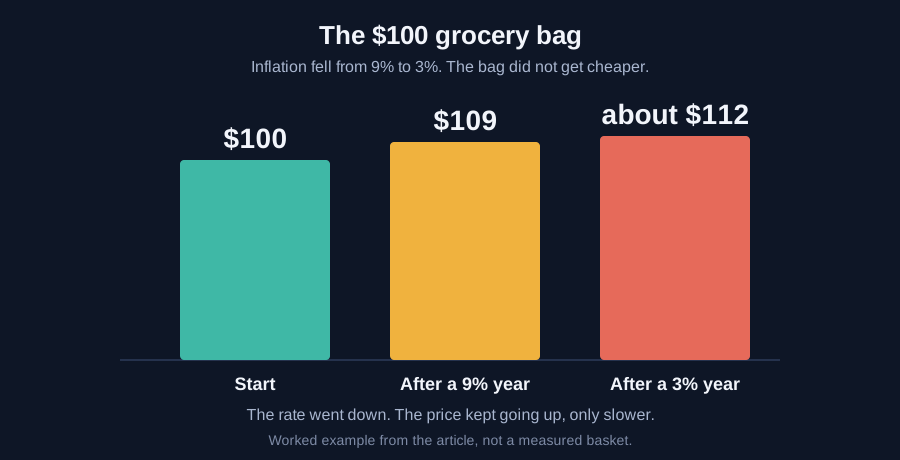
Inflation is a speed. It measures how fast prices are rising. When inflation falls from 9% to 3%, prices are still rising. They are rising at 3% instead of 9%. CNBC spells out the difference: "DisinflationPrices still rising, but more slowly than before. The inflation rate falls, and the prices you already paid stay where they are. means a lower rate of price growth, not an outright price decline."
Take a bag of groceries that cost $100. Inflation of 9% makes it $109 the next year. Then inflation "falls" to 3%, and the same bag costs about $112. Inflation went down. Your bag went up. It never goes back to $100.
The only way overall prices fall is deflationPrices across the economy falling, so the inflation rate is below zero. It is different from prices rising more slowly., when the inflation rate goes below zero and the whole cart gets cheaper. That almost never happens in the United States, and the Federal Reserve works to keep it from happening. The Fed's job is to bring the speed of price increases back to about 2% a year. It does not try to undo increases that already happened. The Associated Press reported in 2024 that the Fed manages "the rate of price changes — rather than price levels themselves," and expects wages to catch up to higher prices, not prices to come back down to meet wages.
Economists fear deflation because of what it does to jobs. If everything will be cheaper next month, people wait to buy. Stores sell less, cut hours and lay people off. The laid-off spend less, and prices fall again. That spiral helped make the Great Depression so deep. CBC News summed up how economists see it: "The popular idea that prices should fall to previous lows gives most economists chills."
Single items can still get cheaper. The Agriculture Department expects egg prices to end 2026 down about 29%, while it expects beef up 9.4% and fresh vegetables up 5.7%, according to its September forecast reported by Grocery Trade News. Gasoline fell 2.9% in July 2026, Bureau of Labor Statistics figures show. In August it jumped 3.9% and was 27.4% higher than a year earlier, Al Jazeera reported. One price dropping is not deflation. David Ortega, a food economist at Michigan State University, described the pattern: "Food prices are downward sticky. They rise quickly when costs go up but rarely decline in a sustained way."
So when a politician promises prices will come down, check which promise it is. On September 11, President Trump said: "Prices will drop very rapidly as soon as we win the military conflict or war," as relayed in MeidasTouch's daily bulletin. Gas could fall if the Strait of HormuzA narrow waterway between Iran and Oman. Before the war about 20 million barrels of oil a day, roughly one-fifth of the world’s oil, passed through it. reopens. The overall cart will not go back to what it cost before the war. CNBC figured U.S. prices were already up about 25% from January 2020 to late 2025, and 2026 added to that.
Where prices stand in fall 2026
Inflation was 2.4% in February, before the war with Iran began on February 28. By May it was 4.2%, the highest in three years, and higher gas and energy prices drove about 60% of the increase, MeidasTouch reported from the May data.
The latest full reading is August. Prices were up 3.4% from a year earlier and 0.4% in that one month, CNBC reported. Energy was up 16.3% over the year. Gasoline was up 27.4%, and it caused more than a third of August's increase. Food was up 2.7%. Core inflationInflation with food and energy taken out, because those two jump around a lot. Experts watch it. For your own budget it can mislead, because you cannot skip food or fuel., which leaves out food and energy, was 2.4%.
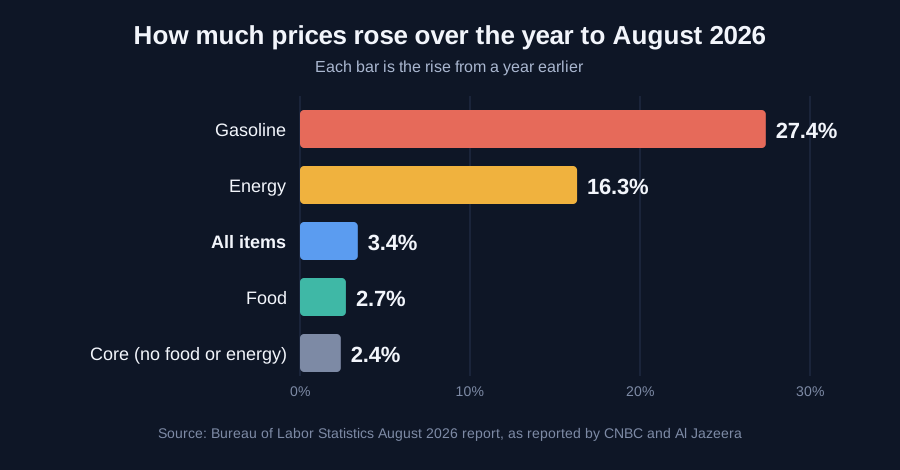
Core inflation is what the experts watch, because food and energy jump around. For your budget it is the wrong number to watch this year. The things it leaves out are the things you cannot skip.
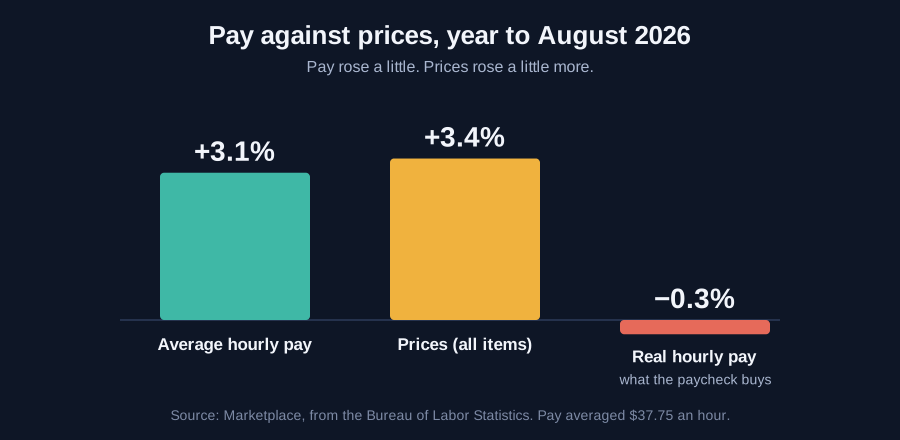
Pay has not kept up. Average hourly pay rose 3.1% over the year to $37.75. Prices rose 3.4%. So real hourly payPay after accounting for prices: what your paycheck actually buys. If pay rises 3.1% but prices rise 3.4%, real pay falls., what your paycheck actually buys, fell 0.3%, according to the Bureau of Labor Statistics. Marketplace ran the headline "Inflation has devoured pay gains over the past year." Breyon Williams told the program that real hourly pay had "been flat or falling, at this point about five straight months now, from April through now." Weekly pay did a little better because people worked more hours. More hours for the same buying power is not a raise.
On September 16 the Federal Reserve raised interest rates for the first time since 2023, by a quarter point to a range of 3.75% to 4%. The vote was 12 to 0. Fed Chair Kevin Warsh said: "The plain fact is that inflation is too high and has been for too long," according to the Fed's transcript and CNN. He added, "This summer's inflation readings do not tell me that underlying trends have meaningfully improved." Two weeks later, New York Fed President John Williams said, "At 3.7 percent, inflation is unquestionably too high," in a September 29 speech that pointed to one more increase late this year.
People feel it, and they expect more. In the Conference Board's September survey, consumers expected prices to rise 6.1% over the next year on average, and confidence fell to 81.9. The AP found 61% of Americans now call gas prices a major problem for their household, up from 48% two years ago. Moody's chief economist Mark Zandi estimated the war is costing the average household more than $1,200 a year: about $360 in gas, $240 in groceries, $110 in other transportation and $205 in higher interest rates, he told NBC News. "The cost of the Iran war is hitting American household budgets hard," Zandi said, "and is set to hit even harder as the war wages on."
The war and the Strait of Hormuz
The Strait of Hormuz is a narrow waterway between Iran and Oman. Before the war, about 20 million barrels of oil a day moved through it, roughly one-fifth of all the oil the world burns. A large share of the world's nitrogen fertilizer, including urea, comes from the same region.
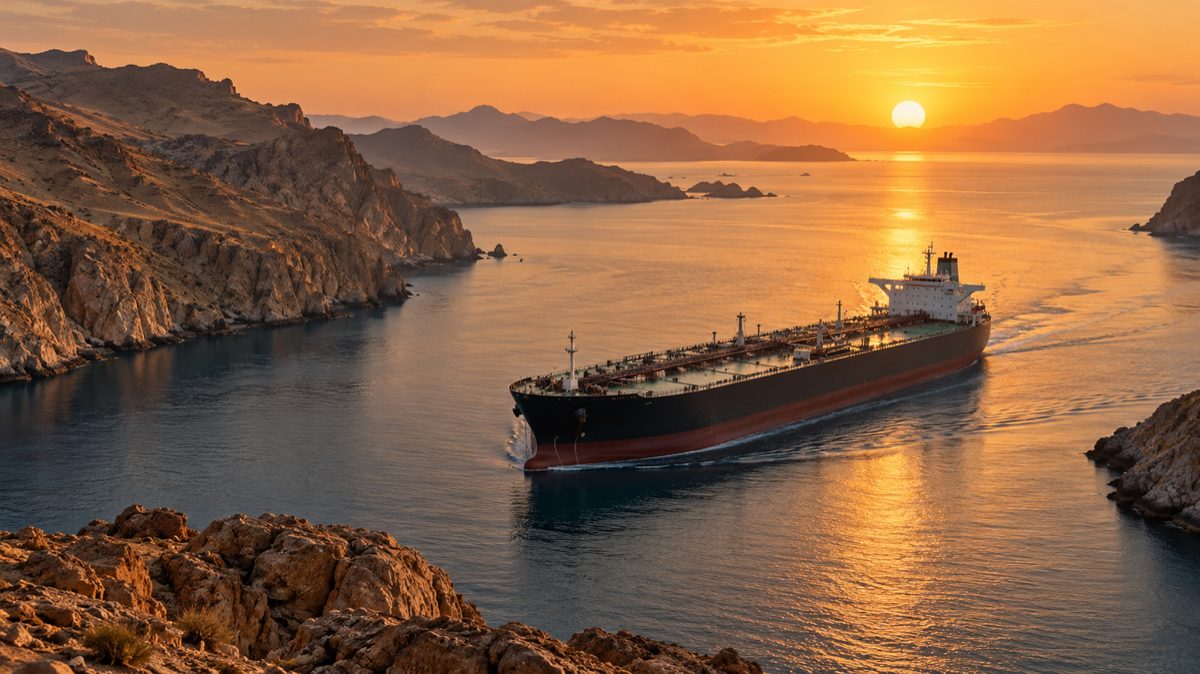
The United States and Israel attacked Iran on February 28. On March 2, Iran's elite military force, the IRGCThe Islamic Revolutionary Guard Corps, a branch of Iran’s armed forces., declared the strait closed to "unfriendly nations." Through the summer, traffic ran about 95% below normal, Al Jazeera reported. A short deal in June let more ships through. The U.S. blockade resumed on July 14, and traffic fell again.
Oil prices followed. Brent crudeThe world’s main benchmark price for oil, quoted per barrel. Brent is a kind of crude oil pumped from the North Sea, and its price sets the tone for oil worldwide., the world's main oil price, rose more than 60% in March alone, the biggest one-month jump since records began in 1988, CNBC reported. On September 28, Brent traded above $105 a barrel after Trump rejected Iran's plan to reopen the strait within seven days. Iran had asked for the blockade and sanctions to be lifted first. Oil has swung several dollars a day since, falling when mediators from Qatar and other countries report progress and climbing when the talks stall. Trump, responding to reports he might ease sanctions, posted: "This is untrue. I offered them NOTHING." Reuters reported that Iranian officials have privately said they doubt a deal can be reached before the U.S. midterm elections. On September 29, Axios reported that Qatar's mediation had "made little progress, with neither side willing to budge." One source told Axios: "It is stuck." On September 29 Brent settled at $102.59, down 2.6%, Reuters reported. On the morning of September 30 it was back up to about $103.70 in early trading, according to the Emirates news agency WAM.
Late September brought one real change. Crude oil started moving again. The tanker tracker Kpler counted a seven-day average of about 13.1 million barrels a day through the strait in its September 28 briefing, against about 17.1 million before the war by its own measure. Saudi Arabia's pipeline to the Red Sea had been shut after drones hit it on September 11. It had been moving 4 million to 5 million barrels a day. No group claimed the attack, and analysts suspected Iran-backed groups in Iraq, Al Jazeera reported. Saudi Arabia restarted the pipeline at a reduced rate in late September. Kpler data cited by Reuters show Middle East crude exports rose to about 16.3 million barrels a day in September, the most since the war began.
Refined fuel has not come back with it. Gulf refineries turn crude into diesel and jet fuel, and they have no pipeline around the strait for those products, bne IntelliNews reported. Gulf diesel exports in August were a little more than a quarter of what they were before the war, according to International Energy Agency figures reported by HormuzEye. Kpler's briefing says middle distillatesThe part of a barrel of crude oil that becomes diesel and heating oil. “Middle distillates” and “distillate fuel” mean that family of fuels., the part of the barrel that becomes diesel and heating oil, "remain the structurally tight leg of the barrel."
That is why gasoline can ease a little while diesel stays near its record. It is also why the war reaches you through more than your own gas tank. The chain runs through the fuel in every truck that stocks your store. Fertilizer followed too: urea, a common nitrogen fertilizer, roughly doubled within weeks of the closure, CNBC, Fortune and Bloomberg reported. It rose from about $400 to more than $850 a metric ton in April, the World Trade Organization reported. The World Bank put the rise at 80% since February. Farmers who paid that in the spring are selling this fall's crops.
This war was a decision, made by people with names. Whether it was right is a separate argument. The price at your pump traces back to that decision, not to bad luck.
Diesel, the fuel under everything
Most people never buy diesel, so they never see its price. They pay it anyway, inside the price of everything else.
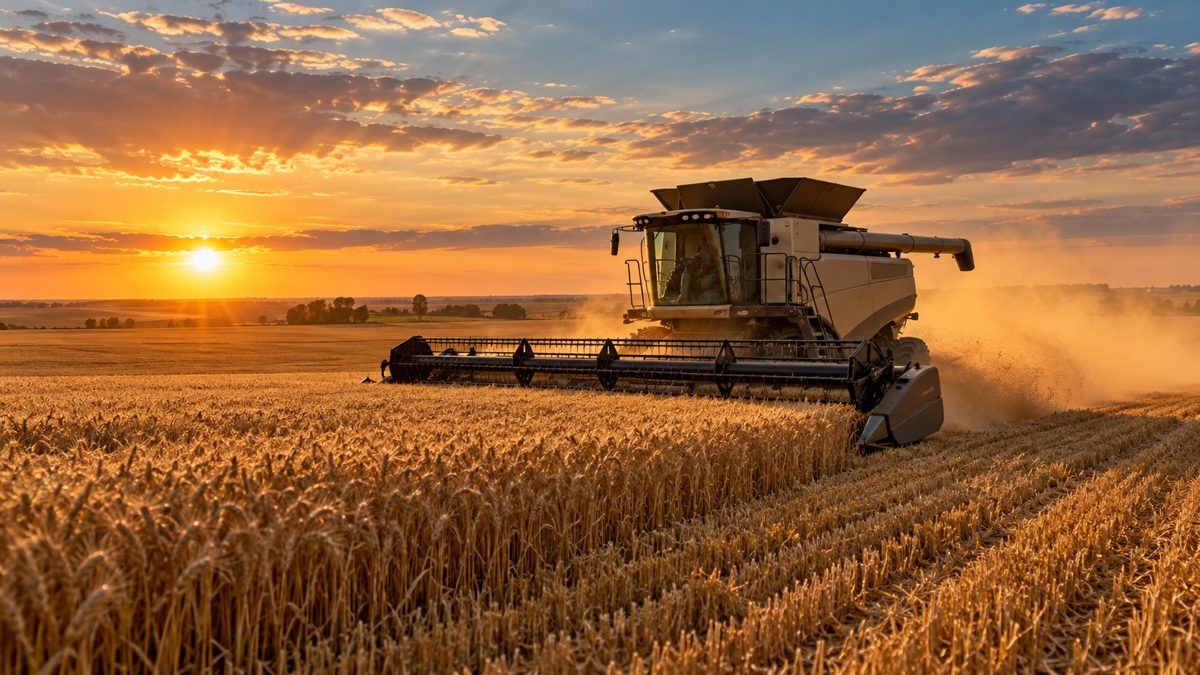
Diesel runs long-haul trucks, freight trains, barges, container ships and farm machinery. Harvesters, tractors, irrigation pumps and the refrigerated trailers that carry lettuce all burn it. Diane Swonk, the chief economist at KPMG, told NBC News: "The cost of diesel gets into just about everything." When diesel rises, she said, everything that is shipped "gets that extra fee tacked onto it." Joseph Brusuelas, chief economist at RSM, told the network that consumers "should be prepared to pay higher inflation for anything that requires being shipped."
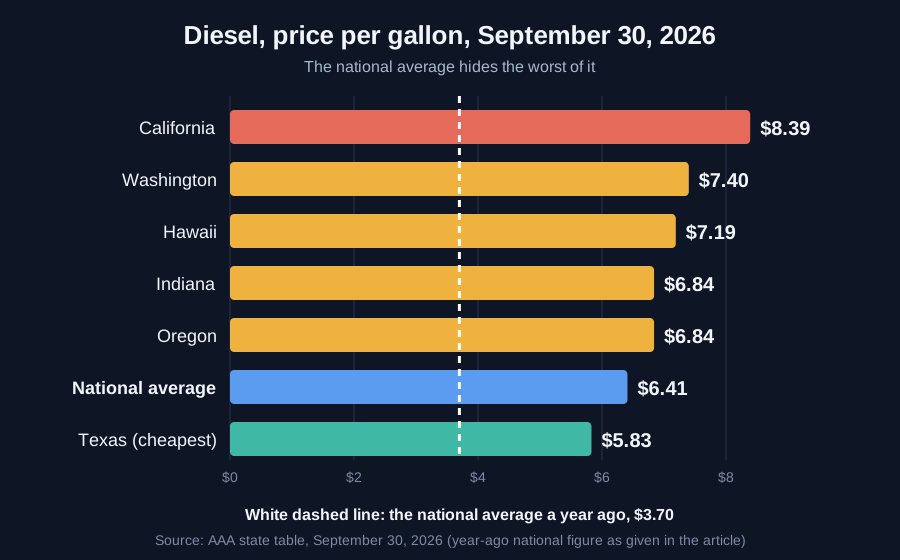
On September 11, NBC News reported, the national average price of diesel crossed $6 a gallon for the first time, at $6.05 by AAA's count that morning. AAA's daily average set a record of $6.53 on September 22, above the old record of $5.82 from June 2022. On September 30, AAA put the national average at $6.41. A year ago it was $3.70. That is about 73% more in one year.
The national average hides the worst of it. On September 30, AAA's state table looked like this:
- California: $8.39 a gallon, up from about $5.15 a year ago
- Washington: $7.40
- Hawaii: $7.19
- Indiana: $6.84
- Oregon: $6.84
- National average: $6.41
- Texas, the cheapest state: $5.83
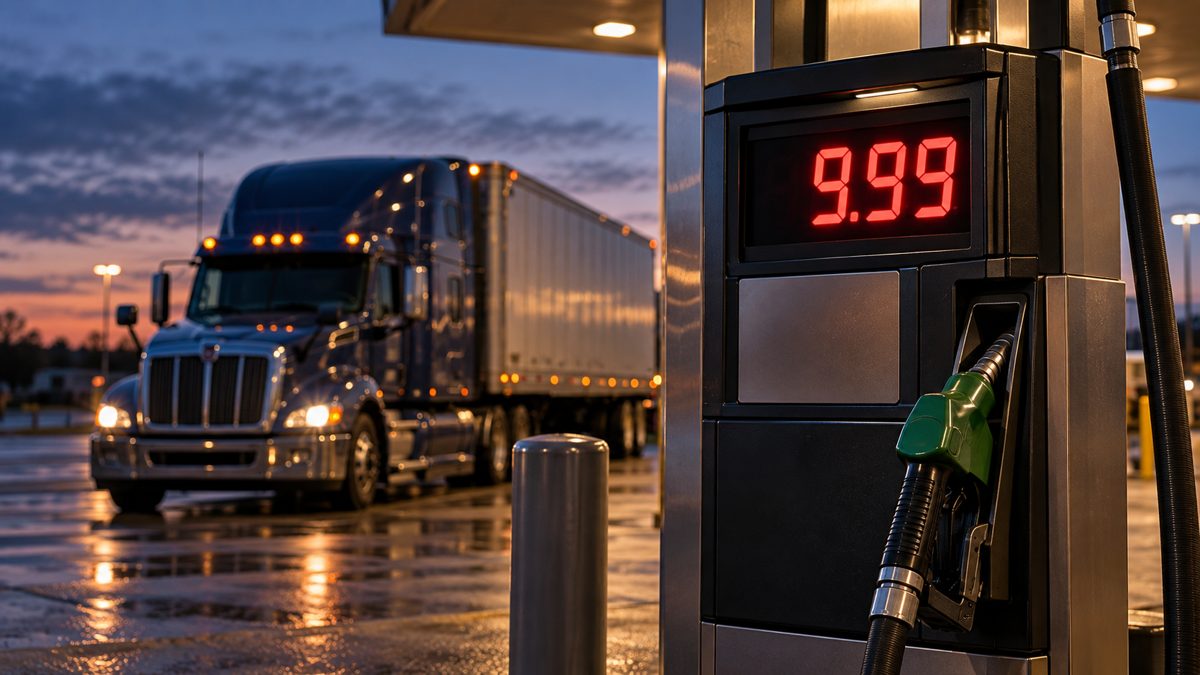
Inside California it runs higher still. On September 29, AAA's averages for San Luis Obispo, San Rafael and San Francisco were about $8.74 to $8.76. Some stations went further. On September 10, GasBuddy analyst Patrick De Haan counted six California stations selling diesel at $9.999 a gallon, the highest number their pump signs can show, KTVU reported. Bloomberg confirmed one of them, a Shell in San Diego's Serra Mesa neighborhood, by phone. Bloomberg noted the real price could run higher, because most signs "can't go higher because they're constrained by three digits."
The pain is not only on the coasts. Senator John Thune, the Senate Republican leader, said on Fox that the issue is "the price of diesel in places like IA, KS, NE and the midwest," as quoted in MeidasTouch's September 28 bulletin. Those are farm states running combines through harvest right now. Drew Peterson, a farmer, told Reuters he expects to spend as much as $1,500 a day to fuel one combine this season, double last year. "You can't just say, well, diesel is expensive, I'm not going to harvest," he said.
Heating oil is nearly the same fuel. Senators Susan Collins and Angus King told the president that Maine households are paying about $675 more to fill a heating oil tank than last year, Reuters reported. Winter has not started.
Why diesel costs so much right now
Three things are squeezing diesel at once: the United States has low stocks stored, Russia has restricted its exports, and Gulf shipping is badly disrupted.
The first is storage. In mid-September, U.S. stocks of distillate fuel, the diesel and heating oil family, were 15.8 million barrels, or 13%, below the five-year average for the time of year, according to Energy Information Administration figures reprinted by the American Journal of Transportation. The agency expects stocks to fall below 100 million barrels this month and stay near five-year lows through most of 2027, the law firm Foley & Lardner noted in a client alert. American refineries were already running at 97% of capacity. They cannot simply make more.
The government's own cushion is thinner too. MeidasTouch reported on September 18 that the Strategic Petroleum ReserveThe government’s emergency stockpile of crude oil, stored in underground caverns along the Gulf Coast. had fallen for 25 straight weeks to 285 million barrels, the lowest since 1982. The reserve held 394 million barrels in January 2025, MeidasTouch's August 30 bulletin noted. A separate one-million-barrel emergency diesel reserve in the Northeast has not been tapped since Hurricane Sandy in 2012. President Trump's budget proposed shutting it down last year.
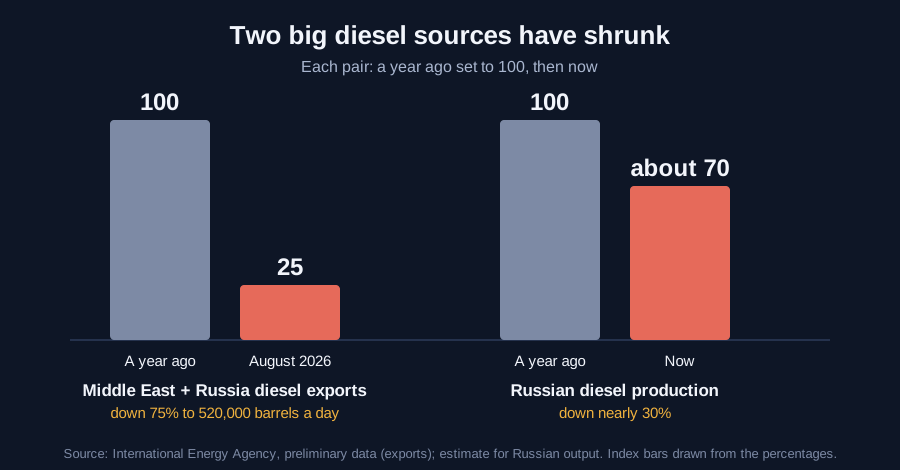
The second is Russia. Ukraine has been hitting Russian refineries with drones all year. In the first eight months of 2026, a Russian refinery was hit about once every three days, the International Energy Agency reported on September 17. Russian refinery output in June fell to its lowest in more than 20 years. Russian diesel production is estimated to be down nearly 30%. Russia used to export about half the diesel it made. On July 8, the IEA said, Russia banned diesel exports for the first time. On September 30 the Russian government signed a decree extending the ban through October 31.
Half of Russia's six biggest diesel refineries cut output sharply or stopped completely in September, Reuters calculated. The Kirishi refinery was fully shut down. Benedict George of the price agency Argus told CNBC the strikes have made diesel "the biggest problem for the global oil system, whereas before it was one of several very big problems."
The third is the Gulf, covered above. Put the last two together and the numbers are stark. The IEA's preliminary data show combined diesel exports from the Middle East and Russia fell to 520,000 barrels a day in August, 75% below a year earlier.
Diesel buyers everywhere are now bidding for what is left, and much of what is left comes from American refineries. The United States has supplied about half of Europe's diesel imports in recent months, Argus's George told CNBC. That puts American drivers in a bidding war with European buyers for fuel made in American refineries. In Fresno on September 29, diesel averaged $8.46 a gallon.
That last fact is what set up the fight in Washington.
The diesel export ban fight
If American diesel is flowing to Europe while Americans pay record prices, the obvious move is to keep it home. The White House has been arguing about exactly that.
On September 23, Politico reported that the administration was preparing a plan to ban diesel exports for 90 days, citing five people familiar with the talks. Politico reported that it would have been the first limit on U.S. energy exports since the ban on oil exports was lifted in 2015. The same day, the White House denied that report, Reuters reported. Energy Secretary Chris Wright said a blanket export banA rule that stops companies from selling a product to buyers in other countries. A diesel export ban would keep American-made diesel from being sold abroad. would not work and could push gasoline and jet fuel prices higher, Carscoops summarized, and said the administration was looking at voluntary deals with refiners instead.
Then the president reopened it. Trump told Fox that a ban could raise gasoline prices, but "we're thinking about it very seriously. We may do it," CNBC reported on September 28. Asked whether truckers should expect high diesel prices to continue, he answered "I don't know," MeidasTouch's September 28 bulletin quoted him saying.
A ban sounds like it keeps fuel here. The people who study fuel markets mostly say it backfires. David Ortega, a food and agricultural economist at Michigan State University, said: "An export ban won't fix high diesel prices. It might lower them briefly by keeping exported barrels at home. But it creates no new fuel." Refiners who lose their foreign buyers, he said, "could respond by processing less crude," and that "would lead to higher prices down the road."
The tanker tracker Kpler said in its September 28 briefing that an outright ban would keep roughly 1.2 million barrels a day at home and could quickly overwhelm Gulf Coast storage and force refineries to cut how much crude they run. That cut would hit gasoline and jet fuel too. Morgan Stanley warned of "a feedback loop to US gasoline prices as refinery runs adjust." Mike Sommers, head of the American Petroleum Institute, the oil industry's lobby, said restricting exports "would only compound the problem."
Europe would pay first. Argus's George said a U.S. restriction would likely send European diesel prices "to a new unprecedented level." U.S. diesel is more than half of the European Union's diesel imports, according to S&P Global figures cited by Politico Europe. Oxford Economics estimated a ban could cut some U.S. regional prices about 30% within weeks while European wholesale prices jumped 40% to 50%, Yahoo Finance reported.
By September 29 the White House was looking at other moves. It urged the European Union to release diesel from Europe's own emergency stocks, and officials were "particularly frustrated with France and Germany," Reuters reported. Other options on the table include asking refiners for a voluntary limit on exports, suspending the federal diesel tax, and letting more red-dyed dieselDiesel dyed red to show it is untaxed and meant only for farm and off-road use, not for cars and highway trucks., normally sold only for farm and off-road use, be sold more widely. A White House official told Yahoo Finance: "No policy decision has been made at this time." European officials said they expect the ban idea to be dropped.
A ban would lower prices for a few weeks before the midterms and raise them after, at home and abroad. Where your representatives stand on this is on the record, and it is a question you can ask them this month.
From a California diesel pump to your grocery bill
California is the most expensive place in the country to buy diesel. It is also where a large share of the country's food is grown. Those two facts together reach your kitchen, wherever you live.
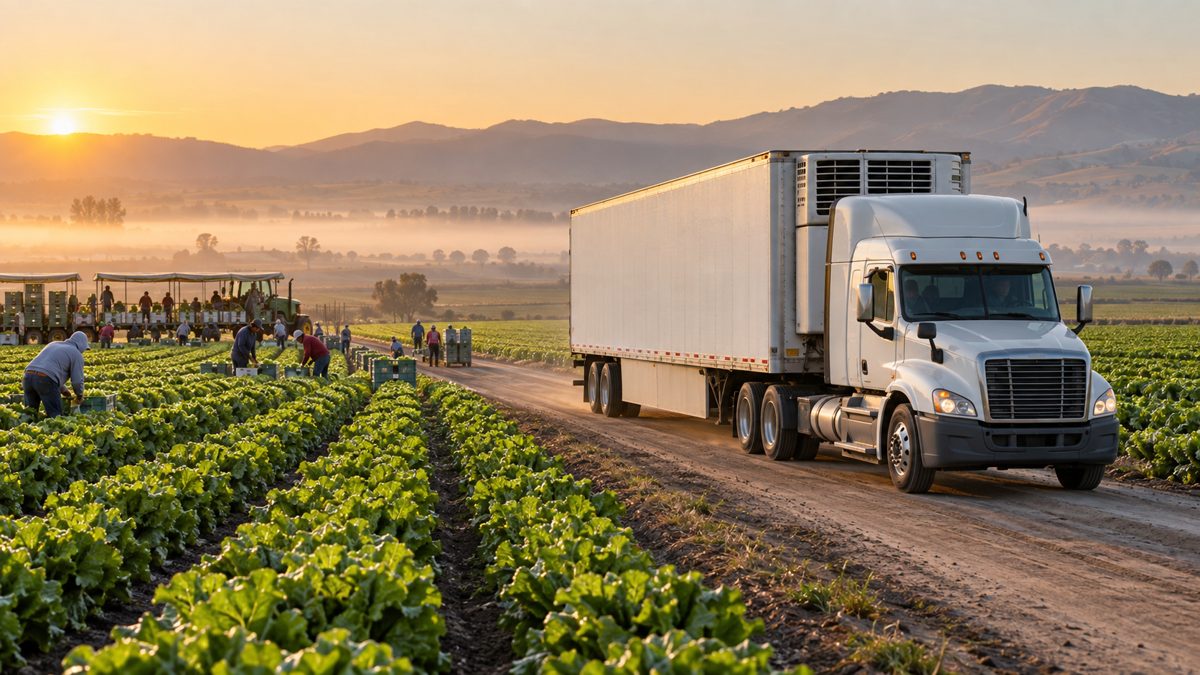
Nearly half of the country's vegetables and more than three-quarters of its fruits and nuts are grown in California, according to the California Department of Food and Agriculture. Nearly all of America's almonds, pistachios, walnuts and figs come from there. The state's farms took in $61.2 billion in 2024.
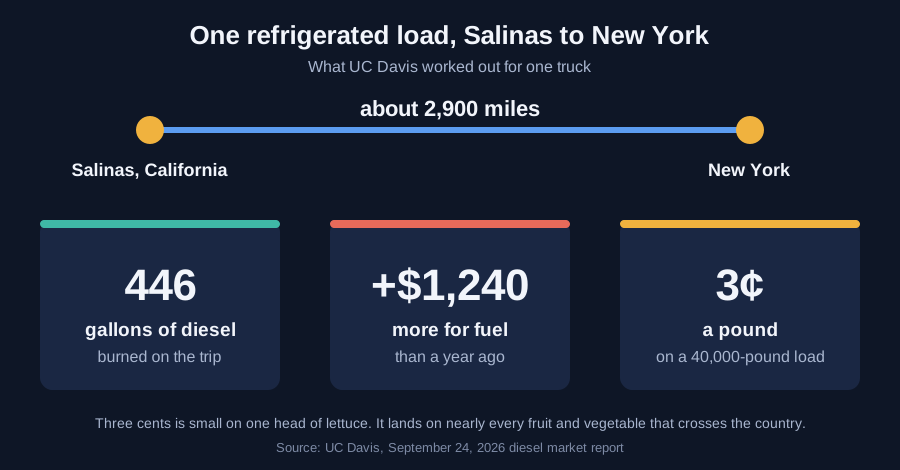
Researchers at UC Davis worked out what that means for one truck. A refrigerated load from Salinas to New York travels about 2,900 miles and burns about 446 gallons. At this year's diesel prices, that trip costs about $1,240 more in fuel than a year ago, or about 3.1 cents a pound on a 40,000-pound load, their September 24 analysis found. Three cents a pound is small on a head of lettuce. It lands on nearly every fruit and vegetable that crosses the country.
Follow one head of lettuce. It is grown in the Salinas Valley. Wayne Gularte, a grower near Gonzales, told Reuters his fuel went from about $5 a gallon to about $7. The tractor, the irrigation pump and the harvest crew's equipment burn diesel. The lettuce is cooled and loaded onto a refrigerated trailer. Dean Croke of the freight data firm DAT told Reuters that "the cost to transport produce out of California is up 40% to 120% from a year ago," and that "in some California cities, diesel prices have topped $8 per gallon." The truck crosses the country to a warehouse, then a store. Every leg adds fuel.
How much of that reaches your receipt is a real argument. Ortega at Michigan State says fuel is "a single digit share of overall food costs at retail, so I do not expect major spikes at the grocery store." The Independent Grocers Alliance puts fuel at 15% to 30% of total food cost, as cited by YCharts. Both sides agree on the direction and the timing. Ortega said: "Early on, much of the cost increase gets absorbed along the supply chain through existing freight contracts and retailer margins. But as contracts reprice and fuel surchargesAn extra fee a railroad, shipper or delivery company adds to a bill when fuel prices rise. It is meant to cover the extra fuel cost. take hold, more of that cost makes its way to the grocery store."
Food prices rose only 0.1% in August, and that number is likely to climb. Freight contracts signed last spring are still running at old prices. When they renew, the new diesel price goes in. In July, fresh fruit was already up 4.9% over the year and fish and seafood 7%, Bureau of Labor Statistics data show. Ground beef averaged a record $6.92 a pound in August, up 9.6%, MeidasTouch reported, citing the same data.
Some people are already cutting back. Erin Hutchins, 44, of Maine, lost $200 in food assistance and told the Guardian, "I try to eat as little as possible," in reporting republished by Yahoo Finance.
The trucking companies caught in the middle are in trouble too. Croke told Reuters, "We're about to see diesel price-driven bankruptcies" among trucking firms. Fewer trucks means less competition to haul your food, and less competition rarely makes anything cheaper.
Who is making money while you pay more
Higher prices are somebody's higher revenue. In 2026 the winners are easy to name.
Exxon Mobil earned $14.5 billion in the second quarter, more than double the $7.1 billion a year earlier, or about $159 million a day. Chevron earned $12 billion, up nearly 400% from $2.5 billion a year earlier, CNBC reported. Fortune called it the company's largest quarterly profit ever. U.S. corporate profit marginsThe share of a company’s sales that is left as profit after paying its costs. A wider margin means the company keeps more of each dollar you spend. overall reached 19.4% of the value companies produce in the second quarter, the widest in records going back to the 1940s, Bloomberg reported, helped by "price hikes and resilient consumers." In the same months, real hourly pay fell.
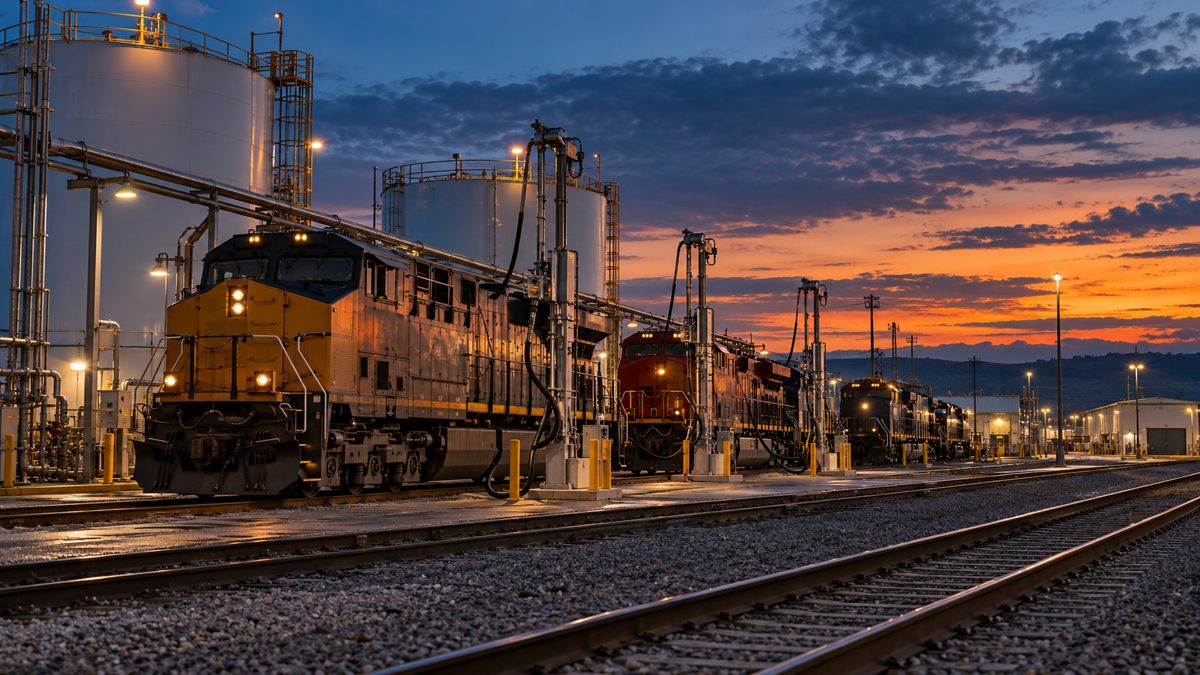
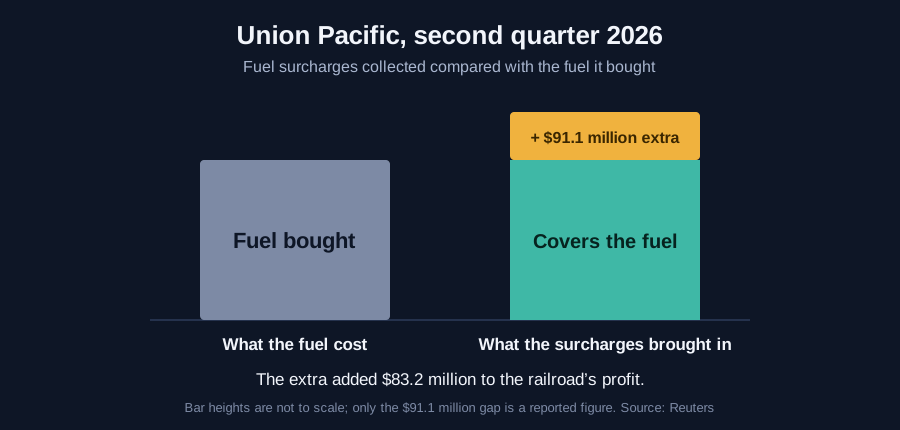
When diesel rises, railroads and delivery companies add a fuel surcharge to their bills. That makes sense if the surcharge covers the fuel. Union Pacific collected $91.1 million more in fuel surcharges in the second quarter than it spent on fuel, and that extra added $83.2 million to its profit, Reuters reported. The railroad said surcharges are "a component of the overall cost we negotiate with customers." UPS's fuel surcharge rose from about 9% in August 2021 to 24.25%, while FedEx's was 23.75%, Reuters reported, citing AFS Logistics. Container shipping surcharges went up as much as 75% while marine fuel rose 30%. Amazon added a 3.5% fuel and logistics fee on sellers who use its warehouses. FedEx's chief customer officer, Brie Carere, said she had worried about customers pulling back on shipping. "That has not at all been the case," she told investors.
Grocers have done it before, on the record. At the Federal Trade Commission's 2024 trial over the Kroger–Albertsons merger, an email from Kroger's senior pricing director Andy Groff was shown to the court: "On milk and eggs, retail inflation has been significantly higher than cost inflation," Newsweek reported. Back in 2021, Kroger's CEO Rodney McMullen told investors: "we view a little bit of inflation is always good in our business," according to the earnings call transcript.
How much of inflation this explains is disputed, and the dispute is real. The Groundwork Collaborative, a progressive research group, found corporate profits drove 53% of price growth in mid-2023, compared with 11% in the 40 years before the pandemic. Economists at the San Francisco Fed found in May 2024 that economy-wide markups stayed "essentially flat" and were not a main driver. An IMF staff study of Europe found profits accounted for about 45% of the rise from early 2022, import costs 40% and labor 25%. At the gas pump itself, Rice University's Ken Medlock said in March, "there is no price gouging that I can see."
The spark in 2026 was fuel. The corner gas station is mostly passing on what it pays. The money is made further up the line: at the oil companies selling crude near $100 a barrel, at the refiners, whose margin between crude and diesel hit a record above $100 a barrel on August 17, the law firm Foley & Lardner reported, and at the shippers whose surcharges run ahead of their fuel bills. When costs rise, prices rise with them. When costs fall, companies that can hold prices up usually do.
Tariffs, and who got the refund
A tariff is a tax on goods brought into the country. The foreign company does not pay it. The business importing the goods, usually a U.S. company, pays it to the U.S. government at the border, and businesses often raise prices to cover some or most of that cost.
A New York Fed post in February found that nearly 90% of the cost of the 2025 tariffs fell on U.S. companies and consumers. Companies said so in their own words. McCormick's CEO Brendan Foley told investors that about half of the extra tariffs on McCormick products remain in place, "and we continue to face related inflationary pressures." Columbia Sportswear raised prices by a "high single-digit percent."
On February 20, 2026, the Supreme Court struck down the emergency tariffs 6 to 3, SCOTUSblog reported. The Penn Wharton Budget Model figured the government had collected about $165 billion from those tariffs through January, and that up to $175 billion could be refunded. The refunds go to the importers who paid the tax at the border. Justice Brett Kavanaugh noted in his dissent that the money may go to importers "even though some importers may have already passed on costs to consumers."
So the shopper who paid the higher price has no claim to the refund. Walmart said it had received nearly $3 billion in tariff refunds, NBC News reported. It says it made more than 11,000 price rollbacks. Its CFO John David Rainey explained why: with $4 gas, "It's why we have leaned so heavily into lower prices." Walmart also reported more than $2 billion in extra fuel costs. Most importers have made no promise at all.
Tariffs and diesel work the same way on your bill. The cost gets added at one step, passed on at every step after, and it arrives at the register with no label on it. A tariff is a choice made by one person with a pen. Diesel's price in 2026 is tied to a war that was also a choice. Both answer to elections.
The money-printing argument
You have probably heard that inflation happens because the government "printed trillions." Part of that is true. Most of it misses when and where the money went.
The Federal Reserve can create new dollars to buy government bonds and other assets from banks. That is what people mean by printing money, though almost none of it is paper. Between 2008 and 2022 the Fed's holdings grew from under $1 trillion to nearly $9 trillion, Federal Reserve data show. By late September 2026 they were about $6.75 trillion. The new Fed chair, Kevin Warsh, has made cutting them a priority but had not acted yet, CNBC reported.
For most of the years between 2008 and 2020, consumer inflation stayed near or below the Fed's 2% target. If new money turned straight into grocery inflation, that decade should have been on fire. It was not. Economists such as Michael Hudson argue the money mostly lifted the prices of things wealthy people own: stocks, bonds and real estate. The people who owned those got richer. Wages crawled.
Consumer prices took off in 2021, when stimulus checks put money directly into people's hands at the same moment the pandemic broke supply chains. Economists like Larry Summers argued the government overdid the stimulus and overheated demand. A 2022 San Francisco Fed study found supply problems caused about half of the rise and demand about a third. Both were real.
The 2026 surge is different again. The Fed's holdings are far below their 2022 peak, and inflation still jumped from 2.4% in February to 4.2% in May. The Bureau of Labor Statistics points mainly to energy and gasoline, and the Fed's own Beige Book reports say tariffs also pushed some prices up. None of that points to new money. Blaming only the printer this year points you away from the decisions that raised your prices.
Printing can also go badly wrong. In Germany in 1923, the government printed money so fast that by November of that year one U.S. dollar was worth about 4.2 trillion marks, according to Britannica. Savings were wiped out. Zimbabwe and Venezuela went through the same thing decades later. The United States in 2026 is nowhere near that. Anyone using the word hyperinflation about today's prices is selling fear, not describing your bill.
What the Fed can and cannot fix
The Fed's main tool is the interest rate, the price of borrowing money. When prices rise too fast, the Fed raises rates. Borrowing usually costs more for households and businesses: many loans, credit cards and often mortgages. People and businesses borrow and spend less. Demand cools, and prices stop rising as fast.
That works against the first kind of inflation, too much money chasing too few goods. It does not work against the second. A rate hike does not put a single barrel of diesel back on the market, reopen the Strait of Hormuz, or rebuild a Russian refinery. What it does is make everything you borrow for more expensive while the fuel shock keeps going.
The Fed knows this, and it raised rates anyway on September 16. Its concern is that high fuel costs are spreading into everything else and into what people expect prices to do next year. Warsh said the Fed "must be confident that underlying inflation is moving to our objective clearly and at sufficient speed," and that the committee that votes on interest rates "decided that this standard has not been satisfied." The Fed's own projections point to another increase by the end of the year.
You pay for that twice. Once at the pump, and again on your interest. Brett Meiselas of MeidasTouch wrote the morning of the hike: "This is the war showing up directly in your mortgage and your savings account."
A rate hike also works partly by slowing hiring, so workers have less power to push for raises. In the Fed's May 4, 2022 press conference transcript, then-Chair Jerome Powell said the Fed wanted wage growth to moderate and described a path to "get wages down" while bringing inflation down without a recession. Economists argue about whether that is a necessary cost or a thumb on the scale against labor. Either way, the people it presses on are the ones who work for a paycheck.
The Fed is not elected. Its governors are picked by the president and confirmed by the Senate, people you do vote for, and the chair is chosen from among them. The Fed can only react to a war or a tariff. The people who start them are on the ballot.
Who pays and who comes out ahead
Inflation does not hit everyone the same way. It moves money from some people to others, quietly, and nobody votes on it.
People who depend on wages and cash are hit hard. Savings in a low-interest account buy less every month when prices rise faster than the interest. Paychecks can rise slower than prices; as of August 2026, real hourly pay was down 0.3% from a year earlier. Families that spend a lot of their income on gas, food and rent feel it hardest. Gas is rising very fast. Food and rent are rising more slowly, but they are bills nobody can skip.
People with a locked-in, low-rate loan can come out ahead. If you have a fixed-rate mortgage from a few years ago, the principal-and-interest part of your payment stays the same, though taxes and insurance can change the total, and you repay it in dollars that are worth less. The U.S. government, the biggest borrower of all, benefits the same way: inflation shrinks what it owes in real terms.
People who own things are often better protected. Homes, stocks and businesses can rise in price with inflation, though not always. If you own them, your wealth may keep up. If you rent and have no investments, you have less protection.
Companies with pricing power can come out ahead. When every price is rising, a company that dominates its market can sometimes raise prices faster than its costs, and some reports say firms used inflation as cover. Record profit margins in 2026 are a clue, not proof.
People shopping for a home or a car face higher loan rates. Mortgage rates are high, and car buyers face higher loan rates too.
So two people can live through the same inflation and see opposite things. A homeowner with stocks may hardly notice. Quinten Martinez, the Amazon driver from the start of this article, told the AP he worries about choosing between groceries and gas. The argument over inflation is really an argument over who should carry the cost of bringing it down, and that is a political question, not a math problem.
What you can do about it
Some of this is out of your hands. A lot of it is not.
Find out who represents you and how they voted. The war, the tariffs, a diesel export ban and the Fed's leadership all run through people you vote for. Our voter tool shows your representatives and how they actually voted, not what their ads say. It takes a few minutes. Look up where they stand on the war, on tariffs and on the diesel export question, and ask them.
Check what you are told. When someone says prices are about to fall, ask which prices, and when. Remember the difference between prices rising slower and prices falling. The article includes source links for its numbers. Run anything you read through our Fact-Check Anything tool, including this article.
Move your money together with other people. Companies keep prices high when they are sure you will pay anyway. That bet changes when enough people change where they shop. In 2011, Bank of America dropped a new $5 monthly debit card fee about a month after customers began moving their accounts. In 2025, reports said Cracker Barrel's stock fell more than 14% at one point after it dropped its old logo, and the company brought the logo back within days. Neither was about politics. Both were customers acting together.
Protect your own household. Food prices can lag fuel prices by months. If you have room in the budget, stocking a few storable staples now at today's prices is a small, real step. Your own earning power is the one thing inflation cannot shrink directly. If pay in your field has risen and yours has not, that is a conversation to have. This is general information, not personal financial advice.
If you heat with oil, act before winter. Heating oil tracks diesel. Ask your supplier about locking a price or a budget plan now, and check with your state's energy assistance program.
What nobody knows yet
Several things that will decide your bills this winter are not settled.
- Whether the diesel export ban happens. The president says he is thinking about it "very seriously." His energy secretary says it would not work. Reporting through September 30 shows the White House still weighing it, with no ban announced.
- Whether the Strait of Hormuz reopens. More crude oil is getting out again, but, according to the International Energy Agency, Gulf diesel exports were still only a little more than a quarter of their pre-war level in August. Trump rejected Iran's latest plan over the weekend of September 26 and 27 and has reportedly told aides he expects strikes to resume after the midterm elections.
- How long Russia keeps its diesel ban. It was due to end September 30. On September 30 the Russian government signed a decree extending it through October 31, TASS reported.
- How much of diesel's jump reaches food. Economists disagree on the size and the timing. The evidence points to higher diesel costs reaching grocery prices over time.
- Whether the Fed raises rates again. Its next meeting is October 27 and 28. Its own projections point to one more increase this year.
- What September's numbers show. The next inflation report is due October 14.
Those are the questions that will set your heating bill, your grocery bill and your loan rate this winter. Every one of them runs through a decision someone in office can make or refuse.
Sources
Every link below opens in a new tab. They are grouped by who published them. A link is listed only if it backs a claim in the article. Government pages load in a normal browser even though some block automated checkers.
Federal Reserve and New York Fed
- Fed press conference transcript, May 4, 2022 — used in: What the Fed can and cannot fix
- Fed press conference transcript, September 16, 2026 — used in: Where prices stand in fall 2026
- John C. Williams speech, September 29, 2026 — used in: Where prices stand in fall 2026
Bureau of Labor Statistics
- Consumer Price Index (CPI) home page — used in: What inflation is
- Consumer prices up 9.1 percent over the year ended June 2022 — used in: What inflation is
International Energy Agency
- Russian refining sector struggles amid intensifying Ukrainian attacks — used in: Why diesel costs so much right now
California Department of Food and Agriculture
- California Department of Food and Agriculture: statistics — used in: From a California diesel pump to your grocery bill
AAA
- AAA state gas price averages (state table) — used in: Diesel, the fuel under everything
University of California, Davis
- September 2026 California Diesel Market Report — used in: From a California diesel pump to your grocery bill
Michigan State University
- Ask the expert: What’s ahead for fuel, food and fall harvest — used in: The diesel export ban fight
Reuters and syndicated Reuters reports
- Exclusive: half of Russia's top diesel-producing refineries cut back output (Reuters) — used in: Why diesel costs so much right now
- Iran war drives US transport fuel surcharges, but also industry profits (Reuters) — used in: Who is making money while you pay more
- Record US diesel prices squeeze farmers, food prices may rise (Reuters) — used in: Diesel, the fuel under everything
- Senators from both parties ask Trump to release emergency heating oil as prices surge (Reuters) — used in: Diesel, the fuel under everything; The diesel export ban fight
- White House urges EU to draw down diesel inventories (Reuters) — used in: The diesel export ban fight
CNBC
- August 2026 CPI inflation report — used in: Where prices stand in fall 2026
- Cumulative inflation since 2020 — used in: Why lower inflation will not bring prices back down
- Deflation versus disinflation: what is the difference — used in: Why lower inflation will not bring prices back down
- Diesel, oil and the Trump export-ban talk — used in: Why diesel costs so much right now; The diesel export ban fight
- Exxon and Chevron second-quarter earnings — used in: Who is making money while you pay more
- Kevin Warsh, Fed interest rates and the balance sheet — used in: The money-printing argument
- Oil price today: Brent and WTI, March 31, 2026 — used in: The war and the Strait of Hormuz
Bloomberg
- California gas station with $9.99 diesel exemplifies fuel crisis — used in: Diesel, the fuel under everything
- US corporate profit margins widen to highest on record — used in: Who is making money while you pay more
NBC News
- Diesel hits all-time high of $6 per gallon — used in: Diesel, the fuel under everything
- Iran war fuels inflation, mortgage rates and gas prices — used in: Where prices stand in fall 2026
- Walmart gets billions in tariff refunds, sales slow — used in: Tariffs, and who got the refund
CNN
- Federal Reserve interest rate decision, September 16, 2026 (live news) — used in: Where prices stand in fall 2026
Al Jazeera
- How a 95 percent drop in Hormuz traffic changed global shipping | US-Israel war on Iran News — used in: The war and the Strait of Hormuz
- Rising petrol costs drive sharp inflation increase in US in August | Inflation News — used in: Why lower inflation will not bring prices back down
Fortune (Associated Press report)
- As Americans choose between gas or groceries, Trump says it's a very inexpensive price to pay (AP, via Fortune) — used in: Introduction
Marketplace
- Real hourly earnings see inflation devour wage gains — used in: Where prices stand in fall 2026
Yahoo Finance
- 'I try to eat as little as possible': US shoppers detail grocery price trade-offs — used in: From a California diesel pump to your grocery bill
- Trump sounds less than sold on a diesel export embargo as his team weighs 3 options short of a ban — used in: The diesel export ban fight
MeidasTouch
- Community note grounds Trump officials' beef claim — used in: From a California diesel pump to your grocery bill
- This Weekend in Politics, Bulletin 451. — used in: Why diesel costs so much right now
- Today in Politics, Bulletin 457. 9/11/26 — used in: Why lower inflation will not bring prices back down
- Today in Politics, Bulletin 469. 9/28/26 — used in: Diesel, the fuel under everything
- Wednesday Afternoon News Updates: Inflation, Elections, Iran, and the Epstein Freakout That Broke the White House – 6/10/26 — used in: Where prices stand in fall 2026
- Wednesday Updates: Trump's War Chaos Deepens as Houthis Shoot Down Saudi F-15, Fed Weighs a Rate Hike, and MAGA Sends Congress Home to Dodge Accountability – 9/16/26 — used in: What the Fed can and cannot fix
Other news, trade and research outlets
- bne IntelliNews - Iran's grip on Hormuz slips as oil flows top 13.5mn b/d — used in: The war and the Strait of Hormuz
- Diesel gas hits $9.999 per gallon in these two Bay Area cities — used in: Diesel, the fuel under everything
- Diesel Stocks Are Expected to Fall Below 100 Million Barrels. Check Your Fuel Clauses. — used in: Why diesel costs so much right now
- EU officials confident Trump will drop plan to ban diesel exports — used in: The diesel export ban fight
- How Gas and Diesel Prices Feed Into Inflation - YCharts — used in: From a California diesel pump to your grocery bill
- If you don't like inflation, you'll hate deflation — used in: Why lower inflation will not bring prices back down
- Kroger (KR) Q1 2021 Earnings Call Transcript — used in: Who is making money while you pay more
- Kroger News: Company Gouged Prices Above Inflation - Newsweek — used in: Who is making money while you pay more
- Supreme Court strikes down tariffs — used in: Tariffs, and who got the refund
- Trump Wants To Keep Diesel In America, But His White House Says No Ban Is Coming — used in: The diesel export ban fight
- USDA Food Price Outlook: Grocery Inflation Cut to 2.4% — used in: Why lower inflation will not bring prices back down
- What goes into diesel prices? — used in: Why diesel costs so much right now
Undastandable
- See how your representative actually voted — Undastandable — used in: What you can do about it