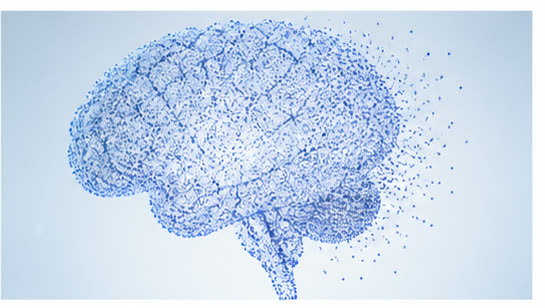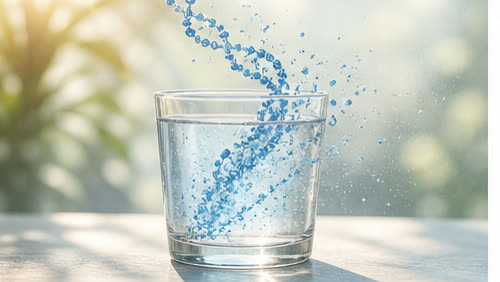
Dr. Scott Sherr is an internal-medicine physician. Most mornings he puts a few drops of a bright-blue liquid into a glass of water and drinks it before work, and increases the dose when he travels or sleeps badly. He is not alone, and the people doing it are not who you'd expect — several are practicing doctors. Ask them why and the answers repeat: a clearer head, energy that holds through the afternoon, a mood that sits a little higher.
The detail that makes it worth your ten minutes: those drops aren't a new invention. The same chemical has sat in hospital cabinets for over a century. So the useful question was never "miracle or nonsense?" It's this: which of the exciting claims are backed by human evidence, and which are still just promising? We'll take the claims one at a time, grade each on the strength of its source, and end with how a careful person would actually try it. Claims tied to specific doctors or early studies are labeled and graded as such throughout. This is education, not medical advice.
What does it actually do?
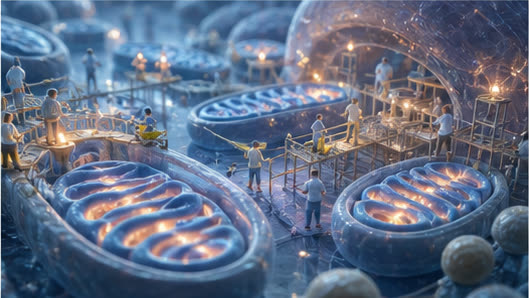
The whole mechanism fits in a breath. Inside every cell are mitochondriaThe tiny power plants inside your cells. They turn food and oxygen into the energy the cell runs on. — power plants that pass charged particles down a line to make energy. When part of that line jams, methylene blue can carry the charge past the jam and keep the line moving. That is the published-in-the-lab idea underneath every "more energy" claim. Not marketing. Actual chemistry.
Two physicians describe it the same way. Dr. Boz — Annette Bosworth, MD, who takes it herself — calls it a "jumper cable": a bypass, not a repair. Dr. Scott Sherr, MD, an internal-medicine doctor who has built much of his practice around it, calls it a "redox" molecule — one that can pick up electrons in one place and drop them off in another, which is exactly the job that keeps energy flowing and helps clean up the byproducts energy-making leaves behind. Two doctors, one picture. Almost everything good about methylene blue grows out of that picture — and so does its one caution, which we'll get to.
How old is this medicine?
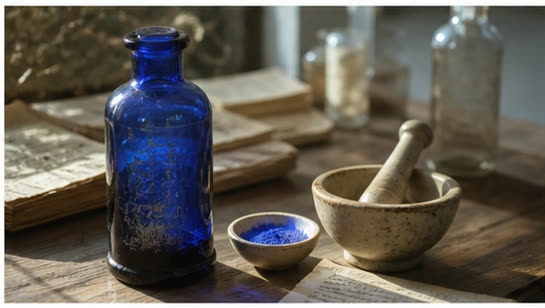
This is what separates methylene blue from the usual internet powder: it's one of the oldest medicines we have. It was invented in the 1870s as a textile dye — among the first fully man-made chemicals. By the 1890s it was treating malaria and staining germs like tuberculosis so scientists could see them. The military leaned on it too: it was the first synthetic antimalarial, given to troops through World War II and into the 1950s — soldiers hated it because it turned their urine blue, and it was eventually dropped for newer drugs. And today, right now, it sits in hospitals as a rescue drug for methemoglobinemiaAn emergency where blood loses its ability to carry oxygen properly. Methylene blue converts it back to the working form — a genuinely life-saving hospital use., a blood emergency where oxygen delivery fails. That keeps it on the World Health Organization's (WHO) list of essential medicines.
So the modern wave isn't inventing a substance. It's asking whether a well-understood old one has uses nobody chased. In her clip on whether it's worth the risk, Dr. Boz recounts first meeting it in the microbiology lab, staining malaria and tuberculosis, and notes hospitals have leaned on it for over 150 years. In his own walkthrough of its health benefits, Dr. Eric Berg — a chiropractor, DC, an educator rather than a physician, which is worth knowing when you weigh his words — adds that emergency rooms keep it ready for cyanide and carbon-monoxide poisoning.
One blue chemical, four lives: a dye in the 1870s, a germ fighter by the 1890s, a hospital tool from the 1900s to today, and now a daily wellness experiment. The first three lives are settled history. The fourth is the fresh, still-being-tested chapter — and it starts from firmer ground than most supplements ever get.
Does it really help memory?
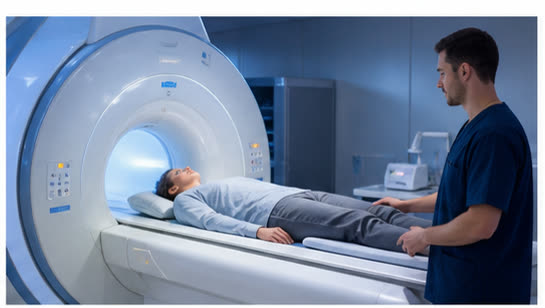
Of everything people hope for, memory has the most actual human data behind it. In 2016, a study in the journal Radiology gave 26 healthy adults a single oral dose of methylene blue (280 milligrams, about 4 milligrams per kilogram of body weight) or a placeboA fake treatment given so researchers can tell a real effect apart from expectation., then ran attention and memory tasks inside a brain scanner. The methylene-blue group showed increased activity in the brain's attention and memory regions and, in the authors' words, a seven-percent increase in correct responses during memory retrieval. Peer-reviewed and placebo-controlled.
Now the ceiling. That was one small study: 26 healthy adults, given a single dose. That dose, 280 milligrams, is far above the 10 to 60 milligrams people usually take day to day, so the study does not show what an everyday dose does. An earlier trial in claustrophobic volunteers pointed the same way: participants on methylene blue remembered hidden numbers better a month later. But only 23 people were in the methylene-blue arm. Dr. Gil Carvalho — a physician and research scientist who runs the YouTube channel Nutrition Made Simple and walks through both studies — lands where the numbers land: interesting, randomized — and small. "Promising" is the accurate word, and both halves of it are true.
The angle worth lingering on is the aging and struggling brain. Methylene blue supports the cell's energy machinery, and the brain is among the most energy-hungry organs in the body. So researchers keep circling it for age-related memory loss and post-illness fog. Professor Francisco Gonzalez-Lima of UT Austin, the leading scientist on this, writes in his own reviews that low doses — the ones that stimulate mitochondrial respiration — are, in his words, safe and effective in both animals and humans, while noting the human neuroprotective data is still thin. Integrative physician Dr. Paul Anderson says he reaches for it clinically in the hardest-hit patients — long-COVID brain fog, recovery from chemotherapy or surgery — usually stacked on top of the basics so that, as he puts it, "the brain perks up, the body perks up and they... dig out of the hole faster." That's attributed clinician experience and it's graded as such: working doctors, actual cases, not a formal trial.
And the Alzheimer's story, told straight. A company called TauRx turned a methylene-blue relative called LMTM into an Alzheimer's drug and ran it through large trials. It largely failed: the drug and placeboA fake treatment given so researchers can tell a real effect apart from expectation. decline curves were, per the trial coverage, "practically identical." TauRx then highlighted a small subgroup that appeared to benefit — generating "slows disease 80%" headlines — but independent experts rejected the analysis. The statistical budget was "spent on the primary analysis"; the comparison was "like comparing apples to oysters." Bottom line from the field: "the only important finding is that treatment was ineffective." So the everyday-memory signal is real and encouraging, and an Alzheimer's treatment is not something the evidence supports today. Telling you that plainly is what earns your trust on everything else here.
Where do the energy and mood effects come from?

The "steadier energy, brighter mood" people describe comes from two separate effects, each with its own mechanism.
The first is energy, through the electron transport chainThe bucket-brigade line inside a mitochondrion that passes electric charge along to make energy. Block one station and the cell makes less. — the bucket-brigade line inside the mitochondriaThe tiny power plants inside your cells. They turn food and oxygen into the energy the cell runs on.. Methylene blue acts as a spare carrier that ferries the charge past a blocked station, so energy production keeps running. Three doctors independently describe the same image in their own words: Dr. Boz's "jumper cable," Dr. Chris Palmer's "electron shuttle" — that's from his Huberman Lab conversation with neuroscientist Dr. Andrew Huberman — and Dr. Eric Berg's "electron recycler." When experts keep converging on one picture, the basic science under it is usually sound.
The second is mood, and it works differently. Methylene blue is a reversible MAO-AThe clean-up enzyme that breaks down serotonin, dopamine and noradrenaline. Slowing it lets those mood chemicals linger. inhibitor — it slows the enzyme that clears serotonin, dopamine and noradrenaline, the same family of chemicals classic antidepressants target. Consultant psychiatrist Dr. Sanil Rege takes this seriously: even a low dose, he argues, carries meaningful antidepressant-type pharmacology. He offers his own rough estimate that it's many times stronger than the prescription MAOI moclobemide — his figure. And there's trial signal to match. In a small crossover study, patients with bipolar disorder who added methylene blue showed significantly improved residual depression and anxiety scores versus placeboA fake treatment given so researchers can tell a real effect apart from expectation.. Thirty-seven people — small, but a measured mood benefit, not a testimonial.
Does it make athletes faster?

This claim is exciting and thin on proof at the same time, and you should hear both halves. The logic is clean: if methylene blue helps cells extract more energy from the oxygen you breathe, that's exactly what an endurance athlete wants. On an IFBB bodybuilding podcast, the host describes running a fixed cardio circuit, adding about forty milligrams a day, and watching his time drop by a couple of percent after two weeks — actual seconds over a distance run. His co-host cites about a seven percent lift in aerobic oxygen-use performance in relatively healthy people. Both add, unprompted, the same refrain: keep the dose under about fifty milligrams a day or the effect reverses. Not everyone agrees on the exact cutoff, but he holds that going much higher turns detrimental.
Dr. Scott Sherr offers a vivid clinical story: a runner in the Leadville hundred-mile ultramarathon used methylene blue during the race and, by Sherr's account, cut hours off his time while avoiding the gut trouble that had wrecked prior attempts. Compelling — and it has a ceiling. These are anecdotes and small self-experiments, not controlled athletic trials. There are no large studies showing methylene blue improves trained-athlete performance, and even the companies selling it for endurance concede it's "not yet approved for performance enhancement."
Who takes it — and who's waiting?

Part of why methylene blue stopped feeling fringe is who's using it — not only influencers, but physicians who dose it deliberately and daily. Meet them by their credentials, because that's how you weigh what they say.
Dr. Scott Sherr, MD — internal medicine — takes a low daily maintenance dose and increases it when he travels, sleeps badly, or flies. His stated sweet spot is well under a milligram per kilo for everyday use, and he's careful rather than cavalier: on antidepressants, he says, "we really need to talk to your practitioner before you think about adding it." One flag you deserve to have: Sherr is COO of Troscriptions, which sells methylene-blue products. His enthusiasm carries a commercial stake — weigh it accordingly.
Dr. Boz — Annette Bosworth, MD — is a practicing physician who takes it, teaches the mechanism, and pushes back on what she considers overblown safety alarm. She has used it in the hospital and follows outcomes in her own patients. A doctor tracking results across a practice sits a tier above a one-off anecdote — though it's still one practice, not a trial. Professor Gonzalez-Lima of UT Austin is the scientist behind the low-dose cognition work; the memory studies above trace to him.
And for balance: Dr. Andrew Huberman and psychiatrist Dr. Chris Palmer both say they don't personally take it. They want a clearer medical reason first. Enthusiasts and careful abstainers in the same room — that's the actual picture, and we're not tidying it up.
How strong is each claim?
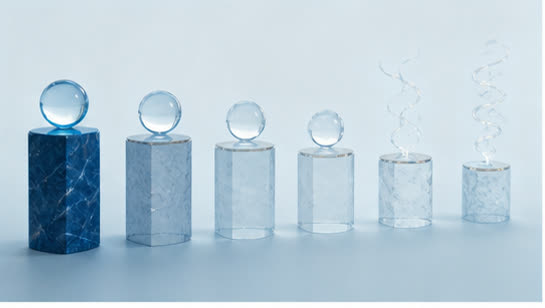
Six claims get made about methylene blue, and they do not rest on the same amount of proof. Here they are from firmest ground to thinnest.
Rescuing someone whose blood can't carry oxygen is settled medicine — a century of hospital use behind it. Memory and attention at a low dose have real human trials, small ones, that came out positive. So does mood. The cellular-energy mechanism is well demonstrated in the laboratory, though nobody has proven it delivers a daily benefit to a healthy person. Better stamina in trained athletes rests on self-experiments and stories, not trials. And treating Alzheimer's is the one the evidence actually argues against — those trials were run and they failed.
Are the loudest claims true?
"Methylene blue boosts everyone's energy." Half-true. The mechanism is real, but it helps most where a cell's energy line is actually strained. In already-well-functioning cells the effect is smaller — and at high doses it can flip. "Boosts everyone" oversells a real but conditional effect.
The claim that it treats Alzheimer's and slows it 80% is overstated. The large trials of the methylene-blue-derived drug LMTM largely failed; the "80%" came from a small after-the-fact subgroup that independent experts rejected. Encouraging everyday-memory signal, yes. Approved Alzheimer's treatment, no.
"Don't mix it with antidepressants." True, and worth respecting. Methylene blue is an MAO inhibitor; combined with SSRIs, SNRIs and other serotonin-raising drugs it can cause serotonin syndromeToo much serotonin activity at once — agitation, tremor, sweating, fast heartbeat, fever, confusion. Specific, and avoidable. — a documented, FDA-warned interaction. This is the one rule that actually matters.
What's the one thing to check first?
For most curious adults the entire safety picture reduces to one clean rule, stated once. The same effect that lifts mood — letting serotonin linger — becomes a problem when methylene blue is stacked on top of other things that also raise serotonin. Together they can tip into serotonin syndromeToo much serotonin activity at once — agitation, tremor, sweating, fast heartbeat, fever, confusion. Specific, and avoidable.: too much serotonin activity at once. The U.S. FDA issued a formal safety warning about exactly this combination in 2011.
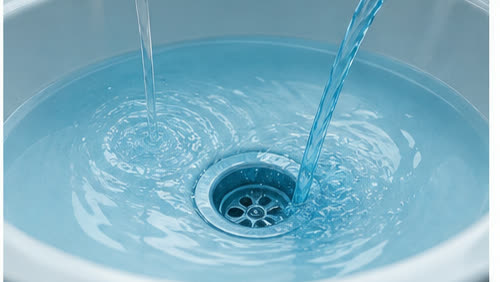
Picture serotonin as water in a sink. Methylene blue lightly plugs the drain. A serotonin-raising drug turns on the tap. Either alone, fine — together, the sink can overflow. It's the combination that matters, not the drops alone. Remove one input and the risk falls away.
The one list to check, if you take any of these, before anything else: antidepressants (SSRIs, SNRIs, tricyclics, MAOIs), the painkiller tramadol, dextromethorphan — that's the "DM" in many cough syrups — and St. John's Wort. If any of those are in your cabinet, this becomes a conversation with your doctor first. Two add-ons, each stated once: if you might have G6PD deficiencyAn inherited enzyme shortage. If you have it, methylene blue can break down red blood cells, so the FDA label says avoid it., get the simple blood test first — the FDA label lists it as a reason to avoid methylene blue entirely. And skip it if you're pregnant. That's the whole safety picture — specific, not sprawling.
How large is this risk, really? Dr. Boz argues it's often overblown: methylene blue is a reversible blocker, and only a handful of serotonin cases appear across 150 years of use — mostly high hospital doses combined with antidepressants. That's a fair, accurate point. She still confirms the warning holds for the high-dose-plus-SSRI case, and cites a post-surgery death where the warning signs were missed. So: narrow for people not on serotonin medications, a genuine doctor's call for those who are. And the practical spine researchers keep stressing: the benefit lives at a low dose. Push the dose high enough and methylene blue paradoxically causes the very blood problem it treats. More is not better. That's the theme of this whole subject, not a scare.
How would a careful person actually try it?
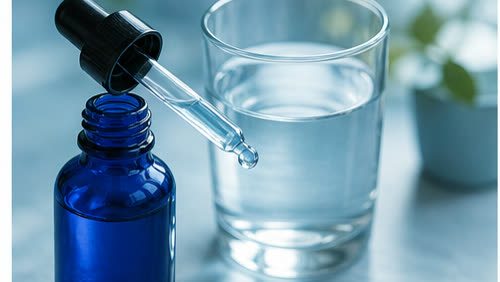
This doesn't end on "just be careful." Curiosity here is reasonable, and thoughtful people act on it. The concrete moves:
Start low. Everyday use is small — roughly 10 to 60 milligrams for most adults. That sits at or below the low end of the low-dose range researchers describe as safe and effective, about 0.5 to 4 milligrams per kilogram of body weight (the 2016 memory study used the top of that range). The benefit curve is a hill, not a ramp: it peaks at a low dose and declines as the dose climbs. Above roughly 7 milligrams per kilo, methylene blue reverses on itself. Sam Robbins, a nutritionist and fitness YouTuber, describes starting around 3 to 5 milligrams and nudging up only slowly — and warns that his own higher doses left him flat and apathetic. Less is more isn't a slogan here. It's the shape of the data.
Check your medicine list first. Run it against the serotonin list above. On one of those medications, it's a doctor conversation. On none of them, this is far simpler.
Buy the right grade. Only USP or pharmaceutical grade is meant for people — never aquarium or lab grade, which can carry heavy metals. "Pharma-grade" on a bottle is a purity claim, not FDA approval, so favor third-party-tested sources.
Take it in the morning, and cycle it. It's energizing — early in the day, not at night. Many users run a few days on, then a break, rather than every day forever.
Judge it by you. The same dose helps one person and does nothing for another; it depends on your biology. Give it a fair low-dose trial and let how you feel be the evidence — not someone else's testimonial.
So where does that leave you?
A dye invented for fabric in the 1870s turned out to move electrons the same way your cells do. That accident made it a malaria drug, a way to see germs under a microscope, a hospital antidote that is still saving people this week — and now the thing in the glass of water on somebody's kitchen counter.
What you have at the end of all that is not a miracle and not a scam. It's an old, well-understood medicine with a mechanism that holds up, two small human trials pointing the right way on memory and mood, doctors who take it themselves and doctors who are waiting for more — and one interaction you can check in about thirty seconds.
That's a good position to be in. Most things in the wellness aisle can't show you a century of use, a published mechanism, and a single clear rule about who should sit this one out. This one can. If you're curious, you now know what's actually established, what's still being worked out, and how to try it carefully — which is everything you needed to decide for yourself.